With Their Taps Dry For 9 Weeks And Counting, They Want To Take Over
Oct 22, 2026 | 6:01 am ET
Description
Photo courtesy of Honolulu Civil Beat
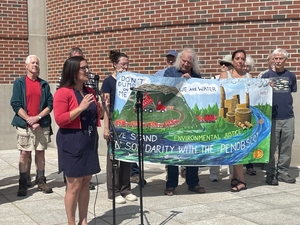
The residents of the Punaluʻu area served by Eva Liu’s company Punalu‘u Water and Sanitation have spent the nine weeks since Hurricane Lala hit living without water and sewer services. Now, many say they’re reaching a breaking point.
The state Public Utilities Commission, which regulates private water and sewer systems, has struggled to get answers from Liu. For the first time in more than a decade, staff went to Kaʻū to learn more.
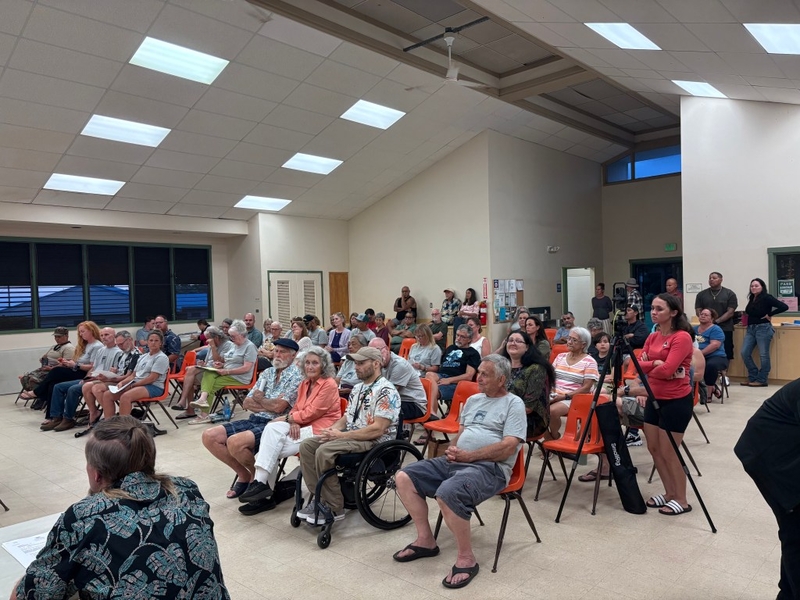
Dozens of owners and residents of the Colony I condominium complex near Punaluʻu Black Sand Beach and Kalana Estates, a development of 20 homes that sits above the highway near the beach, shared details about their daily lives during an impassioned public meeting Monday evening at the Pāhala Community Center.
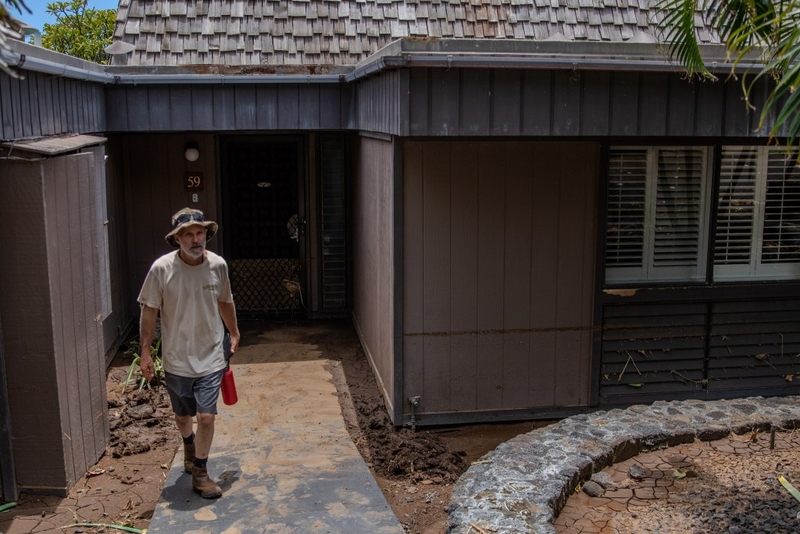
Many housing units are still damaged, and residents who could leave have already. Those who remain have had to rent their own portable toilets, wash their dishes outside, and lug 5-gallon jugs of nonpotable water to and from their homes from two small tanks supplied by Jeff Silva, president of the Colony I Association of Apartment Owners.
There is no timeline for repairing the drinking water system, the utilities commission learned Monday, and it became clear that Punalu‘u Water and Sanitation has no insurance.
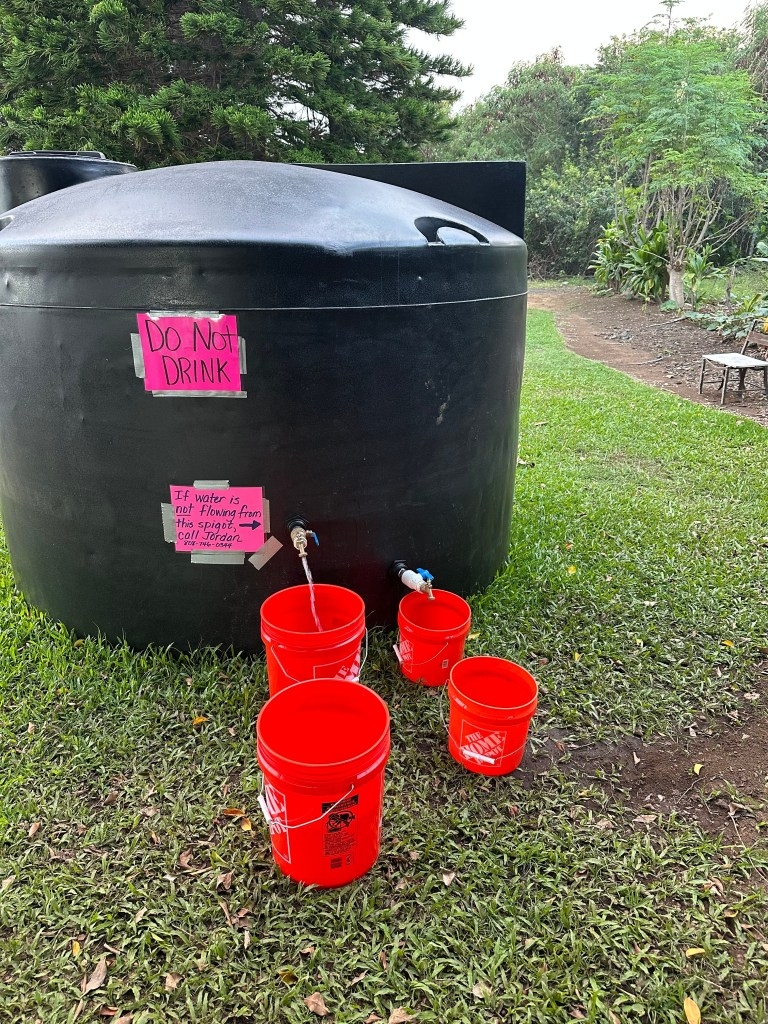
“I've got neighbors who are too old to stay in their units because they can't walk nearly a quarter-mile to a porta-potty or drag their water,” said Don Barnett, a part-time resident of Colony 1. “I spent the day cleaning mosquitoes out of our catchments because that's what we wash our dishes with.”
Kathleen Mumme of Kalana Estates said her counters are filled with water containers that drip and destroy their floor and cabinets. “We are forced to purchase portable showers and stand with basins in our stalls to bathe so that water won't go down the drains," she told the commission. "We are happy to have portable toilets, but we are sickened by the smell and take chances of injury while using them in the dark and in the rain.”
The remaining residents say communication from Punaluʻu Water and Sanitation has been minimal — three brief updates in nine weeks — and they haven’t received any support from the company since the storm hit. Many are over 70, such as U.S. Navy veteran Steve Brewer, and two are in wheelchairs.
“They have never brought a single bottle of water, not one,” Silva said.
Eva Liu, also known as Xiaoyuan Liu, is associated with 22 active and dissolved companies in California, Hawaiʻi, New York, Massachusetts and Canada. She bought 463 acres surrounding the Colony I complex seven years ago in hopes of developing it into a resort and retreat center. She bought the small utility at the same time, through a separate LLC.
The community ultimately fought the proposed development, and Liu was left with the water and sanitation company, which is expensive to run and only serves around 100 people. In recent years she has raised the water rates significantly several times in an attempt to cover costs.
Liu recently made a deal with Hawaiʻi County to sell the 6.8-acre parcel of land that includes the park, campgrounds and parking lot that surrounds Punaluʻu Black Sand Beach for $1.46 million. However, that sale will take place through Black Sand Beach LLC, an entity that is legally separate from Punaluʻu Water and Sanitation.
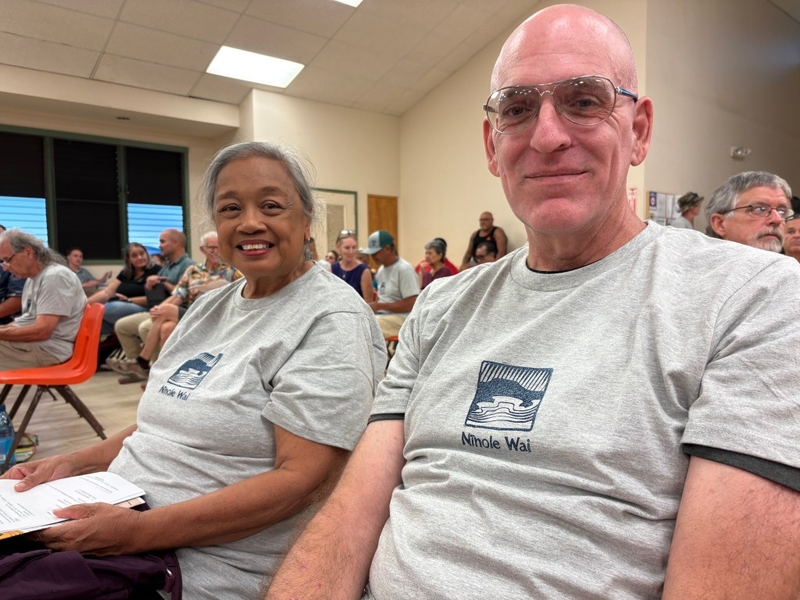
Kevin and Rosalinda Reiss — Kalana Estates residents who had their yard and vehicle completely destroyed by flooding during Hurricane Lala — were in the audience at Monday’s meeting. They wanted to know why Liu hadn’t committed to using the $1.46 million from the beach sale to fix the water and sewage system.
“What is she doing with all the money that she collected over the last year?" said Rosalinda Reiss, who is worried about the potential for wildfire as a dry winter has been predicted. "… At least fix the fire hydrant.”
The utility has raised its water and sewer rates by over 2,000%. The average customer pays around $500 a month, according to Silva.
Commissioner Naomi Kuwaye visited the utility’s service area in late August. According to the commission communications officer Deborah Kwan, Kuwaye immediately directed the utility's co-counsel to provide short- and long-term plans to provide essential services to customers and a communications plan to keep its customers updated on restoration services.
"Since then, the Commission has requested and PWS has provided some updated information about service, but the company has yet to provide all requested information," said Kwan. Kuwaya sees the situation as a "matter of serious concern and urgency," she added.
An Ongoing Disaster
It was against this backdrop that the residents and their supporters filled the community center on Monday. The utilities commission rarely holds public hearings outside Oʻahu, let alone in the rural district of Kaʻū; the last time was in 2015 when they met in Ocean View to discuss overhead power lines. Some people had traveled from other places to be there and many were tired, angry and in need of a real shower.
All three commissioners and several staff members were in attendance, as were four people representing the utility: Sakamuto; the two men the utility hired to maintain its wells and sewage facility, Daniel “Spud” Drake and Sidney Remiticaeo; and Nicole Khanda, a paid consultant. Liu was notably absent.
In their hourlong presentation, guided in part by commissioners’ questions, Punalu‘u Water and Sanitation's representatives painted a grim picture.
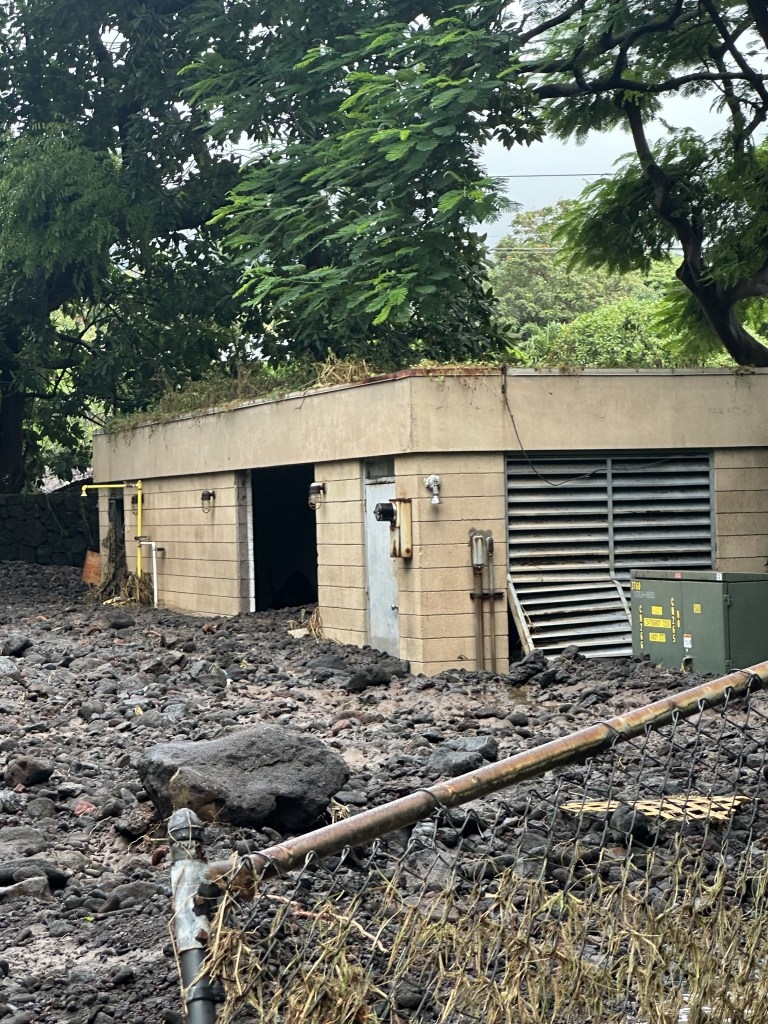
The flooding destroyed the wells’ piping and motors, Drake said. “The entire building that contains the chlorination system and the motor control center was completely flooded, top to bottom,” he said. “Everything has either been washed downstream or completely ruined due to debris and water.”
Sakamuto said that repairs to the potable water service will require an initial half-million dollars to bring in a drilling rig, followed by other significant costs. “Securing half a million dollars when you're not even providing water to the customers — that's unlikely to happen,” he said. “To be absolutely blunt, there is no projected timeline.”
Remiticaeo reported that power had been restored to the sewage treatment plant and it would be back up and running in short order. Sakamuto added the plant can be run off of nonpotable water.
“To be clear, you mean someone would need to pour water into the tank of their toilet and flush it every time?” commission member Colin Yost asked.
“That's exactly what I'm saying,” Sakamuto said, causing an uproar in the crowd.
When commissioners asked about the potential for insurance payments to cover the repairs, Sakamuto said the utility is not insured.
Sakamoto said the water and sanitation company had been in conversation with the county, which he said was considering taking control of the utility due to its interest in seeing the bathrooms at Punaluʻu Black Sand Beach brought back online.
“That's still in preliminary discussions, but they have expressed that they have concerns and perhaps they're the ones who are better suited to try and maintain the infrastructure with respect to potable water services and wastewater,” Sakamuto said.
When Civil Beat reached out to the county, however, Mayor Kimo Alameda had a different recollection of the conversation. He said he had offered to help the utility identify interim solutions, including hauling water from the county’s system as a temporary customer.
“Although the county is committed to being a good neighbor, we have made clear that assuming ownership of or responsibility for the private system would be neither economically feasible nor in the county’s best interest,” Alameda said in a statement.
A Willing Recipient
Given the stated unwillingness to pay for the repairs on the part of the utility, a group of residents has created a nonprofit — Ninole Wai Community Association — with the intention of taking over the system.
Silva, who lives at Colony 1 part-time, has experience running a utility. The board of Ninole Wai includes a former mayor from Montana, a former fire captain and people with financial expertise. They believe taking on ownership of the utility is the only viable way forward.
“The economy of scale isn't there to pay some big-dollar attorney and water organization to run the system. A local community-based nonprofit is the solution,” Silva said.
Ninole Wai also has the support of Michael Angelo, the consumer advocate with the state Department of Commerce and Consumer Affairs. Angelo began working with the residents before the storms, when the Public Utilities Commission approved rate increases.
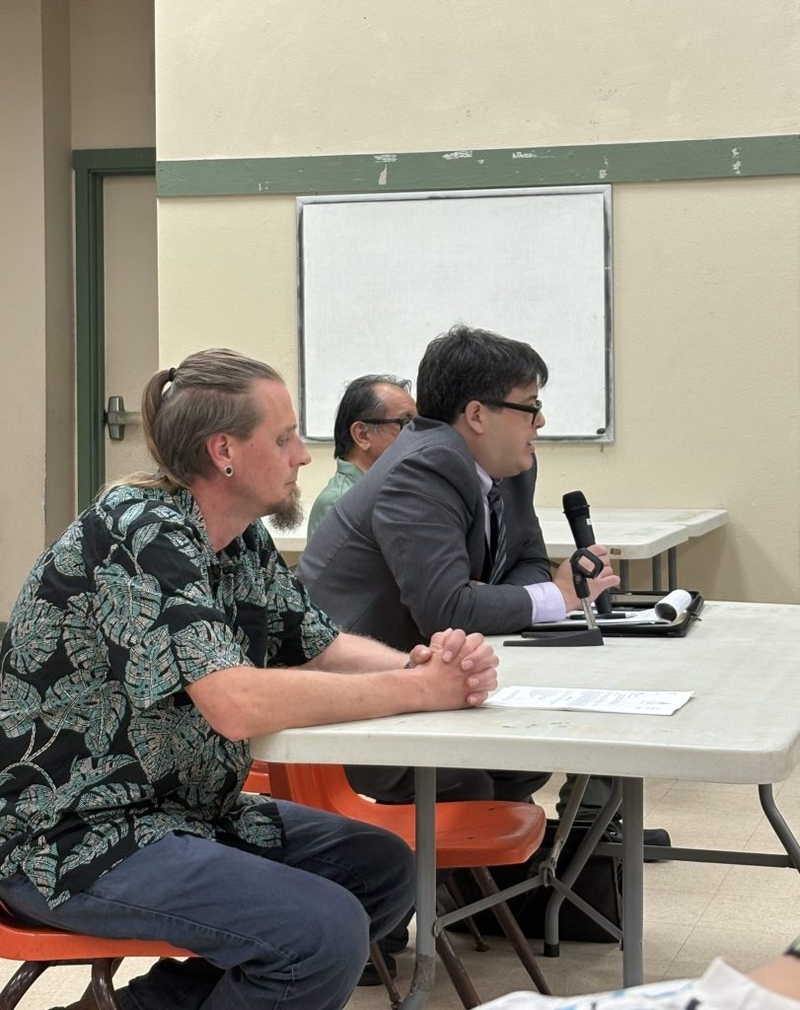
Angelo was in attendance on Monday but was not given time to ask the questions he had included in the information request he’d submitted to the commission beforehand — his fifth request related to the water and sanitation company.
In the request, Angelo asked whether the utility is willing to consider transferring ownership of the utility to other entities, such as Ninole Wai. The consumer advocate also asked pointedly about the lack of accountability on the part of Liu, who went through an approval process with the utilities commission to acquire the system, in which she claimed to have insurance, intentions to bring on skilled operators, and plans to repair and maintain the system.
He asked about the recent influx of funding from the sale of Punaluʻu Black Sand Beach, and asked whether “any of PWS’ affiliates such as C&A Punaluʻu, BSB, or others would be willing to provide financial support to PWS.”
Angelo also pointed to the financial plan C&A Punaluʻu filed in the process of acquiring the land in 2020, which stated over a relatively long period, "PWS will greatly depend on its C&A Punaluʻu’s financial contributions as its main source of funds.” The company, he said, had received a $2.5 million buyer’s credit in 2020 that was supposed to be available to address utility system maintenance needs.
Silva said Liu essentially got paid to acquire the system, and hasn’t followed through on in-depth repairs that were needed at the time of the purchase. “She paid zero dollars for the system … and she took that $2.5 million and didn't put any of it into the system.”
It’s not at all clear how the utilities commission will respond moving forward.
The state’s receivership statute says whenever the commission finds that a regulated utility is failing to provide adequate and reasonable service to its customers, it “may appoint a receiver to take any temporary action necessary to assure continued service or to bring the service up to appropriate regulatory standards.”
In the meantime, the owners live with angst, uncertainty, and an increasingly frustrating day-to-day reality.
At the meeting, Tammy Goesch, a 31-year owner at Colony 1, acknowledged that it had been reasonable for the commission to take Liu at her word in her application to run the utility. But she doesn’t think they worked hard enough to verify her claims. Now, she said, “residents of Hawai‘i are living in conditions one expects to find in the rural global South, not these United States.”
Honolulu, HI