Oregon has more hyperscale data centers than all but one U.S. state, study finds
Nov 18, 2026 | 6:21 pm ET
Description
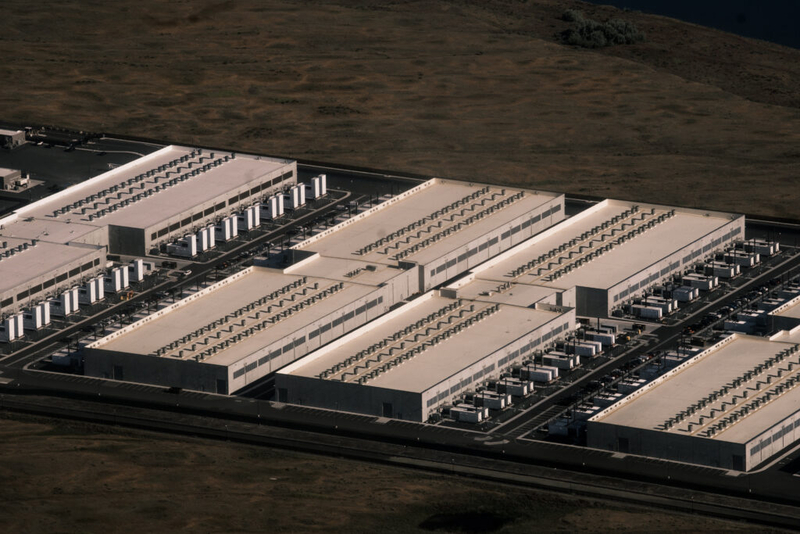
A data center in northeast Oregon is one of many built along the Columbia River Gorge during the last few years. Oregon is home to the second-highest number of hyperscale data centers in the United States, a new study found. (Photo by Jordan Gale/Oregon Capital Chronicle.)
Oregon is home to the second-highest number of hyperscale data centers in the country, according to a consortium of researchers led by Harvard University.
That means Oregon is also home to the second largest concentration of energy demand from the industry’s largest server farms.
The team published its findings Monday in the peer-reviewed journal Nature Sustainability. It focused on hyperscale data centers because they are the largest, most powerful class of data centers designed to handle the largest computing and data storage loads, and are growing in number as the era of artificial intelligence unfolds. Analysts at the Lawrence Berkeley National Laboratory estimate that hyperscale data centers will account for more than 90% of all data center electricity consumption by 2028.
Researchers identified more than 400 total hyperscale facilities in the U.S. between May 2024 and April 2025, including 56 in Oregon. The researchers generally defined hyperscale facilities as housing several server-filled buildings of roughly 2,000 square meters each — about one-third of a football field — with an average energy capacity of 40 MW, meaning at any given hour they can use as much power as five American households use annually.
Only Virginia, with 142 facilities, had more hyperscale data centers than Oregon. Ohio is close behind Oregon with 38 facilities.
Hyperscale data centers in Oregon, almost entirely in the eastern half of the state, required 11.1 terawatt-hours of energy to operate, equivalent to the amount of electricity that could power more than 1 million American homes for a year.
Oregon’s hyperscale data centers contributed to 1.3 million metric tons of greenhouse gas pollution, equal to the pollution from more than 300,000 gas-powered cars in an average year, according to the study.
That’s less pollution than hyperscale data centers caused in Ohio or Iowa, which have fewer facilities but rely more on electricity powered by coal and natural gas.
Rising energy demand from data centers and rollbacks in federal clean energy policies have knocked Oregon off track on meeting state-mandated climate goals, the Oregon Department of Energy shared in March.
The study’s lead author, Gianluca Guidi, a postdoctoral fellow at Harvard University’s Department of Biostatistics, called the findings in a news release a “snapshot of a rapidly expanding industry.”
“The data center boom hasn’t slowed down since our study period ended in April 2025. New facilities have been built, existing campuses have expanded, and demand for AI computing continues to grow,” he said. “That means the electricity use and carbon footprint we’re reporting could already be substantially larger now in 2026.”
Data center growth became a central issue in local and statewide political races during the last year, and several communities issued temporary moratoriums on new facilities. Oregon lawmakers and Gov. Tina Kotek are expected to propose new data center regulations during the 2027 legislative session that starts in January. Proposals could require more transparency around the facilities’ energy use, water consumption and on data centers’ access to property tax incentives meant to spur job growth in the state, according to Kotek and state lawmakers.
Kotek in October also mandated state agencies cease issuing environmental permits for new and expanded data center construction, effectively putting a halt to projects for the time being.
Umatilla County in eastern Oregon, where the state’s largest concentration of large and hyperscale data centers are located, has sued in response with the goal of restarting the permitting process. A September analysis from the consulting firm ECOnorthwest found that most of Umatilla County’s 22 data centers are hyperscale centers. Both the city of Umatilla and the county’s attorneys have asked a local judge to step in and overturn Kotek’s order pausing permitting.
The team behind the Harvard study will examine the health effects of large-scale data centers on local communities, according to the news release, given concerns over data centers’ massive energy demand driving up greenhouse gas pollution and water consumption in many states.
“When data centers draw heavily on fossil fuel power, the people living near and downwind of those power plants may bear health costs, even if they’re far from the data center itself,” said Francesca Dominici, director of the Harvard Data Science initiative.
Salem, OR