What we leave our children in the Monongahela National Forest
Oct 21, 2026 | 6:00 am ET
Description
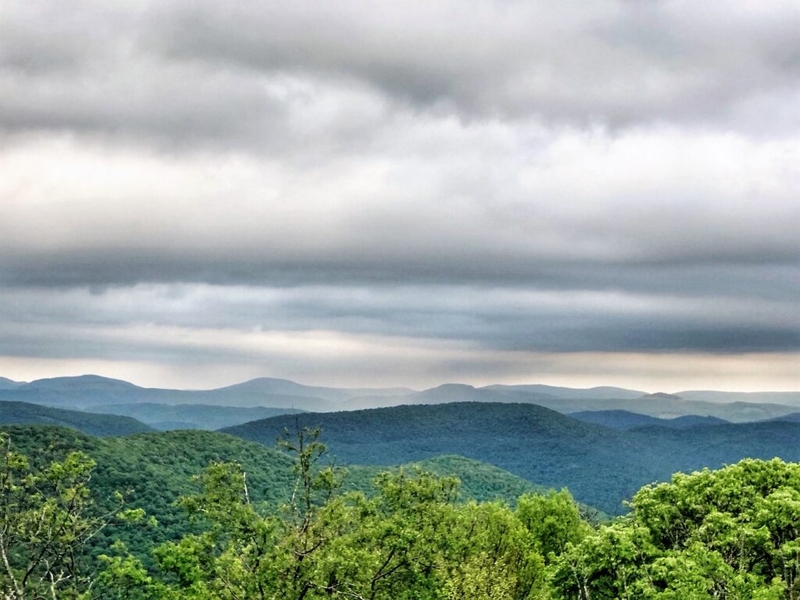
Bickle Knob is part of the Monongahela National Forest in Eklins, West Virginia. (Photo courtesy of the Forest Service)
I want my ashes scattered at Bickle Knob.
That may seem an unusual place to begin discussing forest policy. But it explains why the Monongahela Forest matters to me.
I taught my sons at Bickle Knob in Elkins, West Virginia. Soon, my son will take my granddaughters there.
The trails, streams and panoramas have enriched and continue to enrich my family’s life. Our family’s story is one among many in “our home among the hills.” Preserved public lands hold those connections across generations.
Families whose stories there have not yet begun deserve that chance too. That is moral geography.
Existing regulatory protections for West Virginia’s natural resources should remain in place. That is why I oppose the Trump administration’s proposal to rescind the 2001 Roadless Rule. Mountain State Spotlight reports that more than 180,000 acres across West Virginia’s national forests could lose the rule’s protections against roadbuilding and logging. The Monongahela is among the forests affected.
Years ago, while completing postdoctoral training in the Chicago area, my oldest son announced that he wanted to go fishing. He was 3.
Having little experience, I bought books, sought expert advice and purchased equipment considerably more sophisticated than our fishing skills.
Eventually, his younger brother joined us. As we prepared for visits home to West Virginia, fishing became an opportunity to teach both boys how to walk safely in the woods and leave no trace.
One evening at an Illinois forest preserve, darkness was approaching. I asked how they would find their way back to the car.
“With our flashlights, Dad!” my oldest replied.
He helped his younger brother turn on his flashlight and took his hand. Neither knew that I had placed reflective markers along the trail. Their flashlight beams caught the markers, and the way back lit up.
I was right behind them.
At the car, I reminded them that other trails would not have our markers. I told them how proud I was that they had been careful and had cared for each other.
I think of that evening as I watch my son now teach my granddaughters. Learning to walk in the woods means paying attention to where you place your feet and where the people you love are walking. It means enjoying a place while accepting responsibility for how you move through it.
Adults making decisions about our forests might consider that lesson.
I am not a forester. My training as a pediatric psychologist has taught me to examine evidence carefully. When the subject is a forest where my son is passing along our respect for the beauty of West Virginia to my granddaughters, I have a responsibility to do so.
The Roadless Rule generally restricts road construction and timber harvesting in inventoried roadless areas. It includes exceptions, including limited cutting of generally small trees to reduce uncharacteristic wildfire effects when specified ecological conditions are met.
The administration argues that rescission would give local forest managers more flexibility to address wildfire and forest health. Forest Service research describes long intervals between fires across much of the Monongahela landscape, alongside areas with more frequent historical fire in its drier eastern areas near the Virginia border. That varied history calls for continued scientific judgment. It does not by itself justify removing roadless protections.
Our own history also warrants care. The 1930 fire at Dolly Sods offers a caution: logging debris and removal of forest cover contributed to a devastating fire that consumed deep organic soil layers, in places down to bedrock.
That does not prove that modern timber harvesting always increases fire risk. It challenges the assumption that more logging necessarily makes a forest safer. Rescission would not itself authorize logging. Future projects would still have to comply with forest plans and applicable law. Calling the change “flexibility” does not tell us whether it is wise.
Responsible forestry has a place in West Virginia. So does protecting places where quiet woods and the chance to pass them on are themselves public benefits.
West Virginia’s history of extraction should make us especially vigilant against weakening existing protections for our natural resources.
Federal officials must demonstrate why existing exceptions within the Roadless Rule are insufficient. West Virginia’s congressional delegation should defend existing protections for our natural resources, including this rule.
My granddaughters and other children will inherit the consequences. Perhaps they will have children of their own to take into these woods and say, “This is where my father brought me. This is where his father brought him.”
And then take a small hand and gently and respectfully keep walking.
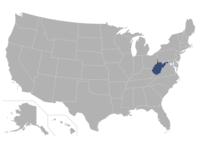
Charleston, WV