Georgia utility commission’s balance of power at stake in midterm election
Oct 20, 2026 | 5:00 pm ET
Description
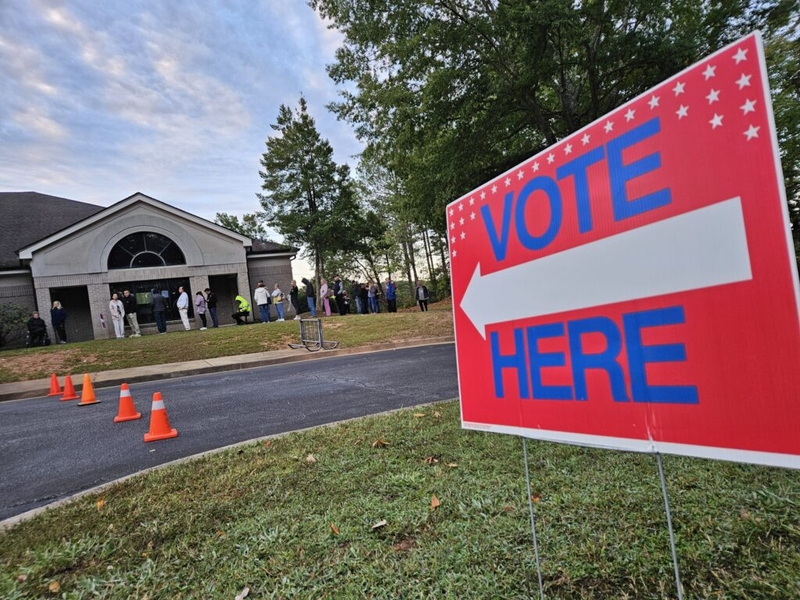
Early voting is underway across Georgia, including for two down-ballot races that could decide which party controls a little known state regulatory board that influences how much Georgians pay for their utilities. Ross Williams/Georgia Recorder
This coverage is made possible through a partnership between WABE and Grist, a nonprofit environmental media organization.
Two seats on the Georgia Public Service Commission are on the ballot in this year’s election, and the outcome could see Democrats controlling the powerful commission for the first time in decades.
The commission regulates utilities, including Georgia Power, meaning commissioners have final say over how the state’s largest utility makes energy and how much customers pay for it. It has received increased scrutiny in recent years due to a series of rate hikes and the scramble to make enough energy for a massive spike in demand Georgia Power is predicting from the data center boom.
Last year, frustration over rising power bills helped two Democrats win seats on the commission in a landslide. One of those seats, the District 3 post now held by commissioner Peter Hubbard, is back on the ballot this year. If the party can hold onto it and win the District 5 seat that’s currently up for grabs, Democrats would hold a majority.
Hubbard stressed that point in the Atlanta Press Club’s debate.
“In this election, you can vote for Peter Hubbard and Shelia Edwards to flip the commission to a Democratic majority who will lower your bills and hold Georgia Power and data centers accountable,” he said.
District 3: Hubbard vs. Johnson
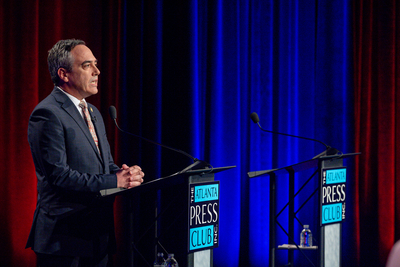
Hubbard worked as an advocate and a solar consultant before he won his seat on the commission. He puts a big emphasis on clean energy as a way to lower power bills.
His opponent, Fitz Johnson, didn’t participate in the debate. Johnson served four years on the commission before losing his seat to Hubbard last year. During that time, he voted to approve the six rate hikes that became the major focus of last year’s election, as well as a temporary rate freeze that began last year. He also voted to approve Georgia Power’s ongoing expansion, which relies heavily on fossil fuels.
At a campaign event in the spring, Johnson told WABE he has unfinished business on the commission.
“To get to dig a little deeper and to make sure that we are on track to take care of our ratepayers,” he said of his plans if he regains the seat. “Also, to promote the economic development.”
District 5: Tolbert vs. Edwards
Republican Josh Tolbert is running against Democrat Shelia Edwards for the District 5 seat on the Georgia Public Service Commission. Tricia Pridemore previously held the post, but decided to run for Congress this year instead of seeking reelection. She lost, then stepped down early for a job at a corporation that builds data centers. Gov. Brian Kemp appointed former Commissioner Stan Wise to the seat until the term ends in January.
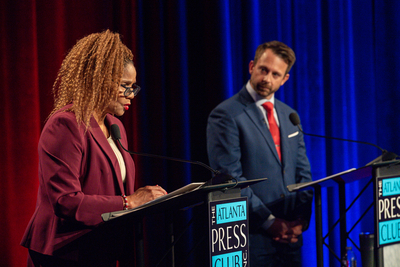
Tolbert has leaned into his background as an engineer working on power plants.
“Ratepayers need a voice and representative on the commission,” he said during the debate. “When it comes to utility decisions and power bills, that voice needs to know something about energy.”
Edwards argues the commission already has engineers and energy experts on its advisory staff.
“You don’t need another nuclear engineer,” she said during the debate. “You need a commissioner who will stand up for families, seniors and veterans. And that’s me.”
Edwards worked with Lockheed and NASA in the wake of the Challenger shuttle disaster, and she points to that experience as proof she can work with engineers and wade through technical material.
What’s at stake
Though the candidates have to live in specific districts, the elections are statewide, meaning all registered voters in Georgia can cast a ballot for both seats on the Georgia Public Service Commission.
The winners of these two races will oversee several issues with substantial implications for power bills and Georgia’s climate future, since burning fossil fuels to make electricity is a leading producer of greenhouse gas emissions.
Georgia Power’s next long-term plan for making and delivering energy is due in 2028 — an opportunity for the commission and interest groups to weigh in on power plants, transmission lines and other key issues. A rate case, in which the utility, the commission and many of those same interest groups hash out exactly what customers will pay for electricity, is due to follow — the first since 2022.
Current commissioners have said they also expect Georgia Power to file another update to its long-term plan next year, much as the utility did in 2023, as part of the ongoing effort to supply energy to data centers.
Atlanta, GA