Iran war, rising costs threaten Nevada revenue outlook, state economic panel warned
Oct 20, 2026 | 7:48 am ET
Description
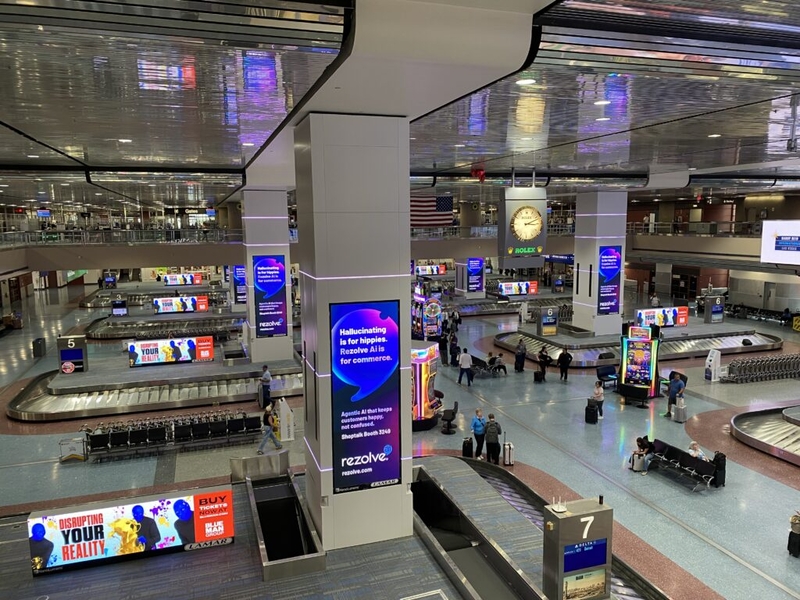
Wage growth is no longer keeping up with inflation, which will put financial pressures on both Nevadans and the non-Nevadans that Nevada relies on to be tourists. (Photo of Reid International Airport: Hugh Jackson/Nevada Current)
The United States, and Nevada, for the past two years has traversed “relatively gracefully” over economic policy shocks brought on by unprecedented restrictions on trade and immigration. But economists warn that the next two years may bring a more difficult, flatter road for revenue.
Kumael Bilgrami, an associate economist at Moody’s Analytics, told the Nevada Economic Forum last week that strength in consumer spending and the AI buildout have been “important tailwinds” but are soon expected to weaken.
“While we expect growth will remain on stable ground” going forward “its progress will remain relatively flat as these supports begin to weaken,” he said. “A major reason behind this is … the conflict in the Middle East and the resulting surge in energy prices.”
Wage growth is no longer keeping up with inflation, which will put financial pressures on both Nevadans and the non-Nevadans that Nevada relies on to be tourists. Personal savings rates have “dropped dramatically” this year, noted Bilgrami.
While Moody’s and state-based economists are currently projecting sales tax revenue collection to rise in the upcoming fiscal years, they acknowledged that growth will be driven almost entirely by the cost of goods being higher and not by people buying more things.
The K-shaped economy — where higher income households are faring fine while lower income households are struggling — is becoming more pronounced, Bilgrami emphasized, echoing earlier presentations the Economic Forum has had this year. Tourists to Las Vegas in the past three years especially have skewed toward much higher household incomes.
Moody’s expects domestic visitation to remain “downbeat,” and noted that the recent decline has been sharper than the declines felt after the 2008 crisis and 9/11. International tourism shows “early signs” of moving in the right direction for Nevada but Bilgrami said it was too soon to tell whether it would stabilize.
Bilgrami said Moody’s baseline assumes the conflict in the Middle East “begins to wind down in upcoming months” and leads that toward the “back end of next year” things will improve.
“But that recovery will be gradual,” he added.
Bilgrami cautioned against seeing the massive investment in AI as a long-term solution to economic woes, saying the “wealth effects” as a result of the “lift to the stock market…will be more limited given the current state of stretched market valuations.”
While Nevada is a player in the data center boom, there are “a lot of downside risks,” he added.
For one, it will bring short-term construction jobs but very few permanent ones.
It may also lead to people losing their jobs. Nevada is seen as having “below average exposure” to direct job loss because of AI, Bilgrami told the forum. But if AI were to usher in mass layoffs elsewhere and kick off a recession, Nevada would feel it acutely because of its tourism-based economy.
Nevada’s Economic Forum is a five-member appointed panel that approves the state’s biennial revenue forecast, which serves as the base for the governor’s recommended budget, which the governor presents to the Nevada State Legislature. The Legislature must pass the budget, which is subject to gubernatorial veto, by the end of its 120-day session.
The forum is scheduled to meet again on Nov. 16 to officially approve the revenue forecast. The 2027 Legislative Session begins in February.
Las Vegas, NV