Dayesla Ixtli uses a living canvas to revive, reinterpret mythic women
Oct 19, 2026 | 6:00 am ET
Description
Photo courtesy of Spotlight Delaware
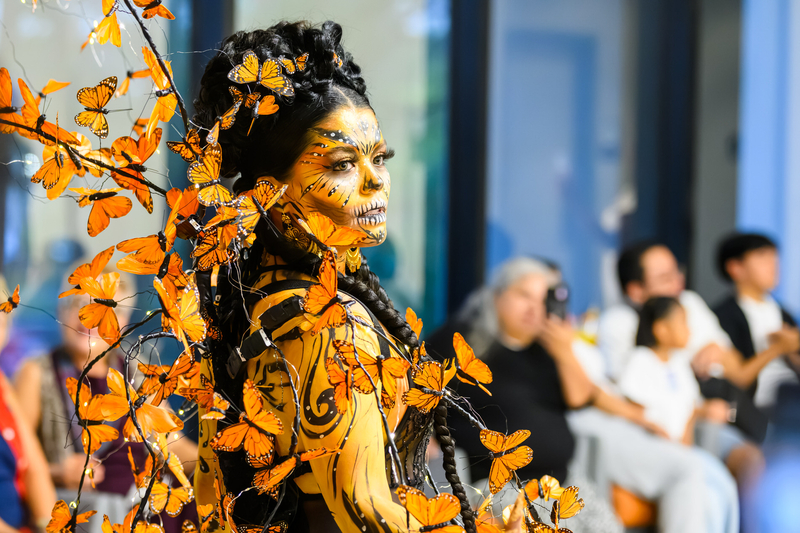
After three hours in the makeup chair, model Carmela Mireles was no longer human.
Faux monarch butterflies flitted around her body, sprouting from wires attached to a harness she wore around a sheer black dress. Her body was insectine, adorned with the butterfly’s orange and black patterns. Her lips and fingers were skeletal, painted to resemble La Catrina, the iconic skeleton woman associated with Día de Los Muertos.
Get Involved
Dayesla Ixtli’s free exhibition “Diosas & Guerreras: The Living Canvas” is on display at The Mezzanine Gallery (820 N. French St., Wilmington, DE 19801) through Oct. 30. The gallery is open Monday through Friday, 8:30 a.m.-4:30 p.m.
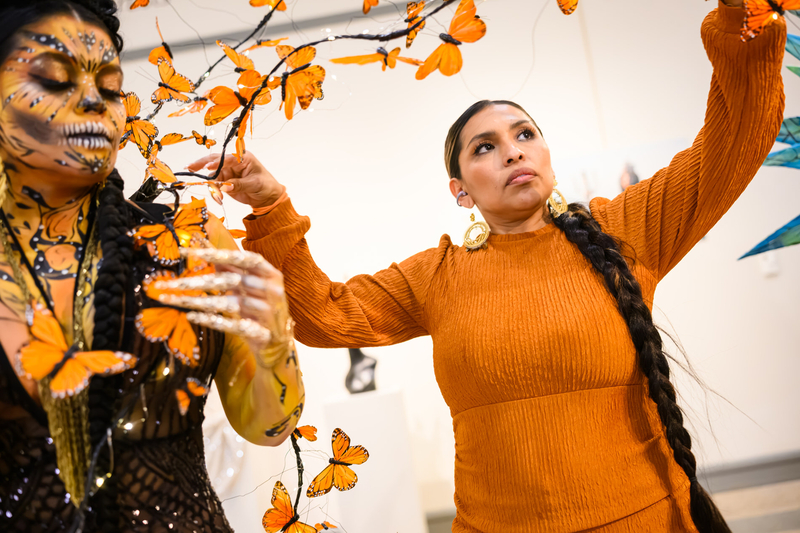
The artist behind Mireles’ transformation was Adaysela Reyes from Newark, better known by her moniker Dayesla Ixtli.
Ixtli uses makeup, body paint, costumes and headdresses to transform her subjects into living, breathing artwork. Mireles and Ixtli have collaborated several times throughout the past few years, most recently at the opening reception of Ixtli’s exhibition “Diosas & Guerreras: The Living Canvas” at The Mezzanine Gallery in Wilmington earlier this month.
Though the gallery was full of costumes and photography to marvel at, Mireles was undoubtedly the center of attention.
Mireles’ ensemble was inspired by the monarch butterflies that migrate to the forests of Michoacán in early November, around Día de Los Muertos — Ixtli’s favorite time of year.
Ixtli was born in Tenancingo, Mexico, and moved to Delaware with her mother when she was 7. She wasn’t very familiar with Mexican culture, customs and folklore until she moved back to Mexico to live with her grandparents during high school and her first two years of college.
“When I was here, I never felt fully Mexican. But I was not American either. It’s kind of like you’re in limbo,” she said.
Living in Mexico, Ixtli finally reconnected with the culture of the country she’d been born in. Her grandmother taught her about ofrendas — offerings to deceased loved ones placed at an altar during Día de Los Muertos — and now, Ixtli carries on the tradition with her own children.
Those formative years in Mexico were what inspired her to pick the name Ixtli — the word for “face” in the indigenous Nahuatl language— when she began her artistic practice six years ago.
At the time, she was reeling from the stressful birth of her youngest daughter, which had involved a C-section. Postpartum depression quickly followed.
Ixtli found a remedy in makeup. She would spend hours in her room watching video tutorials to turn herself into her favorite Tim Burton characters.
“I could accomplish something other than having a baby and just being there, stuck,” she said. “I started going out. I started doing exercise. And then, boom, COVID hit.”
The silver lining of the lockdown was that it gave Ixtli time to refine her artistic practice.
“In that moment, I was like, ‘This is the worst thing that has ever happened to me.’ But now, obviously, I look at it, and I’m like, ‘No, that’s actually the best thing that happened to me,’” she said. “I love makeup, and I love everything art, but I never actually gave myself the time … to fully experience creating something.”
Ixtli began using body paint and making headdresses to transform herself into characters of her own. Eventually, she started posting online, recruiting models, participating in art and fashion shows and hosting pop-up events where her characters would interact with the public.
Ixtli refers to her characters as diosas (goddesses) and guerreras (warriors) because she hopes to empower women through her artwork.
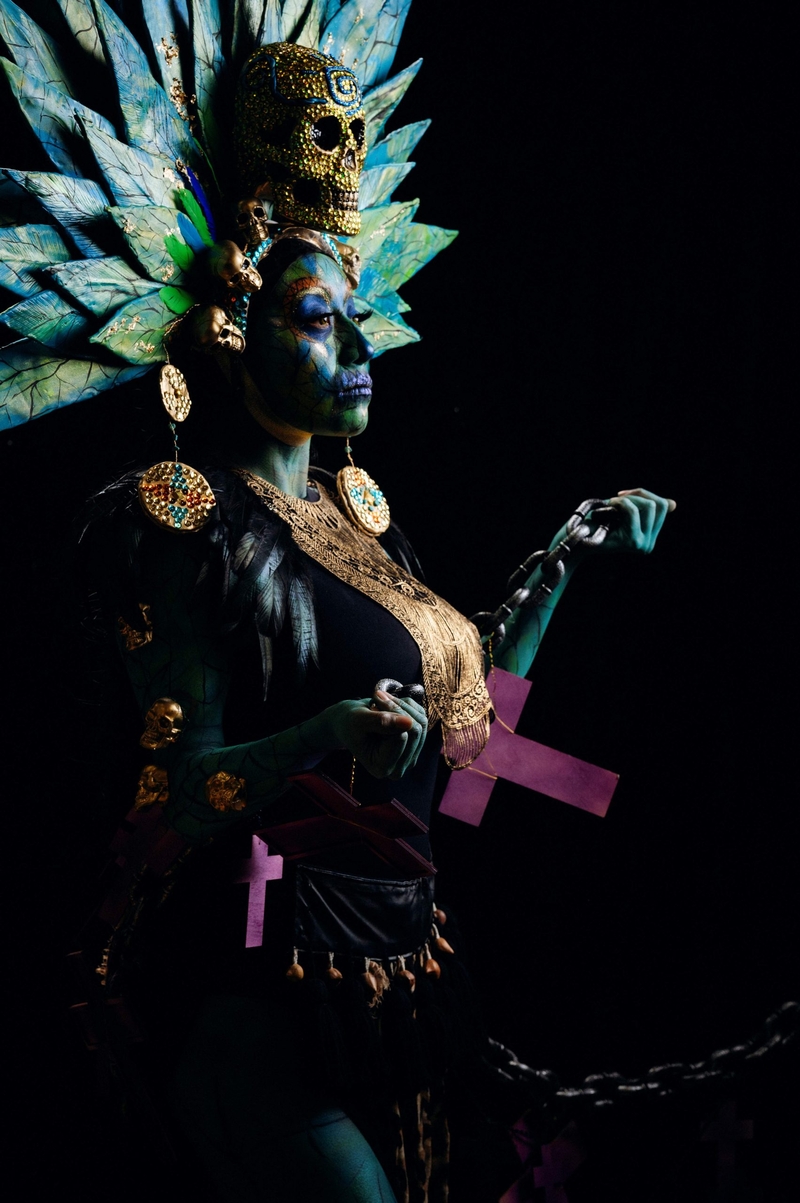
For example, Ixtli’s “Mictecacíhuatl: Lady of the Dead” is based on the Aztec goddess of death. She wears a headdress topped with a bejeweled skull and carries chains of purple crosses — a symbol used to protest femicides in Mexico.
Femicide, or the intentional killing of women because of their gender, has been a longstanding problem in the country, with 852 victims in 2024, according to UN Women.
“There are big protests, and nothing is changing,” Ixtli said. “You’re living in a country where you have to always watch your back, because you never know if somebody’s going to come and sexually assault you and then kill you. And it still goes unpunished. It’s a fear that every woman has to live (with) in Mexico.”
In creating her version of Mictecacíhuatl, Ixtil instructed the model to “carry sorrow” for lives taken before their time.
Though the piece was created with a specific message in mind, Ixtli said one viewer assumed the crosses were a nod to the forced religious conversion of Indigenous peoples by Spanish colonizers.
Ixtli’s messaging is subtle enough that it often flies under the radar.
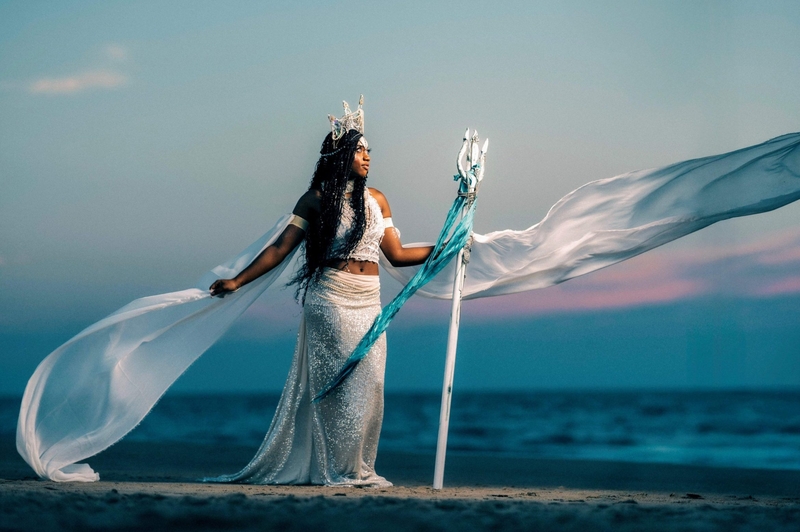
For example, Ixtli placed a hummingbird — which has significance in many Indigenous cultures — on the torch of her version of Lady Liberty. She also intentionally chose a model with Dominican and Puerto Rican heritage.
“In America, there’s all colors, all shapes. Lady Liberty should also represent that,” she said.
In this way, Ixtli reinterprets iconic women from folklore and mythology.
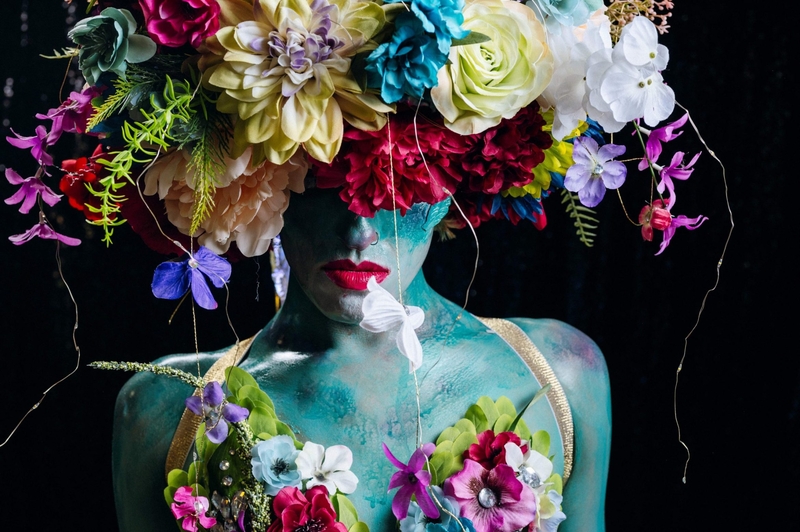
Her “Nymph,” painted in teal body paint and covered in flowers, satirizes the societal expectation that women be gentle and beautiful — seen, not heard.
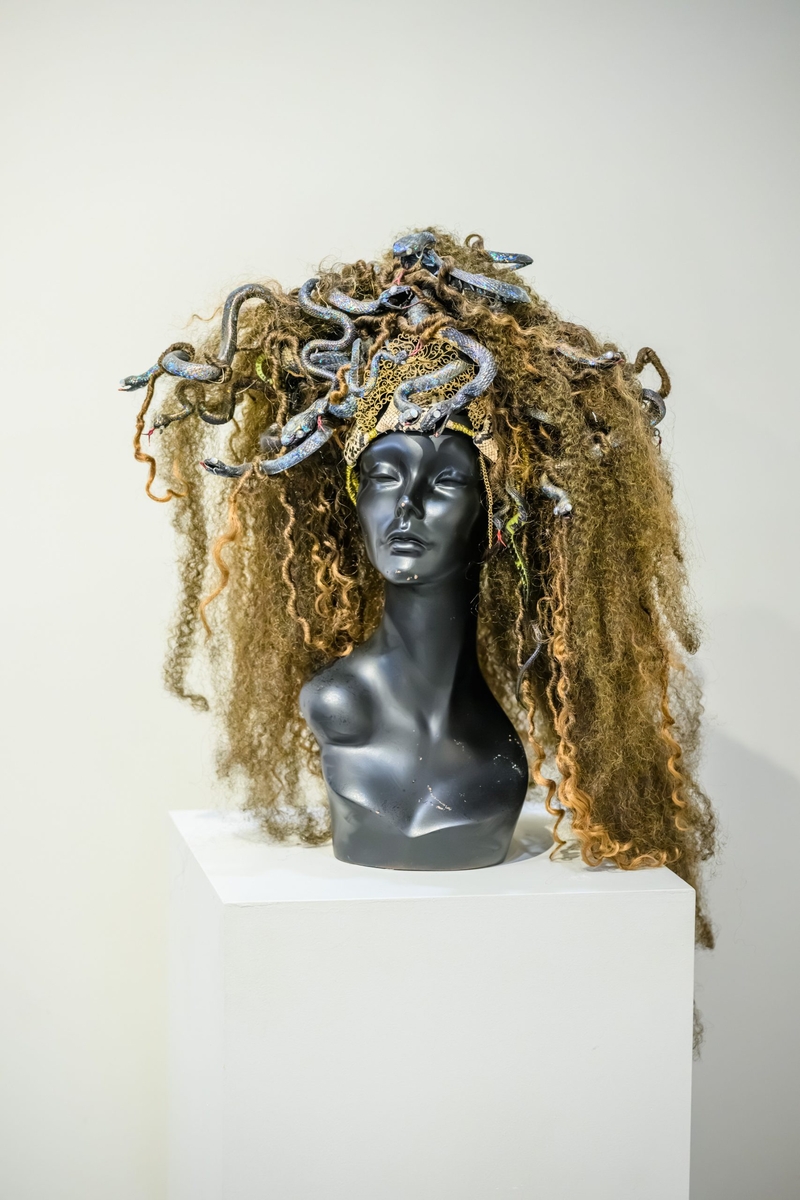
Meanwhile, her “Medusa,” wearing a headdress of snakes, pulls from Greek myth to comment on the demonization of women for their sexuality.
For her “Lilith,” Ixtli turned the model into an actual demon, with hellfire red skin and pitch black wings. Ixtli based the character on Biblical Adam’s first wife from Jewish folklore, who was kicked out of the Garden of Eden for refusing to be subservient to her husband.
Ixtli chose bodybuilder Cris Gutierrez to bring Lilith to life.
“I want(ed) someone that is going to break the standards of beauty. She’s beautiful, but she’s strong. She’s so muscley,” Ixtli said. “She says some guys are intimidated by her. So, I said, ‘That’s what I need.’”
Ixtli is always grateful to her models for enduring the long hours of applying the makeup and wearing heavy costumes.
“I feel like they’re gonna be like, ‘You know what? I never want to do this again!’ They end up saying, ‘That was so much fun. Whenever you need, call me. I’ll model for you,’” she said. “The way that they transform, even the way they carry themselves, changes.”
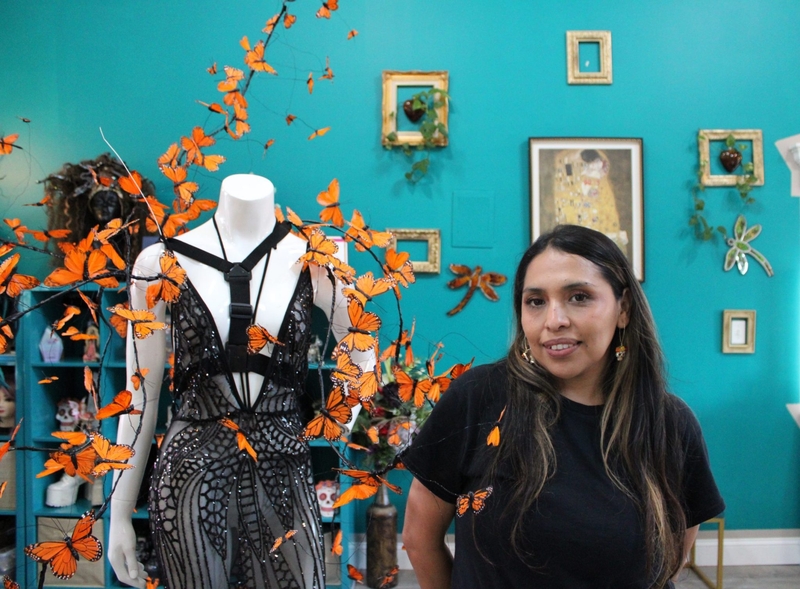
Ixtli, too, has been transformed by her work.
“I feel like I did save myself, but I became something else. I became a lot more daring. My fear is there, but it doesn’t take over. I question a lot of the things that I do, but I still do them. Before, it would just stop me,” she said.
Receiving a Delaware Division of the Arts fellowship this year bolstered Ixtli’s self-confidence even more. She opened her own studio in April, where you’ll find her whenever she isn’t roaming the aisles of the hardware store, trying to suss out how to bring her next goddess to life.
Ixtli’s motto is, “Art saves lives.”
“It might save the artist, and sometimes, it might save the spectator,” she said. “But it always saves somebody.”
Get Involved
Ixtli will co-headline the “Living in the Present” Indigenous fashion show on Nov. 6, 6-9 p.m., at Delaware Art Museum (2301 Kentmere Parkway, Wilmington, DE 19806). General admission is $40 for Delaware Art Museum members and $50 for non-members.

Dover