Stein says NC counties will shoulder costs of new Medicaid rules, urges Congress to reverse cuts
Oct 16, 2026 | 7:03 pm ET
Description
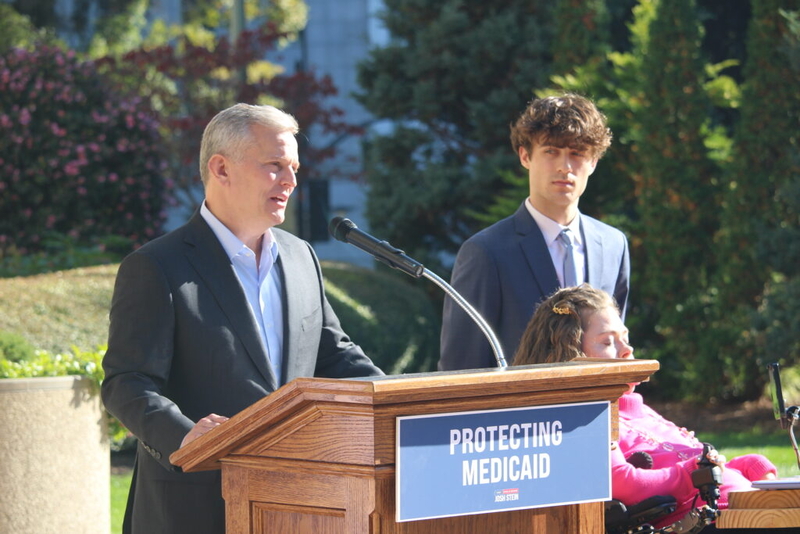
“It is time to fund Medicaid,” Gov. Josh Stein said in a news conference Thursday, Nov. 6, 2025 in Raleigh. “Because if [lawmakers] fail to do so, people are suffering. And it is unacceptable.” (Photo: Galen Bacharier/NC Newsline)
Gov. Josh Stein says North Carolina counties will face more administrative costs and staffing pressures as they prepare to implement new federal Medicaid requirements, after the General Assembly rejected his request for the state to help cover those expenses.
Stein made the comments earlier this week in Fayetteville at a roundtable with Medicaid recipients, healthcare providers and local officials.
He also sent a letter to North Carolina’s congressional delegation, urging lawmakers to reverse Medicaid cuts included in H.R. 1 or the “One Big Beautiful Bill” Act, the federal spending and tax law passed last year.
The governor’s office estimates that more than 250,000 North Carolinians could lose coverage under the new law — not because they aren’t eligible or don’t work, but because the reporting requirements will be a barrier for some.
New requirements will take effect Jan. 1 and will require documentation of at least 80 hours a month of work, education, or community service. States will also be required to conduct eligibility checks at least twice a year, rather than annually.
More than 700,000 North Carolina residents enrolled through Medicaid Expansion will be subject to the new work and eligibility rules.
Stein said state health officials are developing guidance to help beneficiaries document their eligibility through pay stubs and school records. He urged Medicaid recipients to open mail from social services, keep important paperwork and make sure their contact information is up to date.
“When people lose health insurance, they don’t stop getting sick,” he said. “They end up paying a lot more for the healthcare because they go to an emergency department.”
Those costs can ripple through the healthcare system, he said. As hospitals provide more unpaid care, they pass along those costs to private insurers and taxpayers.
The changes also create an administrative challenge for the state, where county social services handle Medicaid eligibility. More frequent reviews and work requirement documentation will mean more paperwork for local officials already managing other benefit programs.
Stein said he asked the legislature to fund the additional administrative costs counties face, but lawmakers rejected the recommendation.
“The federal government pushes it down on the state, and the state shoves it down on the county,” he said.
State Medicaid officials told lawmakers earlier this year that the new requirements would cost North Carolina an additional $44 million in administrative costs and $6.5 million in implementation costs. The state will need to upgrade its systems and add county-level capacity to handle the extra eligibility checks.
Trump Medicaid reform will cost NC tens of millions a year, say state Medicaid leaders
At the roundtable at Simon Temple AME Zion Church, Stein heard from people who rely on Medicaid, as well as healthcare providers who could face the consequences if more patients become uninsured.
Among the participants were physicians serving patients in southeastern North Carolina, county commissioners and state Sen. Val Applewhite, D-Cumberland.
The potential effects of the cuts extend beyond individual patients. Medicaid is a major income stream for hospitals and providers, particularly in rural communities with fewer financial resources.
Nine of North Carolina’s 56 rural hospitals are at risk of closing, including six facing immediate risk, according to the Center for Healthcare Quality and Payment Reform.
FirstHealth of North Carolina, a major healthcare system, warned lawmakers earlier this year that declining revenue could threaten services including behavioral health and emergency care.
The governor’s office said the state’s rural hospitals are projected to lose $3.7 billion over the next decade because of the federal changes.
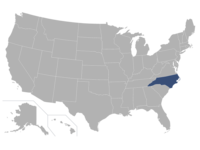
Raleigh, NC