UAW members recall tense encounters with Mike Rogers during his time in Congress
Oct 15, 2026 | 10:41 am ET
Description
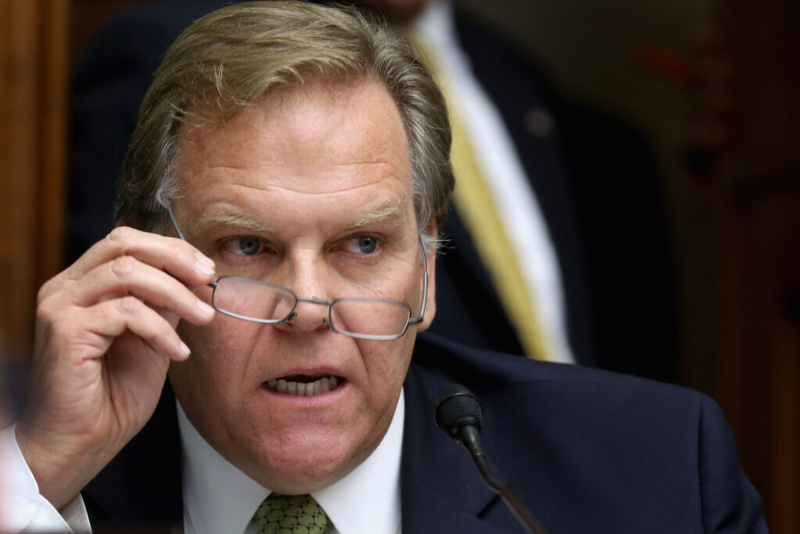
Then-House Energy and Commerce Committee member Rep. Mike Rogers (R-MI) at a hearing October 30, 2013 in Washington, DC. (Photo by Chip Somodevilla/Getty Images)
As Mike Rogers courts Michigan voters in his bid for the open U.S. Senate seat, members of Michigan’s largest union describe a strained relationship with him when he was last in Congress.
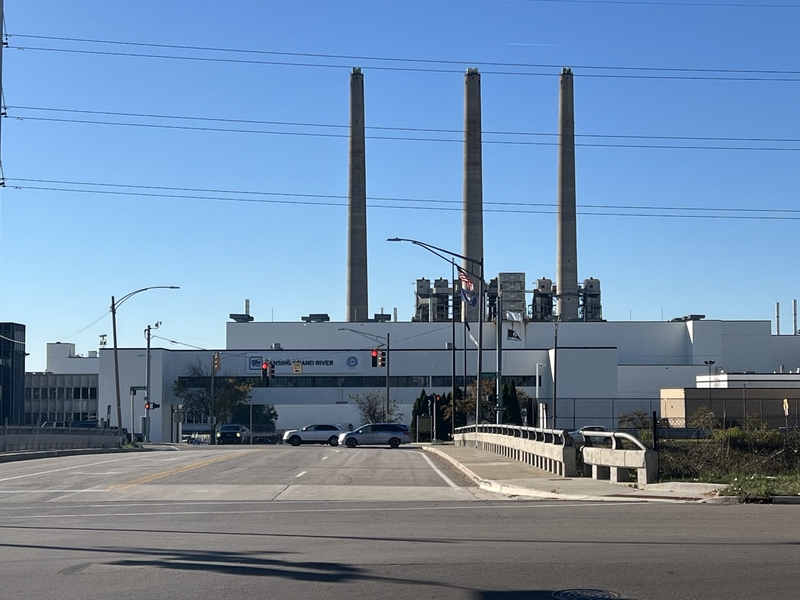
Rogers represented the 8th Congressional District in the U.S. House from 2001 to 2015, which covered parts of Mid-Michigan. That district encompassed the General Motors Lansing Grand River Assembly plant that employed hundreds of United Auto Workers members, including during the 2008 financial crisis, a contentious time for the auto industry in which new vehicle sales fell 40% while employment dropped by 45%.
In the Senate race, the UAW and other unions including the AFL-CIO, the AFT, and Michigan Teamsters Joint Council No. 43 have endorsed Rogers’ opponent, Democratic nominee Abdul El-Sayed. Rogers, meanwhile, has secured endorsements from the business community, including the Detroit Regional Chamber and Southeast Michigan Chamber of Commerce, as well as a coalition called Auto Workers for Trump.
Active and retired UAW members told Michigan Advance they recall tense meetings with Rogers’ office when they lobbied him in Congress. The UAW’s political arm, the Community Action Program, also known as CAP, convenes in Washington, D.C., every other year and members from across the country meet with legislators to advocate for the union.
In February 2003, Art Reyes II, a former president of UAW Local 651 in Flint, told the Advance that he led a UAW meeting with Rogers as the then-Local 651 CAP Committee chair. According to Reyes, Rogers started the meeting by saying he understood the issues the UAW was facing because his brother worked in the plant. Reyes said he responded by asking why Rogers “supported an agenda that ran counter to his brother’s interests.”
“He did not like that and tried to reiterate a lot of the points – trickle down economics, and you know, the whole rigmarole that … as early as 2003, we had known for quite some time was a failed policy,” Reyes said.
Michigan Advance obtained a letter stored in the Michael J. Rogers Congressional Collection at Oakland University. Rogers donated the collection after he left the House. In the letter, dated June 18, 2003, addressed to then-UAW President Ron Gettelfinger, Rogers writes that some members of the union’s Michigan leadership had been “confrontational” in meetings in his Washington office, which he wrote was “highly disruptive to constructive dialogue.” Rogers then asked Gettelfinger to keep future meetings to four to six people and said he “would wholeheartedly welcome such a discussion.”
Mike Rogers claims he was an assembly line worker. The UAW said that is stretching the truth.
Alyssa Brouillet, communications director for the Rogers campaign, said in a statement to Michigan Advance when asked about the letter and UAW meetings: “The men and women actually doing the work on an auto factory floor don’t want to lose their union-negotiated healthcare to Medicare For All or risk losing jobs because of EV mandates – all of which Abdul is pushing for. What bigger siren do you need to see that Abdul’s base is crumbling?”
Reyes said that while meetings with Rogers’ office became tense, members were always respectful.
“I can say with confidence that President Gettelfinger knows full well the professionalism of the people that are sent to lobby our congresspeople,” Reyes said. “Though we may be volunteers, though we may be frontline workers and activists, we know better than to embarrass or to tarnish the name or legacy of the United Auto Workers.”
Reyes said Rogers’ “unwillingness to be questioned caused a great deal of the conflict, and the fact that we know our stuff” about his voting record and legislative issues.
“I think that he was insulted that we dare ask him questions, that we were prepared with follow-up questions, and it was disruptive only in that the meeting did not follow the agenda that he had set in his mind,” Reyes said.
Reyes pointed to the North American Free Trade Agreement, or NAFTA, noting Flint and Lansing were cities heavily affected by the 1994 trade deal given the big manufacturing bases in both cities. El-Sayed has campaigned on Rogers’ support for NAFTA. Overall, the AFL-CIO has ranked Rogers’ House voting record at 11%, on par with the average rating for House Republicans.
Rogers also publicly opposed the September 2007 General Motors strike, a nationwide two-day walkout. The Detroit News reported that Rogers said he was “very disappointed” that the union could not reach an agreement.
“There were numerous other options to the union that did not involve hurting the paychecks of Michigan families or letting down the future security of their members’ jobs,” Rogers said, according to The News. “As General Motors has recently taken positive steps forward, this decision is a step backward. This strike will not turn one outbound moving van around.”
By 2023, when Rogers last ran for U.S. Senate, he said he supported a UAW strike.
His campaign has also attacked El-Sayed’s record on the auto industry, most notably using past comments in a campaign ad in which El-Sayed said “cars are the modern-day cigarette.”
UAW members recall hallway meetings
Several years into Rogers’ tenure in the House, UAW members said they often met with staffers in the hallway outside his office rather than with Rogers himself. Reyes noted some other Republicans would similarly send staffers when the UAW requested meetings.
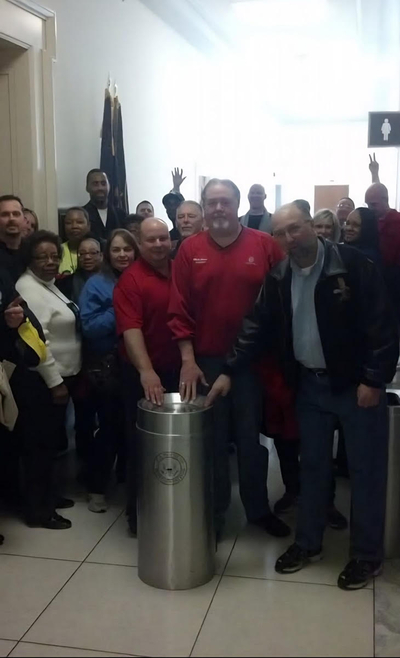
Mike Huerta, now an international UAW staffer, said he spent more time with the trash can outside Rogers’ office than he did with the representative.
“The arrogance to say ‘Please stop sending these workers to me. Please stop sending middle-class folks to discuss their problems,’” Huerta said. “He doesn’t want any part of that. All he wants to talk to is somebody who can feed his campaign coffers.”
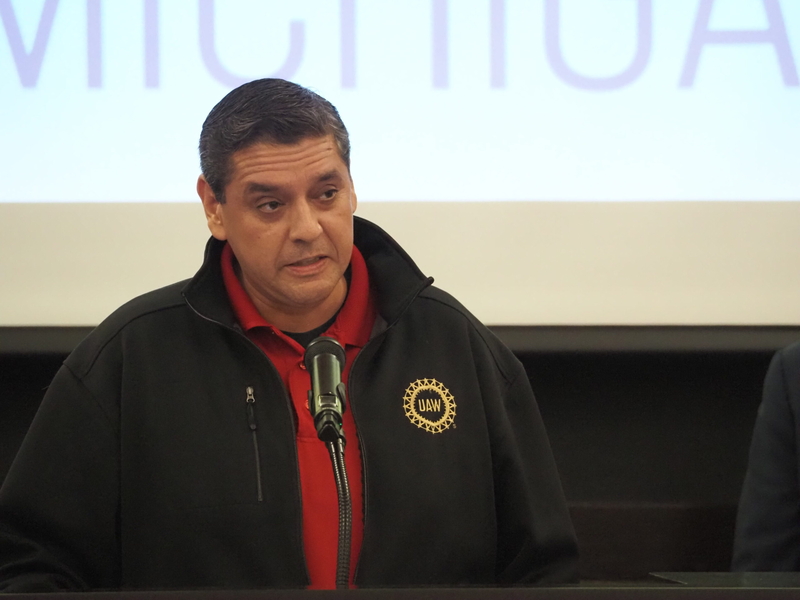
UAW member Julie Hartshorn, who said she didn’t see the inside of a congressional office until Elissa Slotkin was elected, also remembers standing in the hallway outside Rogers’ office.
“As a member of Congress, you should be willing to talk to people that you know you might not [agree with], but that’s an avenue of conversation,” Hartshorn said. “That’s how you still represent those people.”
Hartshorn said she has knocked on hundreds of doors for UAW-endorsed candidates and the response has been mostly positive.
Mike Green, who joined GM when he was 17 and worked there for 39 years before retiring, said UAW members would try to meet with different representatives “so our voice would be heard.”
“We went there to meet with our representatives, and we were more received from everybody else other than him. It was like he never had time,” said Green, who was president of UAW Local 652 in Lansing.
Dean Poggiali, president of UAW Local 724 in Lansing from 1999 to 2017, recalled that, during CAP conferences, he often met with staffers in the hallway when seeking a sit-down meeting with Rogers.
“It was with staffers who really didn’t have a lot of knowledge of what some of the issues were that we were wanting to bring up at the time.”
In the current Senate race, Reyes said he sees a “clear contrast between the two candidates regarding their respect for working people.”
“We’re talking with [UAW] members, and we get some resistance from individuals who cannot see past the difference in religion. I believe that’s a bigoted opinion,” he said.
“But the flip side of that, and it’s something that I’m seeing more of, is your non-regular voter, the low propensity voters … especially young people. They are fired up.”
Lansing, MI