Tribal chairs tell RFK Jr. they need federal resources to improve their own healthcare
Nov 05, 2026 | 9:12 pm ET
Description
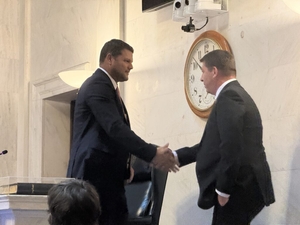
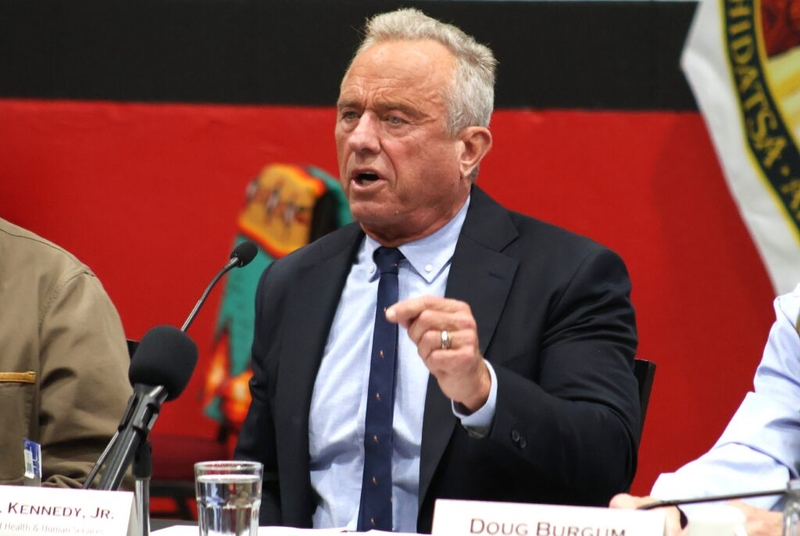
Health and Human Services Secretary Robert F. Kennedy Jr. speaks during a roundtable discussion with North Dakota tribal leaders at United Tribes Technical College on Nov. 5, 2026. (Photo by Michael Achterling/North Dakota Monitor)
Native American communities experience some of the highest disparities in healthcare in the country. Tribal chairs are hoping to work with U.S. Health and Human Services Secretary Robert F. Kennedy Jr., who visited North Dakota Thursday, to remedy that.
A major theme of the tribal chairs’ comments Thursday was the need for the federal government to provide the necessary resources to support local tribal solutions, not to impose solutions crafted in Washington, D.C.
“We have survived generations of policies that attempted to diminish our identity, diminish our lands, and take our sovereignty,” said Lonna Street, chair of the Spirit Lake Nation. “We are not simply asking for the healthcare funding. We are advocating for the health and the dignity and the safety of the future of our Native nations.”
Soil health key to improving human health, RFK Jr. says in visit to North Dakota ranch
Garret Renville, chair of the Sisseton-Wahpeton Oyate, said the trajectory of chronic health problems in tribal communities is headed in the wrong direction, and the federal government needs to redesign Indian Health Services, an agency under Health and Human Services, to meet the challenge.
“Are we willing to fundamentally change the role of IHS from an agency that administers healthcare for Indian people into an institution that helps tribal nations build and govern their own healthcare systems?” Renville asked.
Kennedy agreed and said “we need to overhaul” the Indian Health Service to better support tribal governments’ local efforts, rather than directing everything from Washington.
“I think that gives them agency, gives them a sense of control, gives them the ability to make decisions about their own communities on a day-to-day basis,” Kennedy said. “When the tribes run their own affairs, they do it much better than we do.”
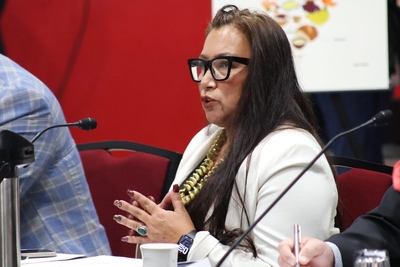
Kennedy was accompanied by Interior Secretary Doug Burgum, and Sens. John Hoeven and Kevin Cramer, and the state’s lone U.S. House representative, Julie Fedorchak. He said they were there to listen.
“We need you to tell us what you need, and we are going to deliver it,” Kennedy said.
Street and the other tribal leaders emphasized that healthcare is tied into a variety of topics, from public safety to economic opportunity, that tribal nations need help with and that everything is tied together.
“When one child cannot access adequate healthcare, it affects our entire community. When a mother can’t receive proper prenatal care, our entire community is affected,” Street said. “And when a family struggles with addiction, diabetes, unemployment, or inadequate housing, our entire community is affected.”
Street cited a variety of peripheral issues that affect health in tribal communities including unequal funding for education, public safety issues like drug crime, unsolved cases of missing and murdered Indigenous people and a lack of jobs and economic activity.
She also said there are workforce shortages for healthcare facilities that already exist, a lack of housing for the professionals they recruit, and that funding for the Indian Health Service budget is $8 billion even though “estimated need exceeds $50 billion annually.”
“These are not separate issues,” Street said. “They’re all connected.”
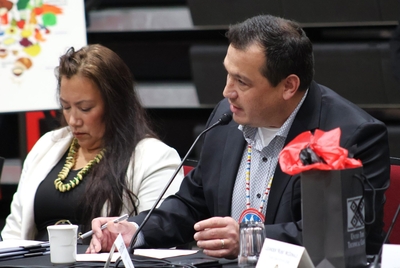
Steve Sitting Bear, chair of the Standing Rock Sioux Tribe, said his nation has created new initiatives for a variety of areas, from economic development to public safety and housing, because all of those issues affect the health challenges faced by tribes. Now they need the federal government’s support.
“Our health challenges and problems are directly tied to the economic conditions we were subjugated to,” Sitting Bear said. “We are taking the necessary steps to do what’s needed to be done. We’re just asking for Congress, for the heads of the departments, to do the same.”
Mark Fox, the outgoing chair of the Mandan, Hidatsa and Arikara Nation, said Kennedy’s ideas are often outside the box. That’s what tribal communities need, even if the HHS secretary receives criticism from others, Fox said. He cited Albert Einstein and said trying the same thing over and over again is the definition of insanity.
“The programs that have been provided, instituted through federal policy in Indian Country, is a reflection of insanity,” Fox said. “Because we do the same thing over and over again, and it doesn’t change. The problem still exists or gets bigger.”
A consistent need cited is help with addiction recovery, substance abuse and mental health services in tribal communities. Tribal leaders said they’ve made strides talking addiction, but significant challenges remain.
“The drugs are killing us. They’re literally killing us,” Fox said. “We need help. They’re asking you for help. We can’t fund these things on our own.”
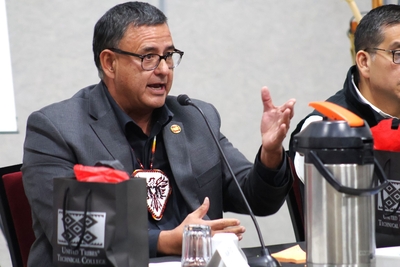
Fox hailed the success of the MHA Nation’s Good Road Recovery Center. Chris Parisien, a policy specialist for Turtle Mountain Band of Chippewa filling in for Chair Jamie Azure, said his community has operated an addiction recovery facility for a little more than a year and they’ve seen good results so far. But he said that isn’t the only issue Native Americans are facing.
“Our life expectancy is 20% lower than other North Dakotans, and that is because of lack of meaningful access to preventive medical care,” Parisien said.
Kennedy touted his agency’s accomplishments for tribal communities in the nearly two years since he was confirmed as secretary and his desire to follow through on his family’s decades-old commitment to helping right the wrongs done to Native Americans by the U.S. government.
“My father had a belief that our country would never live up to its role as an exemplary nation, the exemplary democracy, if it didn’t go back and remedy the original sin that defined our country and allowed us to flourish and to prosper,” Kennedy said. “Which was the treatment, the genocide of the people who were here before us.”
North Dakota Monitor reporter Jacob Orledge can be reached at [email protected].
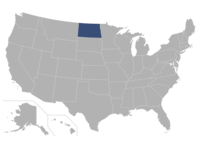
Bismarck, ND