Feds approve Nebraska’s request to block TANF funds for drugs, psychics, music, porn and more
Oct 13, 2026 | 3:21 pm ET
Description
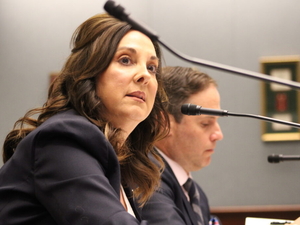
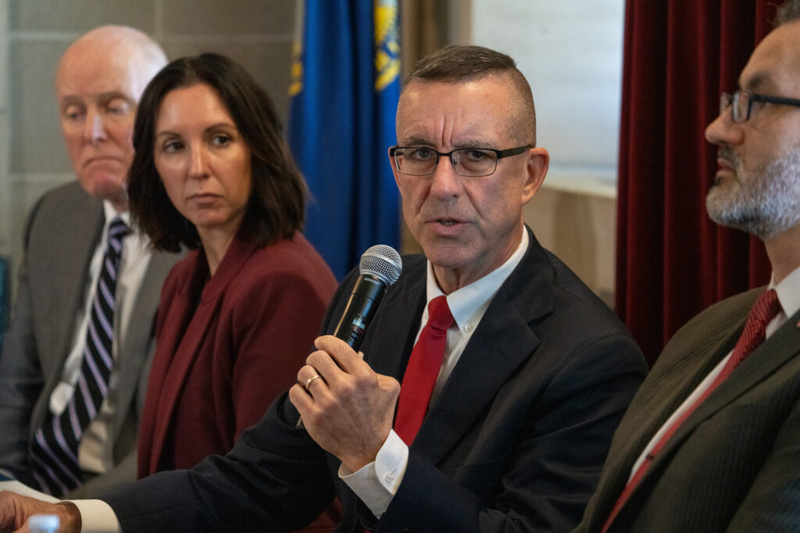
CEO Steve Corsi of the Nebraska Department of Health and Human Services at an inaugural public roundtable of Nebraska Gov. Jim Pillen's cabinet. April 20, 2026. (Zach Wendling/Nebraska Examiner)
LINCOLN — The federal government has approved Nebraska’s request to bar temporary financial assistance for tobacco, tattoos, psychic readings, video games and other “inappropriate and nonessential purchases.”
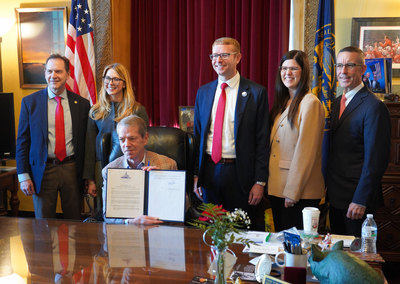
U.S. Assistant HHS Secretary Alex Adams, head of the U.S. Department of Health and Human Services’ Administration for Children and Families, approved the request Tuesday, just four days after Nebraska Gov. Jim Pillen filed to change Nebraska’s participation in the federal Temporary Assistance for Needy Families’ Aid to Dependent Children benefits.
“ACF looks forward to partnering with governors and state agencies across the country to develop and implement common-sense EBT (electronic benefit transfer) purchase prohibitions that strengthen program integrity; protect taxpayer dollars from waste, fraud and abuse; and help ensure that TANF assistance is used for lawful, appropriate and effective purposes,” Adams wrote in a Tuesday letter to Pillen.
TANF helps low-income families with children pay for necessities, such as rent, childcare and utilities, as the families participate in workforce engagement programs. The benefits are provided through a prepaid debit card or direct deposit into a bank account.
Adams, speaking with the Nebraska Examiner on Tuesday, said “hats off” to Pillen for the changes. Other states are in “active conversations” to pursue similar action, Adams added.
“Really is a testament to Governor Pillen’s leadership to be the second state to do this,” Adams said. “I know it will for sure inspire others.”
A Nebraska DHHS spokesperson said that, as of January 2026, 2,856 Nebraska households were on TANF. The average benefit is $470 a month. The average household size is 2.7 people.
Pillen said in a Friday statement: “While Nebraskans are more than willing to help families in need, allowing hard‑earned taxpayer dollars to be spent on tobacco, gambling and video games is completely unacceptable. The inappropriate use of public funds will end at my direction.”
The state DHHS spokesperson said the agency will work toward implementation immediately, including engaging with the state’s ReliaCard vendor to implement the merchant category list. The agency will have a firmer timeline in the coming weeks for completion.
New purchase restrictions
Under federal law and prior Nebraska regulations, the temporary funds could not be used for liquor stores, casino gambling or retail stores providing adult-oriented entertainment.
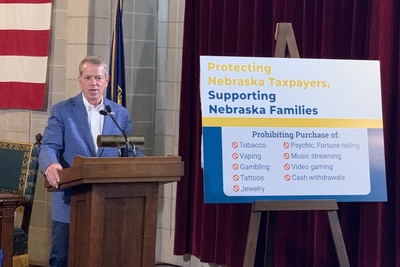
With the accepted Nebraska TANF plan amendment, the list of prohibited purchases will soon expand to what Pillen’s office described as “inappropriate and nonessential purchases”:
- Tobacco, nicotine, vaping and other associated products.
- Drugs, intoxicants and related products.
- Pornography, sexually explicit materials and adult-oriented goods or services.
- Entertainment goods, subscriptions and services including entertainment tickets, theme parks and similar subscriptions or memberships.
- Body art, body piercings, cosmetic services and luxury items such as tattoos, spa services and tanning.
- Psychic, fortune-telling and divination goods or services.
- Political contributions.
- Lottery tickets and entries, sports wagers and bets.
- Music, video and gaming streaming subscriptions.
- Video games, in-game currency, downloadable content and virtual goods.
- Jewelry and luxury watches.
Cash withdrawals of such funds will also only be permitted through cash-back transactions at financial institutions or SNAP-authorized retailers.
TANF now 30 years old
This summer, TANF celebrated its 30th anniversary, and HHS brought back some of the original architects, including former House Speaker Newt Gingrich of Georgia and former Wisconsin Gov. Tommy Thompson. Adams said part of that conversation was that TANF was successful federally but that the feds wanted to “reinvigorate” state leadership in the program.
“It’s been a tremendous success in reducing caseloads and things like that, but it also, over time, has become a little bit stagnant,” Adams said.
The push was in part to get TANF “back to its basics,” which Adams said is a “temporary bridge” for families to get back into the workforce, not a “catch-all” for the items soon to be banned. Adams said he’s aware of other states in “active conversations” to pursue similar action.
Florida became the first state to request such restrictions in late August.
Asked whether Adams’ agency would pursue congressional changes, Adams said TANF, by design, has always been intended to give states the creative control and flexibility they desire, an approach HHS has continued.
A ‘stigma’ of federal help?
Nonprofit Nebraska Appleseed said Friday that the state’s roughly 2,700 families use the assistance for basic necessities and that Pillen’s action is “an invention that stigmatizes low-wage parents and families in Nebraska who are working hard to get by. And it further shows the depth of disconnection leaders have with real Nebraskans.”
Said the nonprofit: “Today’s efforts from leaders in Nebraska are detached from reality and the opposite of what we need in Nebraska right now.”
Adams said the changes are the opposite and emphasize TANF is a hand up, not a handout.
“I think that takes some of the stigma away,” Adams said. “I think when things are seen as short-term bridges, I think when they’re seen as covering basic, legitimate needs, not superfluous purchases, I think that helps legitimize a program.”
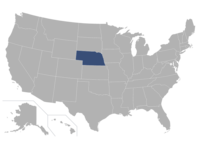
Lincoln, NE