Amid Wyoming’s mental health struggles, governor hopes successor prioritizes the issue
Oct 13, 2026 | 6:24 am ET
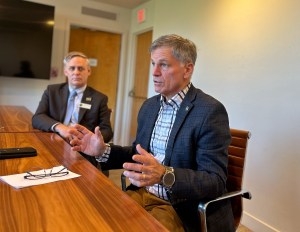
Description
Photo courtesy of WyoFile
JACKSON—Wyoming is among five states with the highest suicide rates in the nation. In recent years, it has fallen from No. 1 to the second and third spots.
“It’s got a long way to go,” Gov. Mark Gordon told WyoFile on Friday. That the state is no longer in the top spot, however, is proof to him that the mental health initiatives he has championed in office are moving the needle. Campaigns to destigmatize mental illness are shifting the culture, access is improving and more people are seeking the care they need, he said.
With just three months left in his second term, Gordon, who did not run for reelection, said he hopes the candidate who succeeds him on Nov. 3 continues to tend the effort.
Republican primary winner Eric Barlow faces Democrat Ken Casner and Constitution Party candidate Rebecca Bextel in the general election.
“I would hope the next administration would understand that we’ve now got little flowers growing all over the state,” Gordon said.
Those “flowers” were featured last week during a mental health conference Gordon hosted in Jackson. The Western Governors’ Association’s Health Beyond Healthcare summit brought together government administrators, researchers and industry professionals to discuss mental health policy lessons and successes. The summit came on the heels of a similar Jackson gathering, the Intermountain West Youth Mental Health Symposium, organized by the Ortus Foundation.

Along with celebrating small gains, participants agreed that Wyoming and Western states have much work to do to meet steep challenges around mental health access in rural states. Workforce shortages, youth suicide prevention and an uptick in demand were among the issues addressed.
Cowboy up, cupcake
Wyoming consistently ranks among the worst states in terms of higher prevalence of mental health and substance use disorders and lower rates of access to care.
Growing up in Wyoming, Gordon said, cowboy culture dictated things like good manners, respect and the willingness to help neighbors in need. He posited that too much emphasis in the broader culture on the rugged individualism element of cowboys tipped led to a growing belief that asking for help is a sign of weakness.
By the time he was elected in 2018, Wyoming led the nation in suicide rates, and it was apparent to Gordon that nearly everyone experiences or knows someone who has experienced trauma, loss or mental illness. The state could do better, he recalled thinking at the time.
Back then, he said, “This was a topic nobody wanted to talk about.”
In July 2022, Wyoming and the rest of the country transitioned to a uniform 988 number for suicide lifeline services. Gordon championed an effort to offer full-time Wyoming-based coverage so that callers would end up on the line with individuals who understood the nuances of life in this rural state.
He was also instrumental in launching a mental health policy roadmap, a public awareness campaign to destigmatize mental illness and suicide, annual meetings and efforts to better fund behavioral health resources.
The Wyoming Legislature in 2021 redesigned Wyoming’s behavioral health system with a goal of focusing resources on those in highest need, such as acute psychiatric patients and children. Gordon supported that.
“In my time, we’ve really tried to take this on,” he said.
So are the efforts resulting in change? More people are accessing behavioral health resources, officials report, including via telehealth expansion. And the state’s suicide rate has fallen.

But pain points still exist, with statistics painting a picture of huge swaths of unserved patients and critical provider shortages.
The issues are shared by many Western states, and the Health Beyond Healthcare event in Jackson was designed to offer participants opportunities to learn how to tap into federal resources, develop new funding streams and implement effective policy.
Experts from across the country sat on panels to discuss issues like the effects of the outdoors on mental health, suicide prevention, gun safety measures and philanthropic opportunities. The Western Governors’ Association will form recommendations based on the discussions for the members to consider adopting.
Alarm bells
Though much of the summit focused on Western or national policy, several Wyoming-specific tidbits stood out.
Central Wyoming Counseling, based in Casper, is experiencing major spikes in demand, CEO Jim Cowser said.
“This year, we saw two and a half times more clients than three years ago,” Cowser said. The clinic is experiencing upwards of 200 walk-ins a month, he said, and its call volume is ballooning.
“Some of the calls are duplicative, but the sheer demand in the area is overwhelming for our workforce,” he said.
Blue Cross Blue Shield of Wyoming has also observed growing use of mental health and substance use disorder services in the state, said Amy Scharaswak, director of population health for the organization. One alarming area experiencing the opposite trend has been in postpartum depression screening and counseling, she said, which may be attributed to the state’s overall erosion of maternity care services.
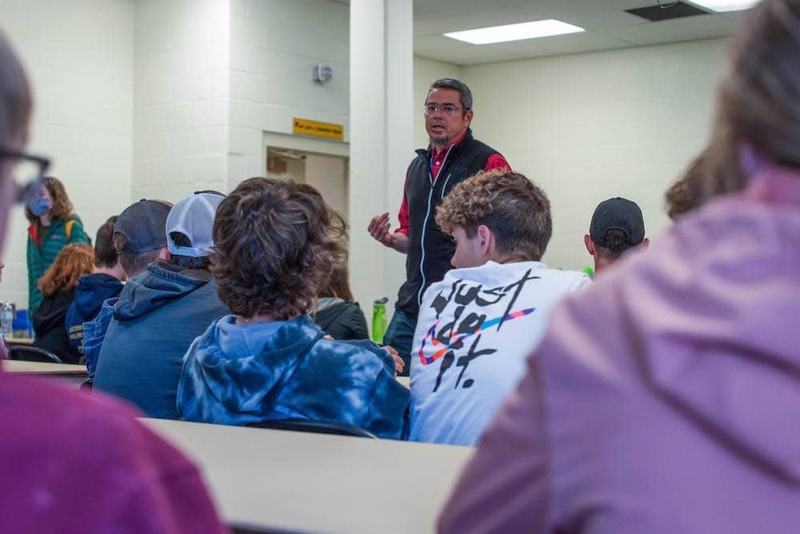
Along with the provider side, speakers addressed ways to ensure access to mental health resources for a workforce of teachers, lawyers, miners, construction workers, emergency responders and others.
Mike Wandler, CEO and president of the heavy machinery design and manufacturing company L&H Industrial in Gillette, has invested a great deal of money to hire a mental health coach to counsel employees and their family members, he said. The result, he reported, is an extremely low turnover rate and healthier, happier workers.
“There is a massive return on investment,” Wandler said, “but you have to do it for the right reasons.”
His sentiment underscores a theme many circled back to: Mental health improvements can contribute to a healthier overall economy.
Such solutions often require money, and one opportunity for Wyoming to tap into funding is the federal Rural Health Transformation Program, a $50 billion, five-year program meant to bolster rural health systems. Wyoming was awarded $205 million in year-one program funds this summer.
The state plans to invest about $38 million in Rural Health Transformation funds annually into workforce development, including programs focused on behavioral health, Wyoming Innovation Partnership Executive Director Lauren Schoenfeld said. But in the country’s least-populated state, where more than 70% of youth leave by age 25, turning the trends around won’t be easy, she added.
“We have some unique challenges that are amplified by the ruralness of the work that we’re doing, and so I think we have our challenge cut out for us,” Schoenfeld said.
Cheyenne, WY