In-home program helps 2,800 new SC moms and babies. Advocates want it to continue.
Oct 12, 2026 | 12:35 pm ET

Description
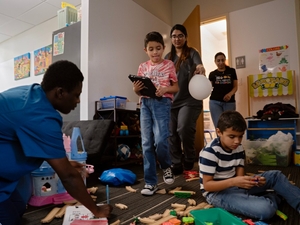
The federal Maternal Infant and Early Childhood Home Visiting program is up for reauthorization in 2027. South Carolina advocates are pushing early to keep the program going. (File photo/Getty Images)
When Sanquinita Martin visits the home of new parents in the Upstate, she acts as an extra set of eyes, encouraging parents and answering their questions as they learn to care for their newborn or toddler, “like an outside person looking in, and it’s not your mother-in-law.”
She’s part personal coach, part cheerleader — whatever that parent needs — as part of the federal Maternal Infant and Early Childhood Home Visiting program.
Martin, who works at the Parenting Place in Easley, and other advocates see the benefit the program brings to these parents and want to see it continue as it comes before Congress next fall for reapproval and funding. And while the renewal deadline is a year away, they’re championing it now in an effort to keep funds flowing uninterrupted to the growing effort.
That’s especially important in South Carolina, a state that consistently ranks near the bottom for both infant and maternal mortality — 43rd for infant death rates and 40th for maternal death rates, according to the March of Dimes 2025 report.
Home visits can start ahead of the actual due date for mothers-to-be. The visitors help pregnant women get to doctor’s appointments, to include arranging transportation. They also connect them with available benefits to ensure they’re getting prenatal vitamins, nutritional food and other health needs, such as help to quit smoking that could harm their pregnancy.
It’s all in an effort to help the women carry their unborn baby to term.
In 2024, the most recent year for data, 6,844 babies were born a month or more early in South Carolina. That’s a rate of 11.6%, compared to 10.4% nationally.
And more than 31 in every 100,000 pregnant women died due to complications during pregnancy or childbirth. The national number was more than 23.
As maternal mortality rises, SC report suggests ways of increasing health care access
The rates were even higher for Black mothers and those on Medicaid, the federal health insurance program for low-income families.
After the baby is born, a home visitor keeps coming for as long as the new parents wish — up until the child turns 3 years old.
The visitor again makes sure the mother and baby are making it to all doctor’s appointments. They support mothers suffering from postpartum depression. They help with breast feeding and sleep schedules and anything else a parent says they’re struggling with.
“It’s an intensive service — one that evolves as the child grows and develops, and you encounter different challenges along the way,” said Cathy Ramage, the state’s home visiting director.
In South Carolina, seven in every 1,000 infants dies before their first birthday, compared to a national rate of 5.6. Most often the cause in unexpected or unknown or involves suffocation from bedding in the crib.
Home visitors aim to prevent these deaths by making sure infants have a safe place to sleep and parents are coping with the stresses of raising a newborn.
And as the child grows, they guide the parents as they interact and play with their children in ways to help the child learn. They also screen for any delays in the child’s development and refer them to treatment if necessary. This ensures children won’t fall behind when they reach school age.
“I highlight the parents’ strength during this time,” Martin said. “I can say, ‘Hey, I noticed that she reached out to you and you picked her up right away. She knows that you’re there for her.’ “
“Because sometimes parents don’t think of the small things,” Martin added. “So I’m intentionally supporting the cue, the responsiveness, the attachment, the development. It’s an accumulation of all the small moments, the listening, the encouraging, the educating, the observing, connecting and helping parents believe in themselves.”
And when Hurricane Helene swept through the Palmetto State two years ago, hitting the Upstate where Martin lives especially hard, she messaged the families in her care ahead of time to make sure they were prepared with fresh water, shelf-stable foods, flashlights and batteries, but also stocked up on diapers and formula.
Martin has between 16 and 20 families she’s visiting at any given time.
“If home visiting didn’t exist, I think we’d be missing the opportunity to reach families before they have a crisis,” she said. “We’d be missing those early conversations, those moments where the parents say, ‘I’m struggling. I’m not sure what I want to do or what to do.’”
Fortunately, Ramage said the home visiting program has enjoyed strong, bipartisan support in Congress since its inception in 2010, as well as the backing of administrators within the U.S. Department of Health and Human Services.
When Congress last reauthorized the program nearly five years ago, it also increased funding to the program for the first time in a decade. It also required states to chip in funding for the first time — $1 for every $3 of federal money.
Today, the program reaches 2,800 families in South Carolina, Ramage said. It will add about 200 more over the next year.
That’s triple the number of families compared to 13 years ago, when Ramage first started with the program.
But it’s also only about 10% of the families that qualify for aid.
“We could be serving just so many more families that need this type of support,” Ramage said.
Especially those living in rural areas with no birthing hospital nearby.
SC rural hospitals, doctors’ offices receive share of $200M in federal funding amid Medicaid cuts
Qualifying for the program involves multiple risk factors.
Calculations start by identifying counties with higher-than-average rates of infant mortality, low-birth-weight infants, poverty, crime, domestic violence or high school dropouts. Priority then goes to families living below the federal poverty level, pregnant women under the age of 21, families with a history of child neglect or enrollment in child welfare programs and those with past drug abuse.
Ramage said it’s important to begin conversations about reauthorization now, before expiration on Sept. 30, 2027, because a funding interruption disrupts the program and can throw off state budgets.
In the past, when Congress has had to keep the program running with bridge funds rather than a full, multi-year reauthorization, it’s led to staffing shortages as home visitors, unsure of their next paycheck, left to find other work.
Thomas Engels, administrator of the federal Health Resources and Services Administration which operates the program within the larger Department of Health and Human Services, spoke to these staffing challenges in a Dear Colleague letter last week.
“The effectiveness of home visiting programs depends on a skilled, stable, and well-supported workforce. Replacing a single home visitor costs a local program an average of $60,000, more than the average home visitor’s annual salary, and these losses are increasing,” he wrote. “More than half of home visiting programs experience at least one staff departure each year, and an estimated 20% to 29% of home visitors leave the field annually.”
Engels went on to express the Trump Administration’s support for the program as it heads back before Congress in the coming year.
Columbia