Digital system will help some WV Medicaid recipients navigate coming work requirements
Oct 12, 2026 | 6:00 am ET
Description
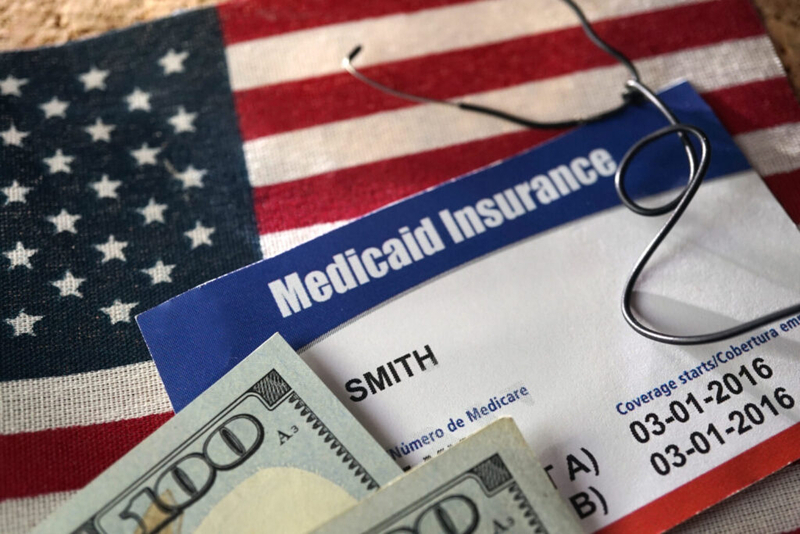
Starting in January, work requirements will go into effect for many Medicaid recipients. (Photo via Getty Images)
With work requirements going into effect for many Medicaid recipients next year, one of West Virginia’s four managed care organizations is offering a new digital platform designed to make it easier for them to keep up with paperwork.
Highmark Health Options West Virginia is partnering with Fortuna Health, a program described as “Turbotax for Medicaid,” that’s designed to help them navigate the new rules. The platform will be available to the 20,000 state Medicaid recipients that have HHO as their managed care organization.
Jason Landers, president and CEO of Highmark Health Options West Virginia, said that “without question,” people who are eligible for Medicaid will lose their health coverage, at least temporarily, after the work requirements go into effect.
“We are very concerned, and we know that people will lose coverage that are eligible,” Landers told West Virginia Watch. “And probably a lot of people that are even engaged in care management programs around diabetes management, or hypertension, or any number of things — they will lose coverage. They’ll regain it eventually, but they will lose coverage.
“That’s not a provocative statement. That’s a statement of fact,” Landers said.
With some exceptions, people 19 through 64 on expanded Medicaid will be required to work, train or volunteer at least 80 hours per month in order to keep their health coverage. Expanded Medicaid — available to low-income residents who earn up to $45,540 for a four-member family — covered 156,000 state residents as of earlier this year.
More information about the work requirements is available through the state’s website, wvmedicaidhelp.org.
Medicaid will also increase the number of times it redetermines a person’s eligibility for the program from once to twice per year.
An analysis by the state Department of Human Services earlier this year found that about 33,000 West Virginia residents would be affected by the changes. Policy analysts say eligible people will lose their health coverage because of the increased paperwork requirements.
The Medicaid changes are part of Republicans’ One Big Beautiful Bill Act, or H.R. 1, which made historic cuts to healthcare and food assistance. President Donald Trump signed the bill into law in July 2025.
Landers said the majority of Medicaid recipients who use Highmark have jobs, though they’re not traditional ones with employer-sponsored health coverage. An estimated 20% of HHO’s low-income Medicaid recipients will lose coverage, he said.
“These are 20% of people that are deemed eligible,” he said. “They are eligible. They meet the requirements, but they will lose their coverage through an administrative decision because they likely won’t all redetermine.”
Landers said redetermining for Medicaid can be a “daunting” and “scary” task, much like filing taxes. He compared the Fortuna platform to what TurboTax does for filing taxes. Users answer a series of questions and the program guides them based on their answers.
“They’ve implemented a lot of really smart AI that makes it feel conversational, almost,” he said. “Something as daunting sounding as ‘I’ve got to redetermine for my Medicaid’ becomes a very streamlined, simple sitting-in-your-living-room process, which is really nice.”
A spokesman for Fortuna Health said the platform will be a “digital Medicaid navigator” for Highmark Health Options members. The company will support members in three ways:
- Targeted renewal outreach and reminders through email, SMS and Voice AI
- Guided navigation through the redetermination process and
- Multi-lingual live agent support from 8 a.m. to 8 p.m. local time during the week. Members can get answers about renewal status, deadlines, required documents, income calculations, and related questions, he said.
The Fortuna program will steer people to PATH, West Virginia’s online management program.
Medicaid recipients don’t need to do anything immediately in order to stay on Medicaid, Landers said. Fortuna will reach out to them about redeterminations.
“We know the dates that they’re required to do redetermination, so we’ll obviously focus our efforts around the dates for those specific members,” Landers said. “We’re not going to annoy members that don’t need a redetermination… We’re going to focus our efforts around the time that they actually need to do this interaction.”
Charleston, WV