National scrutiny on mail ballots changed Utah’s elections system
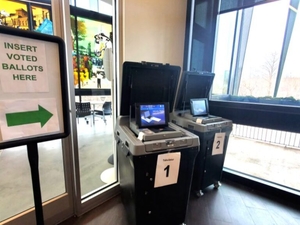
All Utah voters have automatically received a mail ballot since 2020. The reliably red state had championed universal mail voting. However, with voting under greater national scrutiny, Utah legislators rolled back universal mail voting.
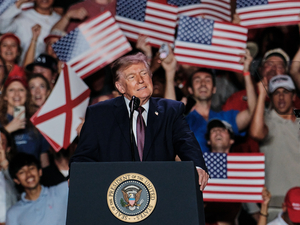
Although he’s recently urged voters to cast their ballots by mail, President Donald Trump has long attacked mail voting, claiming without evidence that it is a source of election fraud.
Utah Republican Lt. Gov. Deidre Henderson, the state’s top election official, has recently spoken out about concerns over the Trump administration’s ‘gamesmanship’ with voting, saying it keeps her up at night. Democratic Salt Lake County Clerk Lannie Chapman says those same fears have woken her up at 3 a.m. in a panic.



In Episode 49, you’ll hear from Chapman, whose office serves a third of Utah’s total voting population. According to Chapman, 90% of people who participate in any given election in the county use their mail ballot. Her priority each election is to have safe and accessible voting, and the 2026 midterms are no different.
You’ll also get a weekly news wrap-up from Evening Wrap newsletter writer Danielle Gaines and Daybreak newsletter writer Madyson Fitzgerald. They’ve got you covered with the latest on: dyed diesel, the battle between the federal government and New Mexico over a border wall and this week's political developments.
Episode produced and edited by Mallory Cheng. Music for Stories From The States composed by David Singer.
Got questions? An episode idea? Email us at [email protected].
Subscribe to Stories From The States on Apple Podcasts, Spotify or YouTube.
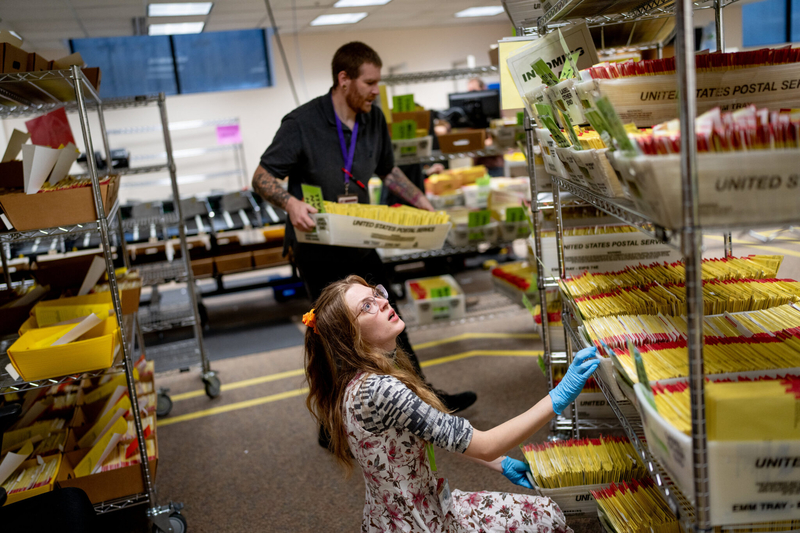
Photo: Elections workers process ballots at the Salt Lake County Government Center in Salt Lake City on Election Day, Tuesday, Nov. 5, 2024. (Photo by Spenser Heaps for Utah News Dispatch)
Stories From The States is a production of States Newsroom, the nation’s largest state-focused nonprofit news organization, with reporting from every capital. At this pivotal moment in American democracy, our veteran journalists from all 50 states are reporting the consequences of government decision-making. By zooming in on one story each week, Stories From The States contextualizes and gives a human voice to what is happening now.
Transcript was created using an automated software.
Chris Fitzsimon
This is Stories From The States. I'm Chris Fitzsimon. Thanks for being here. There's a lot to catch up on this week. First, we'll look at the ever increasing gas and diesel prices and how some states might start allowing the use of dyed diesel. And we'll have a quick rundown of all things politics as November 3rd moves ever closer...
Transcript was created using an automated software.
Chris Fitzsimon
This is Stories From The States. I'm Chris Fitzsimon. Thanks for being here. There's a lot to catch up on this week. First, we'll look at the ever increasing gas and diesel prices and how some states might start allowing the use of dyed diesel. And we'll have a quick rundown of all things politics as November 3rd moves ever closer, and we're checking in with a local elections official in Utah. All voters there have automatically received a mail ballot since 2020. However, with voting, especially mail voting, under greater national scrutiny, Utah legislators decided to change that. The Salt Lake County Clerk's office serves a third of Utah's total voting population, where 90% of the people who participate in any given election in the county use a mail ballot. Coming up, we'll chat with Lannie Chapman about how she's defending her county's voting rights. But first, let's check in on the news with our States Newsroom newsletter authors, Danielle Gaines and Madyson Fitzgerald. Hi, Danielle and Madyson. How are you guys?
Danielle Gaines
Hi, Chris. I'm good.
Madyson Fitzgerald
I'm pretty good.
Chris Fitzsimon
Good. Looks like at least here the fall has arrived. Quite a big change in the weather, although, as we know, a hurricane.
Danielle Gaines
Yes. Yeah. Hurricane is headed for the Gulf Coast in Florida this week, and we're gonna wish them all the best. The state is in full prep mode.
Chris Fitzsimon
Madyson, do you have your Halloween stuff ready?
Madyson Fitzgerald
I do have some of it. I don't want to go overboard, but I did get a bunch of like spiderweb silk to kind of throw all over the place. So we're gonna see how that goes, and also how my dog does with that.
Chris Fitzsimon
Yeah.
Danielle Gaines
Nice. I have only one decoration, but I think it can stand on its own. It's like a child size sequin Rainbow Ghost.
Chris Fitzsimon
Wow!
Danielle Gaines
Ooh, very festive.
Chris Fitzsimon
You're gonna have to start bringing. You guys have to start bringing visual aids to these chats.
Madyson Fitzgerald
Yeah, I was about to say I'm gonna need a picture of that.
Chris Fitzsimon
Well, let's let's talk the news. A lot to talk about. We want to get to politics every week now between now and the election. But let's start with some environmental news. It feels like there's a lot of things happening, especially in New Mexico.
Danielle Gaines
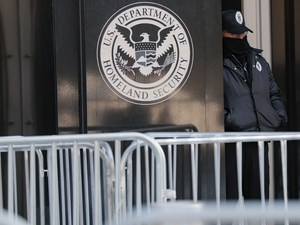
Yeah, New Mexico had quite a bit happening this week. So there's this interesting story about an ongoing fight between federal and state officials down around the site of construction of a border wall. So the U.S. Department of Homeland Security announced this week that they were waiving all New Mexico laws and regulations bearing on water wells that are being used to help construct the wall. So
Chris Fitzsimon
All the laws?
Danielle Gaines
All the laws. So the water is being used for you know to like help with the construction, with dust control, with other things that are needed for the crews down there, and the state actually the office of the state engineer in August had threatened to revoke the licenses of two Arizona contractors who had drilled some of the wells. And Homeland Security Secretary Mark Wayne Mullen said in an announcement in the Federal Register that the drilling of the wells is necessary for an acute and immediate need to construct additional physical barriers, and that they were going to be moving forward. So the state says that they're going to fight it. The attorney for that office calls it outrageous and unconstitutional. It says it violates the 10th Amendment of the U.S. Constitution, if you didn't know what that is, that says that states have the right to regulate publicly owned water, and as we know, water is very scarce in New Mexico and throughout all of the West. So this is a big issue.
Chris Fitzsimon
And it's weird that we haven't heard about the border wall since. I mean, Trump's first term was or his first campaign was all about the building the wall, and we haven't heard as much about that,
Danielle Gaines
Yeah. I mean, it is still, you know, there's still efforts being moved forward by this administration.
Chris Fitzsimon
Well, what about another big theme? Gas prices. This is happening all over the place. Everybody's paying a lot more for gas. Industry and commercial people paying a ton more for diesel, and we have an election coming up. So, Madyson, that seems like a recipe for something.
Madyson Fitzgerald
Yeah, I think it's going to be a good time for voters to come forward and really share how they feel about those high prices. I have a 2012 Honda Accord, and it was like 65 to fill last week. It is a two door, pretty small car, and I was I was so wounded. It was it's it's getting to a point, and if you've been to the gas station, you've probably seen this over the last couple months. Prices are higher than usual, and that's because of the ongoing war in Iran. And so, as a result, state and federal officials are taking steps to lower these fuel prices. I believe last week we talked about states that are dropping their gas tax, but this week President Donald Trump went on a step forward, and he put out an executive order that cuts taxes on diesel. And so, the U.S. Secretary of Agriculture Brooke Rollins said in Iowa that she is urging state governors to follow the president's move to suspend penalties on the unrestricted use of dyed diesel. And dyed diesel is a tax-exempt fuel that's typically only allowed in off-road machinery. So that was very fun to learn this week, but this is in a bid to help farmers and truckers with their transportation costs as fuel prices just get higher and higher. And so Stateline did like a really good run through of all this, and they just said, you know, like if you if you're wondering what red dye diesel is, it's typically only allowed for off highway, agricultural, industrial, and railroad use. Our North Dakota newsroom did a lot of coverage on this as well, but this diesel is not taxed like regular diesel, and so that's kind of why President Donald Trump I think targeted it, and they're urging states to to act.
Chris Fitzsimon
Yeah, I'd never heard of red dyed diesel. All I know about diesel is when you drive by the gas station, there's two prices. One of them is diesel, and I just drove by this morning thinking about talking to you guys, and I think it was like $6.40 a gallon for diesel, which is insane.
Danielle Gaines
Yeah, our Ohio newsroom actually had a story about one economist at least said like you know it could get up to 10 bucks.
Madyson Fitzgerald
Wow.
Chris Fitzsimon
Unbelievable! And now it looks like some states are passing bills, are having legislative efforts, or the governor folks trying to take the state gas tax off temporarily, also right before the election.
Madyson Fitzgerald
Yeah, for sure. And this week, at least, a lot of states are well. Some states already have legislation regarding dyed diesel, but Georgia, Kentucky, Mississippi, North Carolina, several other states moved to suspend penalties for the use of dyed diesel, and so we'll have to wait and see if this actually helps farmers and truckers with their fuel costs. Because there's a lot of other things that play into you know moving packages all the way across the U.S. and agriculture, and there's so we'll see how it actually plays out.
Chris Fitzsimon
One thing confused me about this in North Carolina, they took the they suspended this week the gas tax. They had a one-day legislative session. They suspended the state gas tax on regular unleaded gas. But even with that, or the red-dyed diesel, I mean, it's. The election is less than a month away. It feels like you. I was driving. I noticed there wasn't a giant change in diesel prices or gas prices here in a day. It seems like it's a. If they were going to do this, I wonder why they didn't do this this summer.
Madyson Fitzgerald
That's a good point too.
Danielle Gaines
Yeah, the North Carolina debate is really interesting because you know Republicans and Democrats are clashing on who should get credit and who should do more for affordability, which I think is really interesting. We saw the same thing play out in Ohio, I think one week ago, two weeks ago, where V is trying to take credit, but Democrats are like, hey, you know, we've been talking about affordability, so it's creating a real clash. And I will say, one state, Indiana, suspended their gas tax months ago. I traveled across the country, and we fueled up in Indiana four times on purpose because it made such a difference in the overall price of a tank of gas, but they are facing, I think, a $1 billion, more than a billion dollar, you know, budgetary issue now to make up for having suspended that for so long.
Chris Fitzsimon
And in most states, I know in North Carolina and other states, what that really means is that there are a lot of road projects that will lose that money for a while, and they'll things will be delayed, be delayed, and some people will be complaining that a highway project takes another month or a year or whatever it is because this money's not well.
Danielle Gaines
That's a problem for a different election. That's the issue.
Chris Fitzsimon
Well, let's. You mentioned the election. Let's. I did too. Let's jump into it. It feels like, gosh, things are insane. I felt like every. I know I'm exaggerating, but I felt like every state in the country had a debate this week about with somebody.
Danielle Gaines
So many debates, so much good information. You know, for some states, it was the one and only. So, in Iowa, where it's going to be potentially a close governor's race, they had their one and only debate. Lots of U.S. Senate debates, which are really interesting. One major theme that I saw was, you know Democrats feeling very confident, which you know I'd caution the party they felt confident in the past, but we had a lot of stories about that. The top Democratic U.S. Senate PAC committed airtime, commercial time, ad time in nine states, and then they're keeping a close eye on some other potential Republican targets. So, the nine states they committed to were Alaska, Georgia, Iowa, Maine, Michigan, New Hampshire, North Carolina, Ohio, and Texas. And they're trying to show that they are competitive in typically Republican places. Those are races that are listed as toss up or leaning Democrat, but they said that they're also going to keep their eye on Florida, South Carolina, Mississippi, and Kansas, so that you know could determine control of that chamber. We had a story about the House DCCC feeling very confident that they'll gain a majority as far as the House goes, and then Stateline had a great look at governors' races. So Republicans have had a hold on state power for several years, and so Stateline had a look at what could happen with governors' races this year. So Republicans. Currently, it's almost 50-50, but Republicans hold 26 governorships. Voters are going to choose governors in 36 states, and 13 of those are considered competitive. So we'll see what happens.
Chris Fitzsimon
Yeah, it's interesting, and obviously the president is on the road. There's a lot of he's been all over the country, and some people think that that helps the Republicans. Some people think it doesn't because of his of his I guess unpopularity or at least lower approval ratings than he has had, Madyson, what's your take on all this?
Madyson Fitzgerald
It's interesting because I haven't worked as a journalist for a super long time, but this is like I think the third election that I really have been paying close attention to as someone that's a part of the news. I think it's going to be interesting interesting to see how this all plays out. Specifically, as a Gen Z voter, I finally finished registering in Pennsylvania, so it's going to be. You know, I've been talking with my friends a lot about some of the things that we're thinking about when we go to the polls this year. And interestingly enough, States Newsroom and the 19th did a series this week that started this week about Gen Z voters, which for those who don't know, those are people age 14 to 29.
Danielle Gaines
Babies...
Madyson Fitzgerald
And and so this week I think that all these stories did really did offer a really great perspective as to what it feels like to be a young voter right now. One of the first stories from this week was from Maine. It actually talked about how one of the unifiers among Gen Z voters is like the belief that the government is failing to protect and address their needs, especially with the high cost of living, which is obviously a big concern when you're just getting out of college, just getting out of high school, and trying to figure out what to do next. Trump capitalized on this discontent in 2024, which is how he made a lot of gains with young voters, especially young men. But now that his approval rating is going down, especially among Gen Z, I think there's a lot of rethinking as to what they're going to, how Gen Z is going to vote this year. Another story that I thought was really cool was out of Kansas, and it was talking about Gen Z politicians who are also struggling to kind of find their foothold and find their voice within, you know, state houses across the country, and so you have a lot of these politicians who are frustrated because they're working with a party that maybe doesn't understand them or isn't including their voices in some of these important conversations. And this is on the Republican side and the Democrat side, and so I think that this has just been-it's been an interesting line of thinking because a lot of times you don't-I guess people don't focus focus on Gen Z, so it'll be interesting to see how it goes.
Danielle Gaines
And I also just wanted to say, as a reminder, that election day is less than a month away, and these midterms will really guide the next final years of this term of the Trump presidency. Voters are going to weigh in on a lot of consequential policies, and we want you to visit our website for more election news. And you can find your state's voter guide. You can go to our 2026 election coverage page at newsfromthestates.com, and we will get you hooked up.
Chris Fitzsimon
Well, and speaking of Kansas, our one last thing takes us there with a bit of good news, maybe.
Madyson Fitzgerald
Yeah, this was a really cool story that I got to feature earlier this week in Daybreak. But a pair of nonprofit organizations this week announced that they are abolishing nearly 34 million in medical debt for over 21,000 Kansans who meet certain criteria in a large-scale one-time economic relief initiative. So the mechanics of erasing 33.9 million in medical debt in Kansas began with a partnership between two national nonprofits, or the national nonprofit Undue Medical Debt and Somos Votantes Education, which is a nonpartisan civic education organization that donates to abolish the debt. On average, $1 donated erases $100 in medical debt, according to an announcement from the organizations. In Kansas, is it alone? Kansas is the first in the partnership's history to receive statewide medical debt relief for low-income residents. But the two organizations actually abolished 133 million in medical debt for more than 128,000 people in select counties in Nevada last year. And then this year, Somos Votantes is also in partnership with another organization planning to eliminate 240,000 in utility debt in Michigan. Each of these efforts is part of the Education Fund's Seeds of Relief program. So good stuff to see.
Chris Fitzsimon
Yeah, it's interesting too with affordability in the news. One thing that hasn't been talked about as much this election season is people losing their health care can't afford their health care. This feels like obviously an amazing time for organizations to be stepping in and helping.
Madyson Fitzgerald
For sure.
Chris Fitzsimon
Well, thank you both as always for keeping us up to date with what's happening.
Madyson Fitzgerald
Thank you.
Danielle Gaines
Thank you.
Chris Fitzsimon
To stay up to date on the latest news happening in the states, subscribe to Daybreak and Evening Wrap. You can subscribe at newsfromthestates.com/subscribe. Since 2020, all voters in Utah have automatically received a mail ballot. The reliably red state had championed universal mail-in voting. However, with voting under greater national scrutiny. Utah lawmakers rolled back universal mail voting. President Donald Trump has long attacked voting by mail, claiming without any evidence that it's a source of election fraud. Even though he's recently urged voters to cast their ballots by mail and done so himself. Utah Republican Lieutenant Governor Deidre Henderson, the state's top election official, has recently spoken out about concerns over the Trump administration's "gamesmanship" with voting, saying it keeps her up at night. Salt Lake County Clerk Lannie Chapman says those same fears have woken her up at 3 a.m. in a panic. In a moment, we'll chat with Chapman. We'll be right back.
Moses Esheit
Hi, this is Moses Esheit, product associate at State's Newsroom. At States Newsroom, we believe journalism should be fair, fearless, and free. With reporters working on the ground in all 50 states and Washington D.C. we provide nonpartisan coverage of all the state issues that matter most to you. You can subscribe to our work by going to statesnewsroom.com/subscribe.
Chris Fitzsimon
Thank you for being with us on Stories from the States. How are you?
Lannie Chapman
I'm doing well. How are you doing?
Chris Fitzsimon
Good. You have a tough job, the top elections official in the most populous county in Utah. When when you meet people and they don't know you, how do you describe what you do?
Lannie Chapman
I...I make sure that the people, all eligible people in Salt Lake County, let alone the state of Utah, have access and meaningful access to their ballots, so that they can have their voice heard on local and national elections here.
Chris Fitzsimon
And how many folks are we talking about that is under your jurisdiction?
Lannie Chapman
Sure. So the state of Utah has a little under 3 million voters. We represent about a third in Salt Lake County of all active registered voters.
Chris Fitzsimon
Wow! So quite a slice of the state.
Lannie Chapman
Quite a slice of the state.
Chris Fitzsimon
I'm sure you saw comments from the Lieutenant Governor Deidre Henderson recently talking about the what she called "gamesmanship" the Trump administration is using or or talking about with voting rights, and that keeps her up at night. And I wondered, she's a Republican, you're a Democrat. Not that that matters for this conversation, but I just wanted people to know that election officials of all stripes seem to be in a difficult time. How do what what was your reaction to those comments?
Lannie Chapman
It feels reassuring to hear it from other officials. It's not just me. It's not just me waking up in a panic at three a.m. The Republicans are too. This isn't this isn't a partisan issue. This is access issue. This is ensuring that voters who are eligible to participate in elections understand the methods that they can do so and make a plan ahead of time, as opposed to the chaos and confusion, frankly, that we've been inundated with over the last couple months.
Chris Fitzsimon
Yeah, it feels like that. Just you know, obviously, been I'm an old man. I've been voting for a long time, and I can't remember up until the last several years that it was it was really a people I knew weren't really worried about voting. They knew how to vote. They might vote absentee or early voting in some states, or show up at the polls, and it felt like just something we do as as a that as a citizen and don't really think about it and that feels like that has all changed. Do you sense that?
Lannie Chapman
Absolutely, Chris. That is 1,000% changed. It used to just be muscle memory. We knew what we were doing. Legislators would leave us alone for the most part. Of course, we'd keep updated on safety and security issues, but since the 2020 legislative session in the state of Utah, there have been over 60 laws that have passed dealing with election law and election administration.
Chris Fitzsimon
60??
Lannie Chapman
60, six-zero over that many. We have been pivoting since 2020. In large part, there's some very good laws that are ensuring more robust, more transparency, more robust safety and security when it comes to elections and processes, making sure that there's paperwork. Those were, for the most part, codification of what we were already doing, but a lot of this came with unfunded mandates requiring additional tasks and items during a very small amount of time. So election season for Utah, we mail ballots 21 days before election day, and we have a two-week canvass period after election day. So we're not talking a large swath of time that we have to do all of the things that we're now, frankly, federally and state mandated to do, and again, a lot of this was unfunded mandates, meaning that the state was not providing us any additional resources to ensure that this was accomplished and done so successfully.
Chris Fitzsimon
I mean, I guess. A sort more not polite way to say this is that I think we all sort of took voting and our elections machinery for granted, which relied on people like you to do your jobs without interference, and nobody really worried about it. I want to get to mail-in voting. You mentioned mailing the ballots out. That seems to be one giant point of contention. Tell us a little bit about Utah's history of mail-in voting and what the status is now.
Lannie Chapman
So we consider ourselves in Utah, Utahns. We're uniquely Utah. We do things our own way. What works well for us. Over a decade ago, we have started to become primarily a vote by mail state, meaning we will mail eligible voters for the last decade, ballots 21 days before election day that they're eligible to participate in. At the same time, people can also opt to vote in person if that's what their preference is. But that vote by mail has really opened the door to many Utahns that we've noticed. The number of people that participate, the percentage of people that participate, has gone up tremendously from teens to 20% participation, to even in our smaller elections, 40% participation up to 90.11% participation during the 2020 presidential general election, so we've seen a huge increase in the amount of participation. It works well. We have great processes in place in the state of Utah, and a lot of it is state mandated, requiring us to do certain things. But it works well. We we we audit before and after every election, and in between every election, we have third parties auditing us as well to make sure that things are done accurately and we're properly counting people's ballots.
Chris Fitzsimon
So, and then in 2025, the legislature there changed that procedure somewhat.
Lannie Chapman
They sure did. They decided that we should no longer just be a primarily opt-in state. We are now, or we're not primarily a vote-by-mail state. We now, starting in 2029, have to opt in to receive that by mail ballot.
Chris Fitzsimon
When when people were voting largely by mail in Utah for years, and then the questions about election integrity and all the some conspiracy theories. I think some people in earnest were worried. How how did you reassure people that that and how do you reassure people now that voting by mail, however it is done in Utah, is safe and secure, and they should have faith in their elections?
Lannie Chapman
Great question. I was elected in 2022. Prior to being elected as the county clerk for Salt Lake County, I was the chief deputy clerk, meaning I was the right hand woman to my my predecessor. A large part of my job since I've been elected has just been communication. It's been going out, talking to people, giving tours, explaining the policies and procedures we have in place to kind of you know remove what people consider this curtain kind of hiding what we're doing. There's never been a curtain. It's it's a governmental process. It is it's interesting to to nerds like me to watch it, it's kind of like the Mister Rogers videos we used to watch as kids, watching how crayons are made. I love to encourage people to come in and see how ballots are processed, and I've given hundreds of tours from Girl Scouts and Boy Scout groups to middle school and high schoolers up to civic groups and religious institutions, including some of our elected officials. I love giving tours, and the part that I really try to hit home with is over 90% of people that participate in any given election in Salt Lake County do so using their by mail ballot. So that's your left, that's your right, that's old, that's young, that's dog people. That's cat people. That's that's all of us. We really enjoy our by mail ballot because it gives us a little bit more time to make sure that we're voting for what best represents or who best represents what's most important to us and our families.
Chris Fitzsimon
What kind of questions do you get from people? What what what what's the what? Give us an example of some things.
Lannie Chapman
Sure, you know 'where are you hiding the ballots?' And I'll I'll look around my ballot center. There's no ballots to be hidden. Everything's under surveillance. Everything's under camera. We have a great partnership with our sheriff's office team, where they come down and monitor the whole time that we're processing ballots. Everything is open and transparent. We love it when poll watchers come down, and frankly, when people start asking questions like that, I encourage them not just to be a poll watcher to watch the process, but to come and work within the system, to come work for me during the election system to to help us show that it is a transparent process. It is fair. It is accurate, and it is secure. In large part, once they're part of the process, they can see there there is no way for collusion that could influence ballots going one way or another.
Chris Fitzsimon
What is Utah going to lose, making it more difficult to vote by mail?
Lannie Chapman
I think it's going to make it a lot more difficult for people to have that easy access to a ballot earlier on. We're going to notice more people waiting till closer to election day to participate in elections, causing maybe a little bit more congestion on election day, and a little bit more panic. and And again, that's not the Utah way. We like to do things our own way. We like to research topics and questions and candidates to make sure that we're figuring out what and who best aligns with what's important to us.
Chris Fitzsimon
What what goes through your mind when you hear the president and others, not just the president, to be fair, rail against mail in voting when Utah has been using that so successfully for so many years?
Lannie Chapman
Yeah, and we're even hearing it from some of our senators here in the state. It's it's discouraging to say to say it mildly. It works well. We have been a beacon not just for election officials throughout the nation, but across the world. They come here to tour to see what processes have worked well for us and how we're able to continue to be efficient both with time and our tax dollars in putting on elections, but also making sure that our voters have ample opportunities to have their voices heard.
Chris Fitzsimon
And you mentioned to sort of take us back to the beginning. What do you think about or worry about when you wake up at 3 o'clock in the morning? Now a month away from election day.
Lannie Chapman
That I'm following all of the laws as they've changed because again, 60 laws, 60 plus laws in six years-it's a lot to keep track of. But I have a great team that works with me. But most importantly, I want people to understand their rights. I want people to understand how they can have their voices heard, because our voice is one of the most powerful superpowers that we all have to ensure that we do have representatives that represent what's most important to us.
Chris Fitzsimon
And is that what you want to leave people with? If there's one thing you want them to know,
Lannie Chapman
Yeah, I want them to have hope that their their ballot, their ability to cast a ballot, whether it be by mail, in person, or for those that have the ability to vote electronically, that they understand that's their superpower, and we're such a better community when we actually have representatives that represent what's most important to all of us.
Chris Fitzsimon
Well, thank you for all that you're doing. It's a job without a lot of, I think, recognition that's so important to our democracy. Thank you, and thanks for being with us.
Lannie Chapman
Thanks so much for having me.
Chris Fitzsimon
And that's our show for this week. Thanks for listening to Stories from the States. I'm Chris Fitzsimon. Mallory Cheng produces and edits the podcast. David Singer produced our theme music. To stay up to date on the latest episodes, subscribe now to Stories From The States, a podcast from States Newsroom, available wherever you listen to podcasts, and if you want to know what's on your ballot this election, what your candidates stand for, and how your community is reacting, you can go to newsfromthestates.com to find your local States Newsroom outlet. I'm always amazed at how much coverage is there, and I hope you'll check it out. Thanks for listening, and we'll talk to you soon.