Shapiro, Garrity debate skill games as zero hour for the industry closes in
Oct 08, 2026 | 1:50 pm ET
Description
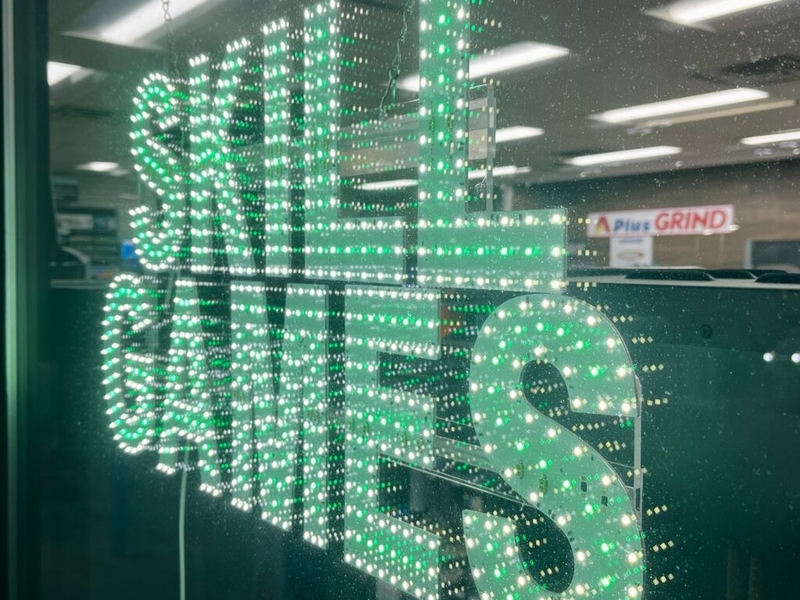
A sign in a convenience store window advertises skill games, slot machine-like devices. (Photo by Peter Hall/Pennsylvania Capital-Star)
With less than a week before the court decision making skill games illegal takes effect, Gov. Josh Shapiro and state Treasurer Stacy Garrity shared their positions on the future of the industry during their gubernatorial debate.
The televised debate Wednesday in Harrisburg happened as state lawmakers and skill game industry members petitioned the state Supreme Court to extend a stay. The move aims to delay the effect of the decision until Feb. 10 to give lawmakers more time to pass a regulatory scheme.
Garrity, the Republican nominee for governor, told moderators she supports a flat monthly fee of $500 per machine. With 50,000 machines statewide, it would generate about $300 million in new revenue to the state, she said, without specifying where in the state budget she would spend it.
She was also critical of Shapiro’s plan to tax skill games at 52%, claiming he aimed to kill the industry to benefit a political supporter with interests in the casino industry. Casino slot machines and video gaming terminals are taxed between 34% and 54% depending on the category of casino.
“He knows that they can’t survive at 52% and it’s because one of his biggest benefactors is Michael Rubin, who is the CEO of Fanatics and also owns a casino,” Garrity said.
Diamond urges House leaders not to allow skill games deadline to pass without a solution
The sportswear mogul made $78,200 in in-kind contributions to Shapiro’s campaign committee listed as travel, which The Philadelphia Inquirer reported reflect trips on Rubin’s private helicopter. Rubin co-owns the Fanatics sportsbook at Ocean Casino Resort in Atlantic City with rapper Jay-Z.
“I would urge the governor to think about the jobs and all the money that these groups give back to the community, because American Legions, VFWs, fire halls, small businesses-they are the backbone of Pennsylvania,” Garrity said.
Shapiro did not address Garrity’s claim, but said he has been unwavering in his plan to regulate and tax the games at the same rate as casinos.
“I would drive those dollars into the general fund and then use a core chunk of that to fund mass transit across Pennsylvania,” he said, adding that the state House of Representatives has passed legislation to enact his plan. “The Senate of Pennsylvania, led by Republicans, has refused to bring it up.”
State Sens. Gene Yaw (R-Lycoming) and Anthony Williams (D-Philadelphia) and Rep. Jonathan Fritz (R-Wayne) filed, withdrew and refiled a petition this week asking the Supreme Court to use its emergency powers to extend the Oct. 13 deadline to pass legislation legalizing skill games. Rep. Danilo Burgos (D-Philadelphia) was named as a petitioner in the original filing but was dropped from the subsequent version.
On Thursday morning, a group described as the Skill Games Business Consortium also filed a petition to intervene in the case in support of an extension. The filing doesn’t identify members of the consortium and lawyers for the group did not return calls Thursday.
At the same time, a group of seven district attorneys signed a letter to the General Assembly urging lawmakers to act on skill game legislation in the interest of public safety, noting law enforcement sought clarity on regulations for the devices even before the Supreme Court’s decision.
“The public safety concerns associated with certain machine locations — including theft and other criminal activity — also warrant consideration as the Commonwealth establishes its legal framework,” the letter says. It was signed by Bedford County District Attorney Ashlan Clark, Butler County District Attorney Richard Goldinger, Clearfield County District Attorney Ryan Sayers, Elk County District Attorney Beau Grove, Franklin County District Attorney Ian Brink, Juniata County District Attorney Cory Snook and McKean County District Attorney Stephanie Vettenburg-Shaffer.
The high court ruled June 15 that skill games are subject to the commonwealth’s Gaming Act and the Crimes Code. As a result, anyone operating a skill game machine is required to be licensed by the state Gaming Control Board.
Recognizing the impact on skill game hosts and operators, the Supreme Court instructed that no law enforcement agency was to act on the decision for 120 days.
In their filing, the three lawmakers say they are co-sponsors of compromise legislation to establish a licensing, taxation, and regulatory framework for skill games.
As the deadline approaches, Pennsylvania State Police and the state Attorney General’s Office have warned that all skill game machines need to be removed from establishments before the ruling takes effect.
The lawmakers’ petition said that in addition to being a burden on businesses and organizations that host the machines, their removal would delay any tax revenue from the machines when the General Assembly passes skill game legislation.
“The Commonwealth would begin its new regulatory program by first recovering the very devices that program is designed to license,” the filing said. “A defined extension of the existing safe harbor avoids that remove-and-return cycle and preserves an identifiable device base for qualification under the new law if the legislation is enacted.”
Harrisburg, PA