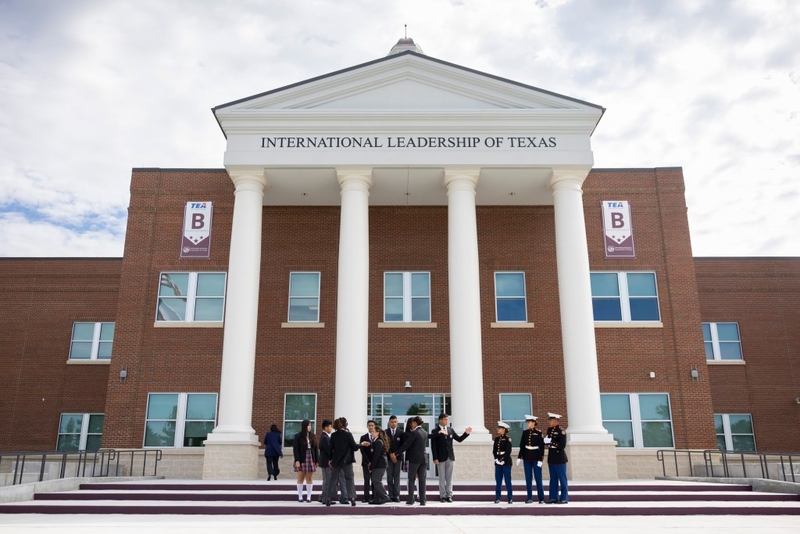
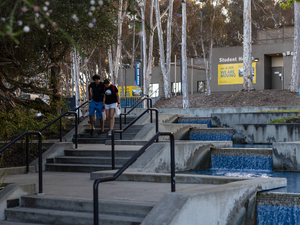
Students gather on the front steps of the high school building on the International Leadership of Texas public charter school campus in the Colony Ridge neighborhood on Monday, Oct. 5, 2026, northeast of Houston. (Annie Mulligan for The Texas Tribune)
Subscribe to The Y’all — a weekly dispatch about the people, places and policies defining Texas, produced by Texas Tribune journalists living in communities across the state.
As rural schools face declining enrollment, shifting learning models and growing demands on limited resources, the consequences extend far beyond the classroom. With on-the-ground reporting from INN’s Rural News Network and data analysis from Big Local News at Stanford University, six newsrooms from across the country — including The Texas Tribune — examine what rural schools provide their communities, who is most affected when those supports erode and what their future means for community sustainability.
LIBERTY COUNTY — Five years ago, Eddie Conger received a phone call from Texas Education Commissioner Mike Morath.
Liberty County, a historic farming community sandwiched between Houston and Beaumont, was growing rapidly, and Cleveland ISD, the largest school district in the region, couldn’t keep up with demand.
Morath asked Conger, the superintendent and founder of the International Leadership of Texas, if he would start a new school in the region.
“Cleveland ISD was growing too fast, and that is why the state asked us to come down here,” Conger said.
ILTexas is a free public charter school system that was approved by the Texas Education Agency in 2012. It operates 26 charter schools throughout the state, including cities such as Dallas, Houston and College Station.
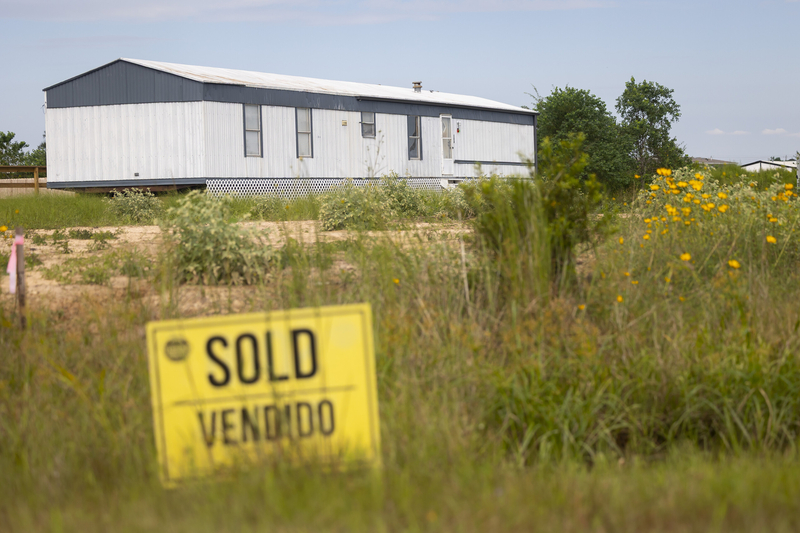
When Conger arrived, he found a predominantly Latino community known as Colony Ridge suffering from a lack of resources and nearby schools. The low-income but burgeoning county, dotted with mobile homes beside unfinished new-home construction, contained families who dreamt of better opportunities for their children. But the region lacked a high-performance school district.
“I wouldn’t say we are filling a gap. We are just offering a different model, a different opportunity for families to choose to send their kids,” Conger said.
In stark contrast, ILTexas is expanding its student enrollment and building three new campuses to serve the growing Colony Ridge community, a 34,000-acre master-planned residential development, and other regions in Liberty County.
For the first time in Liberty County history, charter growth outpaced that of traditional schools. In the 2021-22 school year, charters had 71 students, while traditional districts had a total of 22,224. Charters added six schools and 3,379 students since then, while traditional schools added only 2,090.
Cleveland ISD officials say they’re in a situation that is out of their hands. State law requires building up to meet student demand, but funding doesn’t allow them to do so quickly and doesn’t sustain the build-up after growth slows.
“We were adopting a negative budget every year I was there,” said Stephen McCanless, former superintendent at Cleveland ISD and current superintendent at Marfa ISD. “We were cutting expenses left and right, and still adopting a negative budget. It wasn’t good for teachers. It wasn’t good for students. It wasn’t good for parents. But we had to come to work every day and do the best we could with what we were given.”
Tonya Clark, executive director of communications for Cleveland ISD, said the district doesn’t blame local charters for the student decline at public schools. It’s just an effect of families having educational choices and something administrators must adjust to, just like when the surge in enrollment appeared, she said.
“Several years ago, the immediate question was how Cleveland ISD could expand quickly enough to accommodate an extraordinary number of students,” said Tonya Clark, executive director of communications for Cleveland ISD. “Today, the challenge is appropriately aligning staffing and resources with current enrollment and available funding while sustainably operating the larger school system created during that period.”
Education experts say the influx of families in Liberty County, located an hour away from downtown Houston, is a trend expected to continue statewide as Texans leave urban regions for rural communities because of more affordable housing options.
That’s a big problem for cash-strapped rural schools. Texas’ funding structure makes this sudden growth a burden for traditional public schools and a boom for charters, though it’s unclear how long that will last.
“A lot of these districts are experiencing pretty significant proportional growth and might not have the infrastructure in place to support that at the moment,” said Erin Baumgartner, director of the Houston Education Research Consortium at Rice University.
While many rural schools across the country are closing because of declining student enrollment, data from the Rural News Network suggests Texas’ steady population growth presents a different picture.
Data analysis by the Texas Tribune found that rural districts across the state added 156,204 students, a 13% increase since 2021. At the same time, urban school districts have seen an 89,707-student drop in enrollment over the same period.
However, those traditional rural school districts are not always equipped to handle such growth, in large part due to how the state funds its schools.
Lawmakers created the fast-growth allotment to provide public schools with additional funding to accommodate enrollment jumps, but it’s capped at $320 million annually statewide. When the sum of all eligible districts’ entitlement exceeds that cap, the law requires scaling down the payment proportionally, regardless of how fast they’re actually growing or how bad they need the money.
During the 2023-24 school year, Cleveland ISD was entitled to $17 million from the allotment but received only $13 million. Over a six-year period, the district was entitled to about $83 million but received $69 million, a gap of $14.6 million.
Low local and state funding forces rural districts such as Cleveland ISD to build ahead of money arriving, not after, something education advocates say is impossible for historically underfunded public schools. Cleveland ISD has asked voters to approve loans more than three different times since 2019, money that would have gone to build a middle school and other facilities that have to be found in other ways.
“The district had to expand staffing, transportation, instructional programs, and operational capacity to educate a much larger student population,” Clark said
On the other end, charter schools, such as ILTexas, can move fast, assess an area’s needs, and choose the best location and programs to address them from scratch. Charter schools in Texas cannot levy local property taxes or issue bonds, but they can respond more quickly to student needs because they don’t depend on voters or elected school boards. Lastly, charters have an attendance cap, meaning they’re not susceptible to overcrowding like traditional schools that are required to accept every student in their region.
As a result, charter schools in the region have newer buildings, tailored student programs, and resources from other successful campuses within their charter network.
According to data provided by the Rural News Network, Texas rural school districts — excluding towns — had the highest median per-student revenues from community service activities over the past 10 years. Examples of this include adult education and public library access.
Public school enrollment is dropping statewide, and that trend is expected to hit rural schools and charters in the coming years, leading to a potential battle for students in the countryside, something that education advocates say can be avoided if lawmakers change the state’s funding model for both.
“At the end of the day, there is only a certain amount of tax dollars that are available to the community, and that is the main issue,” said Kevin Brown, executive director of the Texas Association of School Administrators.
As enrollment grew at Cleveland ISD, a charter operator opened new schools nearby
Charter operators have opened 6 new schools and added 3,379 students in Liberty County since the 2021-22 school year, while ISDs added only 2,080 students. Five of the new charters and most of the new enrollment were within Cleveland ISD’s boundaries.
Source: Texas Education Agency
Credit: Rob Reid
The funding problem
The open fields of Liberty County, often occupied by mobile homes, suddenly give way to freshly built suburban-style homes in the rapidly developing Colony Ridge neighborhood, creating a strange contrast between the county’s past and its future.
Jay Knight, the county judge, said the demographic and economic shift in Liberty has been drastic, going from an agricultural region with 36,000 acres of rice farming in 1983 to only 3,000 acres today. The population has grown from 93,000 to an estimated 140,000, with farmland replaced by subdivisions and infrastructure for chemical and oil companies.
“I look at the next census in five years to be 150,000 to 160,000 people, and that brings a lot of issues with it, not just for where they’re going to go to school, but where you’re gonna buy your groceries, where you find entertainment,” he said. “People who move out here expect to have the same services that they had in Harris County, and they’re just not there yet.”
Texas demographics are shifting, and so is student enrollment, as families leave loud, crowded urban areas for rural regions with more affordable housing and the option to own land they can build on for future generations.
Public schools in Texas lost more than 76,000 students this year, the second largest single-year enrollment decline in modern state history, and the first non-pandemic drop in nearly 40 years, according to a Texas 2036 report.
Urban and other city-style districts account for nearly 30% of public school enrollment. In the past 10 years, large urban districts like Houston have lost 17.3% of their students, while rural districts grew by 13.4%. Charters have grown cumulatively by about 63% over the same period.
Policymakers, district leaders and community stakeholders should plan now for a public school system that is smaller, more concentrated in rural and charter settings and less reflective of overall Texas population growth than at any point in four decades, the Texas 2036 report noted.
“We’re hearing it across the state. People are moving out of central urban areas and into exurbs, a layer out from the suburbs. In a lot of those places, those are actually areas that might be a little more rural,” Baumgartner said.
However, rural schools, like their cities and counties, aren’t ready to meet the needs of this growing population immediately, creating challenges for school administrators.
“You might not be seeing 2,000 new kids show up in a school year, but for a district that only has 2,000 students, having 100 extra students show up is a big deal,” Baumgartner said.
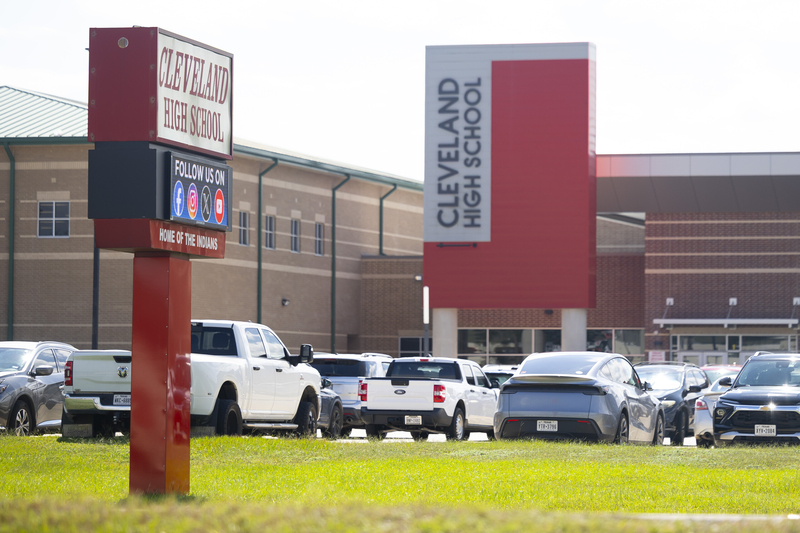
Cleveland High School on Monday, Oct. 5, 2026, northeast of Houston.
Cleveland ISD serves more than 12,000 students. TEA records show that a significant portion of its students are classified as English learners, receive special education services and are economically disadvantaged. Each special class requires additional funding to create the programs and staff needed to serve them.
“[Those demographics] provide important context regarding the instructional services, staffing, and resources necessary to meet student needs,” Clark said.
Texas per-student spending based on average daily attendance ranks below the national average, 47th among the states, meaning enrollment funds often can’t cover the programs and facilities needed for sudden growth alone.
One bus costs about $180,000, and the school district was buying five to eight buses a year, paying bus drivers $21.50 to attract them to the district, McCanless said. That’s just one example of the district’s rising costs. More students means more teachers, more lunches, etc.
“It was unfathomable, but those are challenges you face as a rural district dealing with explosive growth,” McCanless said.
Public schools are funded primarily by property taxes. But complex real estate arrangements like what is occurring in Colony Ridge with owner-financed contracts mean that the traditional method of revenue and property valuation breaks down.
The state’s funding model views the rural school system as land-rich, so less funding comes their way, but in reality it’s mostly undeveloped land where primarily low-income families are buying lots in hopes of building in the future.
The state allocates funding based on a district’s property wealth per student. However, owner-financed properties are often sold at high purchase prices for families, often low-income, who might not be able to secure a bank loan. These inflated sales prices can artificially drive up the school district’s overall appraised property values, which under the Texas’ funding model, means fewer state contributions. However, property taxes based on appraised value often don’t match the actual situation, with a few high-end purchases overshadowing the low-income reality.
“It’s a weird mechanism. A school district can become what we call property wealthy, and the state will then look and say, well, your property value per student has gone up. This can lead to school districts sometimes having to send local tax dollars to the state when they actually need it. We have seen it happen in a number of communities,” Brown said.
Of Cleveland ISD’s $4.2 billion in total assessed value in 2022, almost a third was classified as vacant lots; another $327 million was assessed on mobile homes, but the state’s funding model still views the district as property rich, which can lead to the state actually taking money away in what is called recapture despite the district needing those funds for programs for their low-income students and families
“I am dealing with the same thing in Marfa. We are 95% low income, but they consider Marfa as a property-wealthy district,” McCanless said. “OK, but that is all real estate. People are coming in and paying $1 million for a three-bedroom, two-bath out here, but it has nothing to do with the school district. Why should the school district suffer because of what real estate is doing? Our parents and students didn’t become wealthy, and they aren’t benefiting from it.”
Empty lots marked with “SOLD” signs with an occasional mobile home line the newly paved roads in the Colony Ridge neighborhood on Monday, Oct. 5, 2026, northeast of Houston.
A fast-growing district often needs a bond to fund new construction. But Texas voters are more skeptical of tax increases.
Cleveland ISD, in northern Liberty County, has attempted to pass more bonds recently than almost any other district in the state because of growth from Colony Ridge. Voters rejected a $250 million bond in 2019, a $150 million bond in 2021, and a $125 million bond in 2023.
Skepticism about bond increases is affecting every public school in Liberty County, not just Cleveland ISD.
Earlier this year, Liberty County residents rejected a $26 million bond proposal by Liberty ISD, with 52% of voters voting against the measure, which would have addressed aging facilities and upgraded structural capacity. Voters also rejected bond proposals from Tarkington ISD, with the most recent occurring in 2025.
Charter schools, on the other hand, offer a different option for families seeking specific resources for their children, such as language classes, food programs or mental health services.
Emergent bilingual and economically disadvantaged enrollment is declining faster than overall Texas public school enrollment. However, the charter sector is the exception, with its share of both populations in school year 2025-26 increasing, suggesting that some of these students are leaving traditional schools for charters rather than leaving the public system altogether.
“As you can see, we have a diverse student body and we make sure each one of their needs is met,” Conger said, waving his hand over his predominantly Latino students walking his hallways.
Baumgartner said one thing that could help rural districts is demographic data, which would allow them to predict the specific needs of their growing student population before it reaches their doors.
She said many rural public schools lack the funding for this expensive and often complicated data collection leaving them flying partially blind as they try to figure out what student needs might be and how long they might last.
The rise of charters
For several years, Santino Davalos, who lives in the Colony Ridge region of Liberty County, attended Cleveland County ISD, about 20 to 30 minutes from his quickly developing neighborhood. He described his time at the traditional public school as simply OK, navigating crowded hallways as the school district dealt with a rapidly growing student population. Then ILTexas appeared down the road from his home and changed his life, he said.
“This area didn’t have a school district besides Cleveland ISD, and we were grateful to have this here, and it had more options than a normal school,” said Daralos, who is a member of the charter school’s Marine ROTC program.
Charter schools operate outside traditional school district rules and boundaries. Their expansion has been most pronounced in urban areas until recently.
During the past several years, their rural footprint has grown following the student migration. Data show charter schools now enroll 8.2% of all Texas public school students, up from about 5% a decade ago. Notably, charter enrollment has grown every year since 2016 with no single year recording a decline.
“When we came to Colony Ridge, we looked at the demographics. We looked at the number of kids. We talked to the developer, who said they’re bringing in 100 kids a month,” Conger said.
Texas lawmakers created public charter schools in 1995 to offer alternatives to traditional school districts. Charters still operate under the TEA but have more flexibility in teaching methods and specialized curriculum, giving parents options for different learning environments and class sizes without charging tuition.
For example, the ILTexas system emphasizes bilingual education from the start of its curriculum, with all students learning not only Spanish but also Mandarin Chinese and English. This contrasts with the slow build-up required of rural school districts, where school boards must approve curriculum changes, and districts must find funding to hire specialized teachers, usually limiting these programs to the top students in each grade.
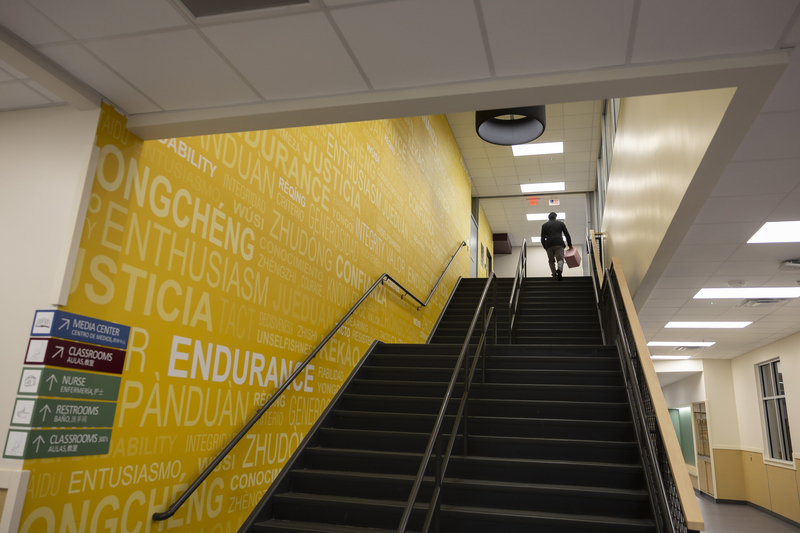
A student walks to class in the International Leadership of Texas high school campus n the Colony Ridge neighborhood on Monday, Oct. 5, 2026, northeast of Houston.
ILTexas opened its brand-new high school this year, with spacious hallways and classrooms, along with top-of-the-line security measures. The charter school is following a carefully designed plan based on the region’s demographics, which it analyzed when the TEA first contacted it about Cleveland ISD problems.
Conger, the ILTexas leader, is no stranger to the dilemma traditional school districts face. He served as an educator in Garland ISD and led a high school for Dallas ISD, with most of the ideas he implemented at ILTexas being concepts he formed during his time in those school systems and faced the same challenges his former colleagues are dealing with now.
“I have lost many friends in ISDs when I made this decision, but we are truly just offering another opportunity for families, and I believe that is a good thing,” he said. “I think we can co-exist; it will just require some change in thinking from the state when it comes to funding us both. We are both public schools in the end.”
The blip effect
Many traditional rural schools have been in fixed locations for decades, sometimes with multiple generations walking the same hallways.
That’s part of the charm of small, rural public schools, education advocates say. But when a surge of new students arrives, those quaint classrooms become an infrastructure problem.
By law, public schools must enroll any student who lives in their region. But 40 to 50 new students might mean additional classrooms, new facilities and expensive security protocols.
During the district’s rapid-growth period, Cleveland ISD had to create additional instructional and operational capacity to accommodate thousands of new students, but it took several years to address because state and local funding did not reach the level of demand.
Cellphone footage shared with a local television station in 2023 showed students packed shoulder to shoulder in some hallways, raising safety concerns. At various points, over the past several years, nearly 39% of the student body had to take classes in temporary, portable classrooms outside.
“The pressure that is put on the hallways during class changes, the overcrowding, the teacher shortage, not being able to build facilities because no bonds were passing and even if they did it takes two years to build and we had 100 students moving in a week,” McCanless said. “You just can’t keep up with it.”
Cleveland ISD, using various combined funds, built a new 51,000-square-foot administration building, a weight training center and a middle and elementary school. Officials planned much more if bonds had been approved.
“What is clear is that Cleveland ISD has already been fundamentally changed by the growth it experienced,” Clark said.
The challenge with rapidly building new facilities to address a surge in growth is that population increases ebb and flow over the years, Baumgartner said, meaning that by the time a rural school district has enough of a financial cushion to finish construction, it might no longer need it.
“If some locations are seeing sort of a blip in growth, those rural places will start seeing some of the challenges urban locations are facing, where enrollment declines and they’re all kind of competing for students instead of divvying up students,” she said.
Cleveland ISD is predicted to become an example of this blip effect with enrollment slowing down, but those facility and infrastructure responsibilities do not automatically disappear when growth steadies.
“Current district enrollment is trending below last year’s comparable level,” said Clark. “[Yet] many of those responsibilities remain even when growth slows or enrollment declines.”
Often, because a rural school can’t get rid of the structures they had to build during sudden growth, staff are the first to be cut.
Cleveland ISD implemented staff reductions and position consolidations last year to address ongoing budget concerns.
“These are difficult decisions because employees are people, not simply numbers in a budget,” Clark said. “At the same time, staffing is one of the district’s largest investments, and the district is responsible for ensuring resources align with the students being served.”
The combination of funding issues and restrictions rural school districts face compared to their charter counterparts can create a spiral because they can’t build capacity fast enough, leading to overcrowding and strained resources that often show up in academic performance. Poor ratings then make the charter alternative more attractive to families, only accelerating the enrollment loss and removing the student dollars needed to address the issues.
For example, Cleveland ISD faces a potential state takeover because its middle school has received failing state academic A-F ratings for four consecutive years.
One option for rural school districts is consolidation, which allows multiple districts to merge together to pool resources and facilities.
Liberty County has seven traditional public school districts, with Cleveland ISD having the most students at 12,513 and Devers ISD having the fewest at 191.
In theory, school consolidation can give the region’s school district the financial cushion it needs to handle explosive growth and its eventual slowdown. But it also means a rural town might lose the heart of its community and a gathering place for events, graduations and sports.
“It’s the identity of that community. They all rally together on Friday nights to come together to support one another, and you have multiple generations that go through the school district,” Brown said.
Education advocates say charters need rural schools because they can’t take on every student, and traditional public schools need relief when enrollment surges. The issue is that the current funding structure, which incentivizes student attendance rather than district needs, pits the two public school systems against each other for enrollment dollars.
“There are things that we will never be able to compete with. I’ll never build a $100 million football stadium. So if you want your child in sports, then there are schools for you,” Congersaid.“Some parents might want their children in a specific fine art; there are schools for that. I think the freedom is a good thing.”
The Texas voucher program is predicted to pull even more students from the public school system into homeschools or private schools, creating an uncertain future for both charters and districts.
The challenges for public schools in Liberty County is an example policymakers must consider when discussing how enrollment, attendance funding, student needs, growth, staffing, facilities, and long-term operating costs interact within the state’s school finance system.
“The broader question for Texas is how the funding system responds across the entire lifecycle of enrollment change, not simply when a district is growing,” Clark said.
To assess the expansion of charter schools in rural Texas, The Texas Tribune analyzed publicly available state data to locate charter schools within rural districts.
How we identify rural schools
Using locale classifications from the National Center for Education Statistics (NCES), we categorized more than 1,000 independent school districts in Texas as urban, suburban, town, or rural based on population size and proximity to urban areas.
Following a recommendation from Big Local News, we expanded our analysis to include both rural and town districts. Because a shift in population can change a district’s classification, we used 2020-21 classifications for our entire 5-year trend analysis.
How we identify rural charters
We located most charters using TEA’s GIS site. For the 55 newer charters missing GIS data on TEA’s site, we used their operator websites to identify and confirm site addresses and then used the US Census Bureau’s batch geocoder to convert their addresses into latitude and longitude coordinates. We then ran a point-in-polygon analysis using those coordinates to match each charter school to the independent school district it falls within. This search helped us determine the NCES locale for all charter schools.
How we calculate enrollment and count schools
Enrollment figures are from the Texas Education Agency’s Student Enrollment Reports. When counting schools, we included any school with a reported enrollment number for each year.