Schools need more air filtration to protect youth from wildfire smoke, OSU study finds
Oct 29, 2026 | 5:32 pm ET
Description
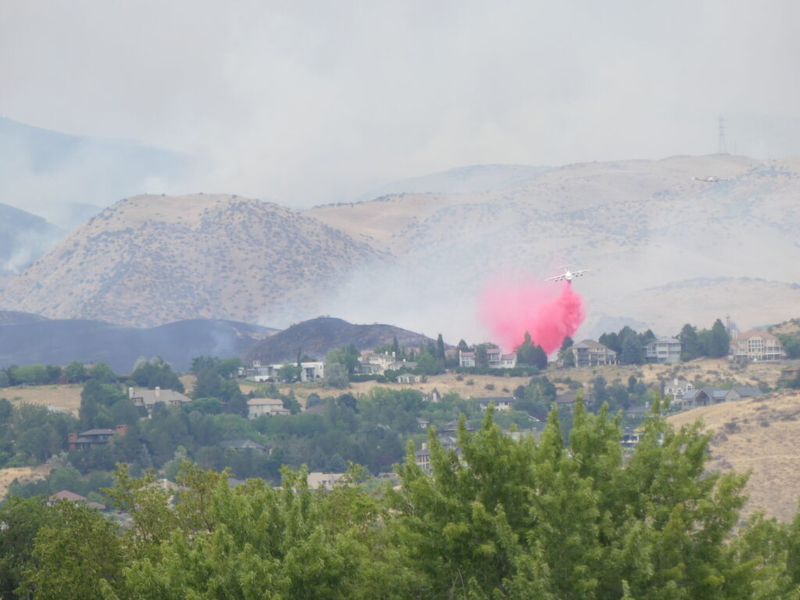
Firefighters on the Claremont Fire in Boise, Idaho on July 6, 2026. Drought across the Northwest has exacerbated wildfire conditions in the region. (Photo by Brenen Helgerson/
National Interagency Fire Center)
Children are breathing in unhealthy air for longer periods of time as wildfires worsen across the country, according to a new study by researchers at Oregon State University’s College of Health.
The study, published earlier this month in Environmental Research, found that over a 17-year span, the average number of days school children were exposed to unhealthy air increased by nearly eightfold.
Researchers looked at the air quality data from across the country from 2006 through 2023, finding that the average number of annual smoke days at public schools rose from 6.8 to 54.4 days.
Childcare centers saw a similar rise, with the average number of smoke days rising from 9.4 to 112.2 days.
“Our children are collectively experiencing billions of days of smoky air each year,” said Molly Kile, a lead researcher and an environmental epidemiologist at Oregon State.
The number of U.S. wildfires each year has remained relatively stable, or around 70,000 fires a year. However, the intensity of those fires is increasing. In Oregon alone, wildfires this summer scorched across 2.5 million acres, breaking the previous record in 2024 when 1.9 million acres burned, according to the Oregon Department of Forestry.
Although states in the West experience more smoke, lingering smoke from wildfires affects people living across the country, Kile said.
“Fine particulate matter travels hundreds and thousands of miles, and the prevailing wind blows from west to east, so it all goes downwind,” she said.
When children breathe wildfire smoke, they’re breathing in particulate matter, such as PM2.5, that can be inhaled deeply into the lungs and even enter the bloodstream. PM2.5 is a known cause of cardiovascular disease and is linked to the onset and worsening of respiratory illness. Wildfires account for almost half of all PM2.5 across the country.
Staying indoors isn’t necessarily a solution, Kile said. Indoor air quality can vary depending on how well a building protects occupants from outdoor air pollution.
“Some schools had higher indoor PM2.5 concentrations than nearby outdoor measurements during smoke days,” Kile said. “This is a particularly actionable finding and emphasizes the need for investment in improving indoor air quality in schools through HVAC upgrades, which can be expensive, or portable HEPA filters, which can be a more affordable approach.”
The air quality inside schools and childcare centers is especially important to protect since children spend so much time in those facilities, corresponding author and Samaritan Health Services’ Research Development Office program manager Stephanie Foster said.
“Educational facilities are places where coordinated preparedness plans, air filtration, indoor air quality monitoring and changes to activities during smoke events could reduce exposure,” she said.
Salem, OR