Proposed Federal Scholarship Tax Credit rules fail to win over CT educators
Oct 08, 2026 | 5:00 am ET
Description
Photo courtesy of CT Mirror
Connecticut education leaders still aren’t happy with the Federal Scholarship Tax Credit.
On Friday, the U.S. Treasury Department released its proposed rules for the program, which provides a dollar-for-dollar tax credit of up to $1,700 to individuals who donate to scholarship-granting organizations, known as SGOs. The rules clarify how SGOs should operate, who qualifies for scholarships and what role states have in regulating the program.
But public school advocates in the Nutmeg State still don’t like what they see. Everything they’d feared the FSTC would enable, they say, remains in play.
“I think [the rules] solidified for me exactly what we always knew: that this was a program that is going to be designed to hurt public education and basically help the rich,” said Jan Hochadel, an outgoing state senator and the president of AFT Connecticut, one of the state’s two major teachers’ unions.
Public education leaders made it abundantly clear in May they did not want Gov. Ned Lamont to opt Connecticut into the FSTC. They argued the program lacks oversight, exacerbates inequality and will likely prompt cuts to core federal education programs like Title 1 and the Individual with Disabilities Education Act.
At the time, Lamont said he’d rather wait for the federal government to release additional guidance before making a decision.
On Tuesday, he told reporters he’ll be asking the feds for further clarification this week.
“I want to make sure this does not discriminate in any way against public education,” Lamont said. He added it should be transparent and carefully audited “given all the back-and-forth we have about not-for-profits.”
“I think we’ll know within a month or so,” Lamont said.
Lamont’s Republican opponent in this year’s gubernatorial election, Sen. Ryan Fazio of Greenwich, was an early supporter of the FSTC, telling the Connecticut Mirror in May that it is “literally free money” for the state. The Connecticut Mirror reached out to Fazio for comment on the Treasury’s new rules this week, but he did not respond in time for publication.
The new rules from the Treasury have not won over the FSTC’s critics, who are still urging Lamont not to opt in.
What the FSTC actually does
The FSTC is a scholarship program signed into law by President Donald Trump as part of 2025’s One Big Beautiful Bill Act. Individuals can donate up to $1,700 a year to an SGO, or $3,400 per household; SGOs then award the money to students as scholarships for a wide range of potential services, including tutoring, afterschool programming and private school tuition. Donors, meanwhile, get their donations paid back in full as a tax credit when they file their returns at the end of the year.
In effect, the federal government is paying for scholarships, with several steps in-between. At the heart of advocates’ concern is where the money would actually end up, and what redirecting federal dollars in this way will mean for public schools.
According to the Treasury’s proposed rules, states that opt in cannot prohibit SGOs from offering private school tuition scholarships — almost guaranteeing that some federal dollars will flow to private schools as a result of the FSTC. That alone is a red flag for public school advocates like Hochadel, who fear the FSTC is a step toward privatizing education nationwide.
“The incentive is to have more students go to private institutions,” Hochadel said.
There is an income limit on which students qualify for scholarships, but it’s high: 300% of the area median income, which includes an estimated 96% of all students nationwide.
Hochadel said she expects most students who get private school scholarships to come from affluent families, “so all they’re doing is getting more tax dollars sent to the rich.” And she said if there are students “on the cusp” for whom those scholarships make private school possible, their departure would cost public schools directly, because state funding is tied to enrollment.
Even a small number of students leaving public schools for private schools is more than some districts can afford, she said, pointing to ongoing concerns about Connecticut’s school funding system.
There are some who argue states can still make the FSTC into a boon for public school students.
They note scholarships can go to those students, too — not for core services offered by schools themselves, but for things like high-dosage tutoring and afterschool programs provided by third-party vendors. And they point out that governors who delay won’t stop the FSTC from happening — they’ll only prevent their own states from getting a cut.
Those proponents include Nicole Pollock, the president of Democrats for Education Reform, an advocacy group that favors greater school choice. She laid out a vision for how state governments might direct FSTC dollars toward public school students.
“The way I think about design is, you should have a statewide SGO, or a collection of public school-serving SGOs, that focus on a particular goal for the state” such as early literacy, Pollock said. “And then that organization partners with LEAs [Local Education Agencies] and raises money.”
She offered Colorado, one of the only states with Democratic governors to opt in yet, as a case in point. There’s now an SGO that partners with districts there to deliver “district-aligned interventions.”
Pollock said it’s also possible to get a state’s major employers in on the arrangement. For example, say an SGO forms around scholarships to give public school students access to technical career training.
“At that table sits your top 10 employers in the state, right? And part of their commitment is that they will be offering this [FSTC] program to their employees as a deduction program,” Pollock said.
In other words, employees donate to the SGO automatically through payroll deductions, and the SGO gives scholarships to students to get workforce training. Because it’s a dollar-for-dollar tax credit, employees can lower their federal withholdings at the same time, ensuring they don’t see any change to their paychecks.
“It doesn’t require sophisticated systems to do that,” Pollock said. “Most payroll providers do wage garnishment or wage adjustments … like this all the time.”
But Fran Rabinowitz, executive director of the Connecticut Association of Public School Superintendents, said setting up an SGO for a public school isn’t as easy as it sounds.
“I’ve set up 501(c)(3)s. CAPSS became a 501(c)(3) about five years ago, and it cost quite a bit of dollars … and attorney time,” Rabinowitz said. “I created a 501(c)(3) with a foundation in Bridgeport, and that took nearly a year.”
Considering the FSTC begins operating in January, that doesn’t leave much time for states to get everything set up.
Conversely, Rabinowitz said, “all of the private schools are very used to having 501(c)(3)s and setting up scholarship programs.” In effect, they’re starting the competition already ahead, she said.
Pollock acknowledged that the FSTC does create market competition for education resources, “and that is an uncomfortable place for a lot of folks … who are concerned about the movement around ESAs [Education Savings Accounts] and choice.”
However, she said the Treasury guidance “creates more of a regulated market … that makes it more possible and easier for high-poverty districts and students in high-poverty areas to participate.”
Among those regulations are safe harbor rules that reduce the administrative burden on SGOs serving high-need students. More specifically, SGOs don’t have to conduct income verification for students enrolled in certain social programs, residing in qualified census tracts or living in foster care.
“That’s like a market signal … to drive those resources administratively into more high-need districts or for high-need students,” Pollock said.
Rabinowitz said she doesn’t buy that. She expects families to donate primarily to SGOs that benefit their own students and communities — which, if true, would suggest more affluent communities with an abundance of disposable income will see more scholarships.
“You’re certainly not going to have as many families in Hartford as you might have in Simsbury who can afford to send up to $1,700 to an SGO,” Rabinowitz said.

Other concerns
Ultimately, the FSTC will cost the federal government money. Exactly how much will depend on how many people donate to SGOs and claim the credit — estimates range from a few hundred million to tens of billions annually.
In theory, Congress will have to offset that lost revenue somewhere, and public school advocates are pretty sure they know how it will happen.
“Connecting the dots, they’re going to take it away from education,” Hochadel said — in other words, cutting core public education programs like Title I and the Individual with Disabilities Education Act (IDEA).
Connecticut Education Association President Kate Dias said many of those programs already aren’t funded as much as they should be. The federal government’s own goal is to fund 40% of IDEA; Dias said it currently funds closer to 14%.
“If you look at the dialogue in Connecticut around education funding, it is all about special education,” Dias said. “We are making up the difference.” Most special education costs fall on local districts, and the state does not weigh its contribution based on how many special education students a district has.
The problem will only get worse if federal funding shrinks further, Dias said. Connecticut towns may end up having to pay even more out of local property taxes to fund those services, she said.
Pollock pushed back on those concerns. She said it’s highly unlikely that the federal government — notorious for operating at a glacial pace — will do anything in response to the FSTC’s costs in the next two to three years. By then, she expects Democrats to once again be in control in Washington.
She also offered a different perspective on the $1,700 tax credit itself.
“If you proportionally thought about that $1,700 as if it was the federal budget for this country, less than 20 of those dollars would be going into K-12 education,” Pollock said. Viewed that way, sending $1,700 directly to education looks more like “supercharging” education funding.
Except, Rabinowitz noted, those dollars can’t go toward a public school’s core operations. “It can be used for tutoring and for afterschool programs. That doesn’t speak to staffing. That doesn’t speak to what goes on in classrooms all day long,” she said.
Rabinowitz also raised concerns about oversight.
“Yes, the governor has to approve that SGO, but they get to use 10% of whatever they collect for administrative costs. … And I’m just not so sure that all of that money and funding will go in the direction that we would want it to,” Rabinowitz said.
Dias was blunter.
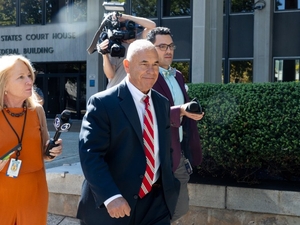
“We don’t have a great history with this kind of stuff in CT,” Dias said. “We have Kosta Diamantis who’s in Greece, we have an FBI investigation in terms of moneys being used improperly,” she said, referring to the former state budget official who oversaw school construction contracts, was convicted of extortion and bribery in connection with those deals, and is currently a fugitive in Greece.
“SGOs can go under, go to Greece, and … what’s the recourse?” Dias added.
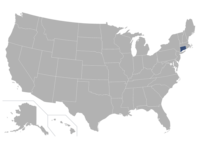
Hartford, CT