Matos, Loughlin spar over Trump, groceries and gasoline in second LG debate
Oct 07, 2026 | 6:48 pm ET
Description
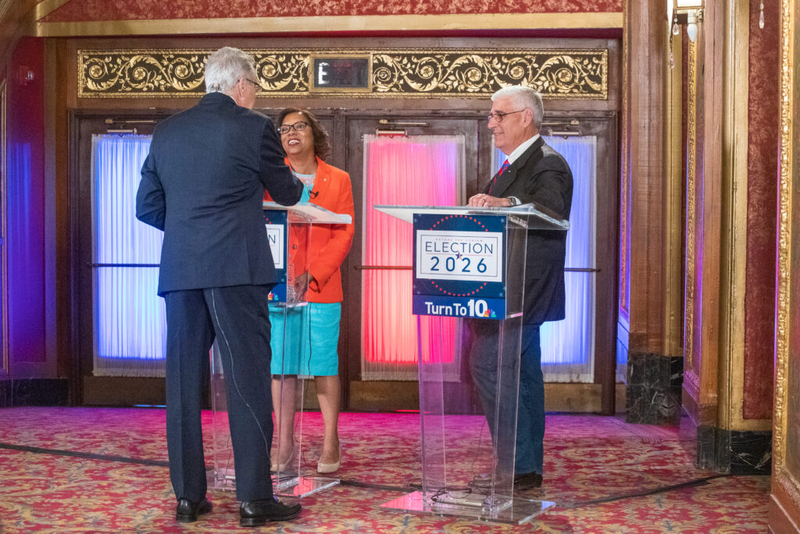
NBC 10 moderator Gene Valicenti speaks with Lt. Gov. Sabina Matos, center, and Republican challenger John Loughlin after Wednesday’s lieutenant governor debate at the Providence Performing Arts Center on Oct. 7, 2026. (Photo by Alexander Castro/Rhode Island Current)
Rhode Island Lt. Gov. Sabina Matos and her Republican challenger, former state Rep. John Loughlin, met Wednesday afternoon for their second televised debate in less than two weeks, sparring over grocery stores, gas prices, and how much blame to assign to President Donald Trump for Rhode Islanders’ problems.
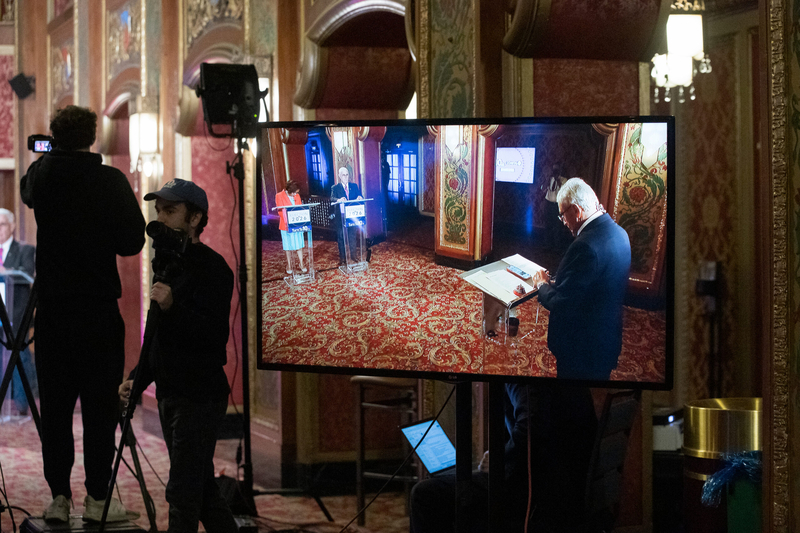
Unlike the candidates’ pretaped Sept. 25 matchup at WPRI 12, Matos and Loughlin went at it live from the Providence Performing Arts Center lobby, with Gene Valicenti moderating the 30-minute WJAR NBC 10broadcast. A gubernatorial debate was scheduled to follow at 7 p.m.
Matos found fault with the current administration in Washington for rising costs and what she described as insufficient federal investment in the Ocean State. To Loughlin, these problems were largely self-inflicted.
“The administration in Washington didn’t give us the worst roads and bridges in America,” Loughlin said, then listed a number of other local failures. “Those are homegrown problems.”
Most intriguing RI race to watch? New UNH poll shows LG Matos in tight race with Loughlin
In response, Matos acknowledged the state received money for the Washington Bridge rebuild from Trump’s administration — but the state has received federal funding from “many other administrations in Washington, not just this one.”
“But this one made it worse because he decided to give a big tax break to the rich people, to his friends,” Matos said of Trump.
Though ideologically distant, Matos and Loughlin were more closely aligned in a University of New Hampshire poll released Sept. 24, which found the two candidates vying for the state’s second-in-command role were basically tied in tentative voter support. The online poll of 598 likely voters was conducted Sept. 17 to 21 and found the incumbent Democratic lieutenant governor with support from 48% of likely voters. Loughlin had support of about 44% of likely voters — a narrow difference reduced to basically zero by the survey’s 4-point margin of error. An additional 7% of voters were undecided.
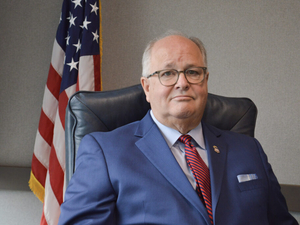
Matos, 52, has been lieutenant governor since 2021, when she was appointed to fill the vacancy created after Dan McKee became governor. Reelected to a full term in 2022, Matos last month bested four other Democrats in a crowded primary. Loughlin entered the race last year and ran unopposed for the Republican candidacy.
Loughlin, 67, served as a state representative for District 71, which covers Tiverton, Little Compton and Portsmouth, from 2005 to 2010 and was House minority whip in his final year at the State House. An Iraq War veteran and retired Army Reserve lieutenant colonel, Loughlin is no stranger to live media, having hosted a Saturday radio program on WPRO-AM from 2012 until the launch of his campaign last year.
When Valicenti asked why Matos should be replaced, Loughlin replied, “I think that she’s done a decent job as lieutenant governor,” then added, “I think I could do a better job.”
The general election is set for Tuesday, Nov. 3. The deadline to apply for a mail ballot is Tuesday, Oct. 13. Early in-person voting will begin the following day on Wednesday, Oct. 14.
Different visions for a limited office
The list of contenders who sought the lieutenant governorship this election year is lengthier than the list of duties afforded to the office, which are constitutionally few compared to other states.
Still, one obligation hovers over the office, as outlined in the state constitution, which defines the lieutenant governor’s time to shine as “[w]hen the governor-elect shall die, remove from the state, refuse to serve; become insane, or be otherwise incapacitated.”
That leaves the officeholder to use their limited powers in creative ways. In her tenure, Matos has focused heavily on grocery access and affordability as one of her key issues, and she reiterated this theme Wednesday. She pointed to successful legislation she promoted that prohibits new restrictive covenants from being applied to former grocery store properties. The covenants are a means of barring competing supermarkets from filling the spaces once inhabited by markets that close their doors.
“John, does she get credit for that?” Valicenti asked.
“Well, I mean, it’s an achievement,” Loughlin replied. “I thank you for doing that.”
But he said it was a modest achievement overall, and one which he thought would not have much immediate effect since existing restrictive covenants can remain in play for years, if not decades.
“I tried to explain to you before,” Matos shot back. “I think you don’t understand the law.”
She said that, if still in office next year, she plans to pursue legislation that would strip away “restricted covenants on the buildings that already have it.”
Loughlin expressed his desire that the office become more independent and proactive, and take on a larger role in oversight. His chief example was his May 11 call for a state inspector general, which he believes helped motivate legislative leaders to issue their own proposal for the new oversight role.
The House of Representatives introduced their own proposal on May 14, three days after Loughlin’s promise to create the position via the lieutenant governorship if he’s elected.
“Conversation could happen for a long time,” Loughlin said. “Nothing has happened until I made them push it across the finish line.”
Following House leadership’s successful proposal, five finalists are now under review for the inspector general role.
Matos countered that the proposal has been floated for years in the General Assembly, including by Democratic Rep. Charlene Lima.
“I don’t believe that having a press conference pushed the [House] Speaker to make the decision,” Matos replied.
As they did at the Sept. 25 debate, Matos and Loughlin again disagreed on how to get Rhode Islanders’ energy costs lower. This time around, the influence of Trump on gas prices emerged as a major point of contention.
Matos credited Trump’s “illegal war” as the cause of gas prices being “so high.”
Loughlin stated the war in Iran has “no impact” on domestic natural gas prices, and that Rhode Island should broaden access to pipeline capacity so it can obtain cheaper domestic gas.
“You said that the war is not increasing the price of gas,” Matos said shortly after. “Have you been at the gas station?”
“Natural gas, Sabina, there’s a difference,” Loughlin said.
The half-hour debate also touched on the Washington Bridge, the return of Providence schools to municipal control, how the office can work across the political aisle, and Rhode Island’s business climate.
Matos, who filed a post-primary report with the Rhode Island Board of Elections for the 33 day-period ending Oct. 5, had about $43,000 cash on hand after raising about $40,000 in private contributions and receiving $174,350 in public matching funds. She spent more than $196,000 during the reporting period.
Loughlin had $22,813 cash on hand as of Oct. 5, after raising about $39,000 and spending $40,000 since July 1, according to his third-quarter campaign finance report.
You can watch the debate on WJAR’s website.
Providence, RI