Judge dismisses YouTuber’s defamation lawsuit against Iowa photographer
Oct 07, 2026 | 3:58 pm ET
Description
(Photo by David Talukdar/Getty Images)
An NCAA wrestling official who runs a YouTube channel dedicated to youth wrestling has failed in his bid to sue an Iowa photographer he claimed had defamed him.
The lawsuit was filed late last year in U.S. District Court for the Northern District of Iowa by Nima Gharavi, a YouTuber and self-described “registered wrestling official” with the National Collegiate Athletic Association, Illinois High School Athletic Association, Illinois Elementary School Association and other entities.
Gharavi sued Allyson Schwab of the Cedar Falls area, a photographer who allegedly has a substantial social media following for the youth wrestling content she produces. A federal judge recently dismissed the case, in part because it dealt with statements of opinion, rather than factual assertions, that were made by Schwab.
In his lawsuit, Gharavi alleged that for many years he has created videos of youth wrestling matches, initially for the exclusive use of wrestling officials. Gharavi says he subsequently created a public YouTube channel to share his passion for the sport and called it Midwest Wrestle, which has more than 175,000 followers on YouTube.
At some point, Gharavi claimed, he realized that websites with which he has no connection had copied, without his knowledge or permission, video content from Midwest Wrestle and posted it to third-party websites that contained pornography or other objectionable content.
In December 2023 and January 2024, the lawsuit alleged, Schwab published multiple posts to her X (formerly Twitter) account, encouraging parents to watch out for “suggestive” online videos of youth wrestling matches that were generating hundreds of thousands of views.
“This makes me sick and why I got this convo going,” Schwab allegedly wrote in one post. “So many parents don’t know their kids are on someone’s YouTube… No reason a 46kg youth girls match should have 2.6 million views … The kids think it’s normal to have 400k views on their video from a local youth or hs tournament…”
The lawsuit stated that while Schwab’s posts did not explicitly name Gharavi or Midwest Wrestle, details in her posts corresponded to Midwest Wrestle’s viewership. For example, the lawsuit claimed, Midwest Wrestle was the only YouTube channel to have garnered 2.6 million views of a 46kg youth girls wrestling match.
The lawsuit goes on to allege that several athletic organizations then canceled or declined to renew their contracts with Gharavi, a third party published Gharavi’s home address on social media alongside the false allegations, and Gharavi was the target of threats and an attempted home break-in.
The lawsuit sought unspecified damages for defamation and invasion of privacy by painting Gharavi in a false light.
Federal judge dismisses lawsuit
Recently, U.S. District Judge Leonard Strand dismissed the lawsuit for failing to state a legal claim against Schwab.
In his ruling, Strand noted that to make a claim for defamation, Gharavi must allege sufficient facts to show that Schwab made a false and damaging public statement about him.
“For starters,” Strand ruled, “there is a significant issue whether Schwab sufficiently identified Gharavi (in her statements). Although she need not explicitly mention Gharavi by name for him to maintain a per se claim, there must be sufficient identifiable details in the statement that a third-party could reasonably understand it to concern him.”
Strand ruled that the fact that other parties had linked Gharavi to Schwab’s statements “might count for something,” but added that “nothing about the posts themselves clearly identify that they are about Gharavi.”
Even if Schwab had identified Gharavi as the target of her posts, Strand found, Gharavi’s defamation claim still would fail. “Pornography is not mentioned nor naturally insinuated from any of Schwab’s posts,” Strand ruled, “much less allegations of creating or peddling child pornography… Nor do the posts contain any clear language besmirching Gharavi’s professional reputation.”
Strand also noted one “difficulty for Gharavi comes down to whether Schwab’s posts are fact or opinion. Expressions of opinion relating to matters of public concern receive full constitutional protection and cannot sustain a defamation claim… On their face, Schwab’s posts appear to offer her opinions on what visual media is being published by others.”
Strand ruled that while he agreed with Gharavi that public accusations that he had engaged in the production of child pornography could amount to extreme and outrageous conduct, “Schwab’s public posts make no such assertions.”
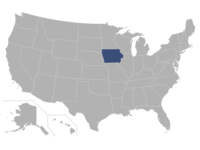
Des Moines, IA