Nashville court rules state must preserve all records from botched Tennessee execution
Oct 07, 2026 | 4:01 pm ET

Description
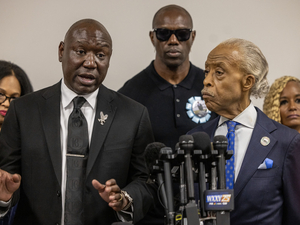
Randy Spivey, an attorney for Christa Pike, gives an update on her condition following Tennessee’s botched execution on Sept. 30, 2026. (Photo: John Partipilo/Tennessee Lookout)
A Davidson County Chancery judge ordered Tennessee officials on Wednesday to preserve all evidence related to the botched execution of Christa Pike.
Chancellor I’Ashea Myles ruled that the Tennessee Department of Correction must “preserve all evidence” related to the failed execution of Pike by two rounds of lethal injection last week.
Myles’ ruling comes one day after Pike woke up, with her lawyers confirming she was “confused, “angry” and talking at a local hospital.
Randy Spivey, an attorney for Pike, said she is battling a blood clot, pneumonia and severe swelling in her arms and hands, and she has a long way to go before recovering.
“On Monday night, it was our understanding [Pike] was brain dead and life support would be removed the next day,” said Spivey at a news conference. “But on Tuesday, to the shock of everyone… [she] woke up and was talking.”
Pike was sentenced to death for the 1995 killing of her classmate Colleen Slemmer. Pike was 18 years old when she and her then-17-year-old boyfriend Tadaryl Shipp tortured and killed 19-year-old Slemmer in a wooded area in Knoxville. Shipp, ineligible for the death penalty because of his age, got a life sentence.
May Martinez, Slemmer’s mother, recently described her daughter to WIBR Knoxville as compassionate and playful, and said she is saddened that the execution often overshadows her identity.
Pike, now 50, was set to be executed on Sept. 30. She would have been the first woman to be put to death by Tennessee in more than two centuries. But on the night of her scheduled execution, the lethal injection drug pentobarbital failed on two separate attempts.
By protocol, after the second failed attempt, she was transported from Riverbend Maximum Security Prison in Nashville,where the execution was taking place, to the hospital where she remains.
Tennessee changed its lethal injection protocol in 2022, following a review of its effectiveness by Gov. Bill Lee. The state resumed lethal injections in 2025, executing four people over the span of the next 15 months.
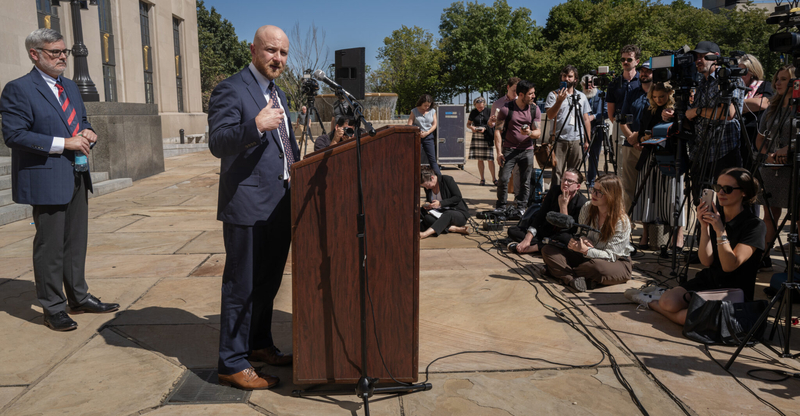
The state also failed in its execution of Tony Carruthers in May. Lee stepped in to stop Carruthers’ execution when physicians tried and failed for more than an hour to insert intravenous lines to begin the process in what was later described as “bloody torture.”
Carruthers was granted a one-year reprieve by Lee, who has so far made no announcement about Pike’s status on death row.
Lee tapped former U.S. Attorney Ed Stanton to lead an independent review of the state Department of Correction’s process in Pike’s botched execution, and has paused all executions through the end of the year.
In January, the term-limited Lee will leave office. U.S. Sen. Marsha Blackburn, the GOP nominee for governor, and other Republican legislative leaders discussed bringing back the electric chair for executions.
State lawmakers are expected to take up the issue during next year’s legislative session, which starts in January.
In the months leading up to Pike’s execution, her lawyer warned state officials that past difficulty with finding her veins to draw blood could lead to a more painful, potentially unsuccessful attempt to kill her.
Luke Ihnen, a second Pike attorney, argued in court Wednesday that records about her attempted execution needed to be preserved, because the public could “not take the state’s word.”
“Their word is shrouded in secrecy and legal jargon in attempts to obfuscate what really happened,” Ihnen said.
Will Ayers, a lawyer with the Tennessee Attorney General’s Office, said in court the state was already planning to preserve the evidence from the execution and was willing to work with Pike’s attorneys.
Nashville, TN