Lawmakers call on state Supreme Court to extend deadline for skill games
Oct 07, 2026 | 2:20 pm ET
Description
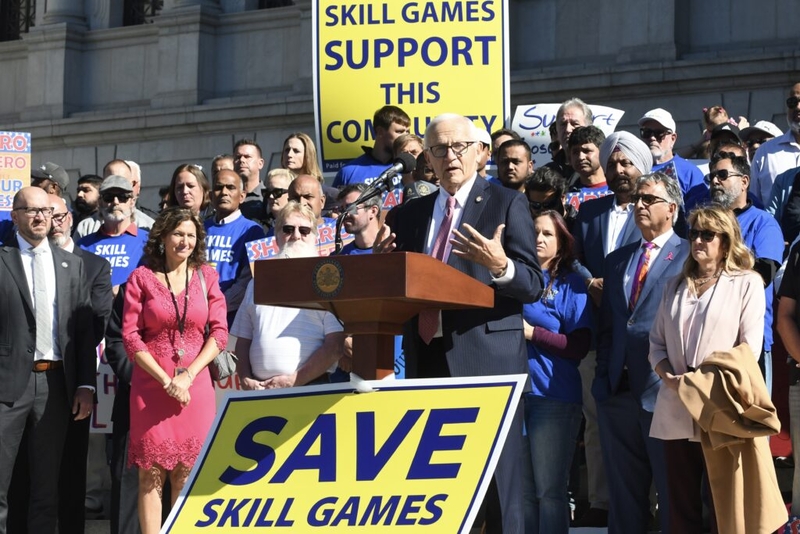
State Sen. Gene Yaw (R-Lycoming) speaks at a rally Tuesday, Oct. 6, 2026, where business owners and volunteer organizations urged lawmakers to pass legislation to legalize and tax skill games. (Photo by Peter Hall/Pennsylvania Capital Star)
Four state lawmakers with pending legislation to tax and regulate skill games have asked the Pennsylvania Supreme Court to extend the stay on its finding that the devices are illegal gambling machines.
Sens. Gene Yaw (R-Lycoming) and Anthony Williams (D-Philadelphia) and Reps. Danilo Burgos (D-Philadelphia) and Jonathan Fritz (R-Wayne) filed a petition Wednesday asking the justices to exercise the court’s “King’s Bench” power to give the General Assembly more time to pass legislation regulating and taxing skill games.
Recognizing the impact its June 15 ruling would have on skill game hosts and operators, the Supreme Court instructed that no law enforcement agency was to act on the decision for 120 days. That safe harbor period expires Oct 13.
The lawmakers requested an extension until Feb. 10.
The high court ruled that skill games are subject to the Gaming Act and the Crimes Code. As a result, anyone operating a skill game machine is required to be licensed by the state Gaming Control Board.
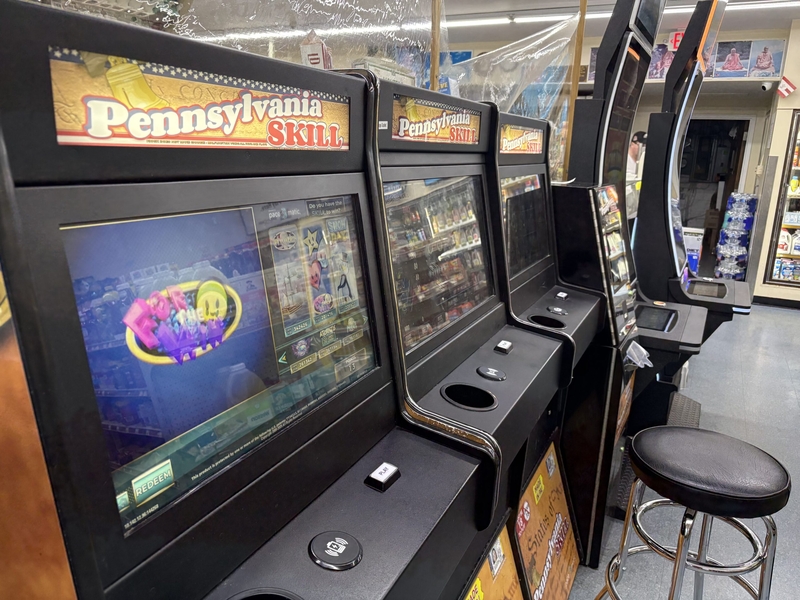
Skill games are slot machine-like devices that have proliferated in the last decade across the commonwealth in corner stores, bars, gas stations and volunteer organizations such as fire halls and American Legion posts.
Pace-O-Matic, the Georgia-based company that produces software for the games, argued the machines differed significantly from slot machines because players are offered an opportunity to win their money back.
Attorneys for the commonwealth argued before the Supreme Court that few players actually make the effort to win their bets back and that the machines are functionally the same as casino slot machines.
The Pennsylvania State Police and the state Attorney General’s Office have warned that skill games must be removed from establishments before the ruling takes effect.
Since June, business owners and volunteer groups that have come to rely on the machines have urged lawmakers to act. And despite bills passing in both chambers of the legislature, neither the House nor the Senate has concurred in the other’s legislation.
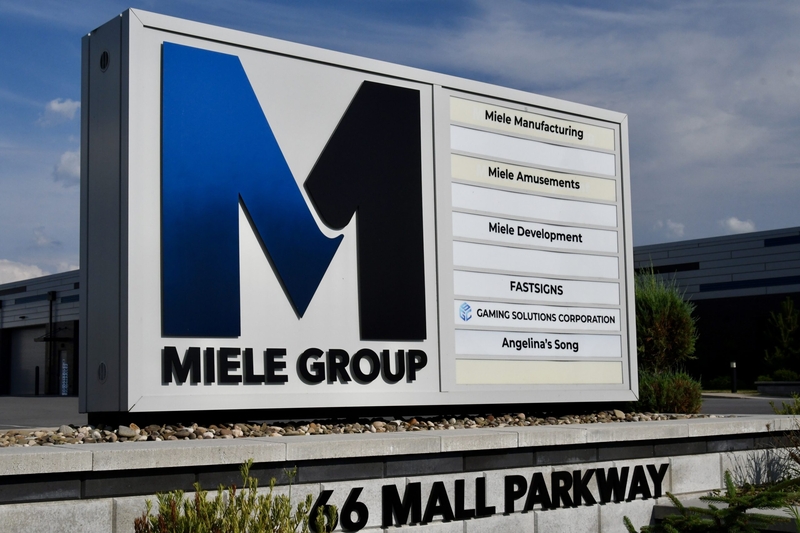
Speaking at a rally for skill game legalization Tuesday at the state Capitol, Yaw said he has been working on legislation for six years. His Lycoming County district is home to Miele Manufacturing, which produces Pace-O-Matic’s Pennsylvania Skill games.
Yaw is the prime sponsor of a bill that would establish a $500 per game monthly fee he estimated would generate $300 million in new revenue for the state. Other legislation has proposed taxes between 16% and 35%.
The commonwealth’s casino industry, which has lobbied heavily against skill games, is taxed at a hefty 55% and pushed for a comparable rate.
“I’ve told our leadership, put my bill up, run it,” Yaw said, adding. “If it fails, I’ll go away. I don’t think it will fail.”
Despite a range of options, the lawmakers said in their petition to the Supreme Court that “the legislative process will not be complete by Oct. 13.” After Wednesday, the House and Senate have five voting days left before the session expires
Allowing the ban to take effect before the legislature can act would complicate the process of licensing the machines, the petition says.
“Petitioners do not seek the extension because law enforcement agencies are unable to enforce existing law. They seek it because widespread seizure and impoundment of devices in the weeks before enactment would make prompt implementation of the legislation materially more difficult,” it says.
Harrisburg, PA