Legislators said eligible Idahoans won’t lose care over work requirements. Let’s hold them to that.
Oct 07, 2026 | 6:00 am ET
Description
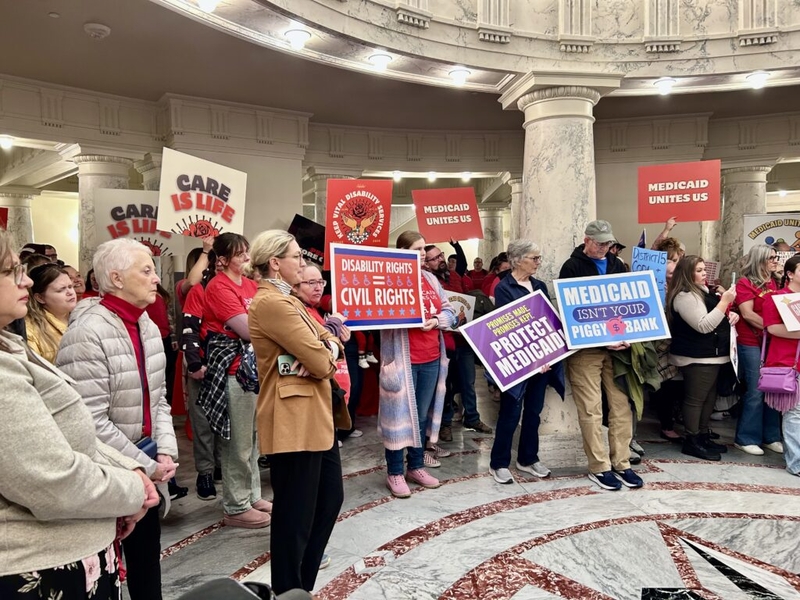
Hundreds of Idahoans gathered in the rotunda of the Idaho Capitol on Jan. 12, 2026, to protest proposed cuts to the state's Medicaid program. The protest, organized by Idaho Voices for Children, took place before the governor's State of the State Address. (Photo by Christina Lords/Idaho Capital Sun)
One thing we know for absolute certain in Idaho: Our people understand the value of Medicaid expansion.
We voted to adopt Medicaid expansion in 2018 through ballot initiative started after years of inaction by the state Legislature, with more than 60 percent of Idaho voters supporting expanded healthcare access.
When the state Legislature became very active in attempts to weaken and repeal that voter-approved expansion seemingly as soon as they could, Idahoans showed up. They traveled to Boise to let lawmakers know that the program was not a suggestion, but a mandate and more than 80,000 of our friends, family and neighbors relied on it.
Idaho’s Medicaid work requirements start in January. Here’s how they will work.
Some of the busiest days at the Capitol are when everyday Idahoans show up to have their voices heard on a healthcare bill when lawmakers have tried to repeal the program or institute confusing bureaucracy via work requirements. The halls are packed and hearing rooms overflow with Medicaid supporters who vastly outnumber those who advocate cuts at around 100-1 … and the one is very often not somebody from Idaho.
Most Idahoans, myself included, don’t think much about the details of our health insurance until we need it. For someone with cancer, that could mean discovering at a doctor’s appointment, while scheduling a scan, or even in the middle of treatment or recovery that they no longer have Medicaid coverage due to the work requirements that will add red tape to the program starting in January.
Then what?
Do they delay treatment while trying to navigate the paperwork? Do they skip a follow-up appointment or prescription they can no longer afford?
For most, there isn’t another insurance option waiting in the wings. These are Idahoans who already qualified for Medicaid, including people whose serious medical conditions should qualify them for a medical frailty exemption.
Administrative red tape should not become another obstacle between a cancer patient and the care they need. When that happens, the consequences aren’t limited to the patient. Their families suffer too and local care providers must then care for somebody with no ability to pay the bill.
It’s a terrible scenario and one Medicaid expansion has prevented from being widescale.
This past session, House Bill 913 established the Jan. 1 start date for federally mandated work requirements. Medicaid proponents had requested a one-year extension to give the Idaho Department of Health and Welfare and our residents more time to learn about the changes and implementation.
That did not happen, so we hope Idaho lawmakers grasp fully their responsibility to hold true to the promises they made clearly and often during all those Boise debates over work requirements. Then, they were firm in their convictions that no eligible person would ever be stripped of healthcare.
Policymakers should be just as committed now to making work requirement exemptions clear and accessible as they were about putting them into law. Coverage losses from work requirements usually aren’t because someone suddenly became ineligible, but because eligible people get caught in paperwork, reporting requirements, missed notices or other government bureaucracy.
That distinction matters because it means people who are supposed to get care are forced to go without. Someone who otherwise could treat a medical condition and work, care for family members, and otherwise be active in their community could lose their coverage, get sicker until they can no longer work and be forced to a hospital and incur expensive medical debt, or worse.
It would be dirty business to balance savings on the backs of people who qualify for coverage but can’t successfully navigate another administrative hurdle.
There is no real possibility that all eligible people who need coverage will remain on the rolls when this requirement is implemented, but simply a matter of how many will be erroneously kicked off, and what the consequences will be when they need care but cannot afford it.
More than half of Idahoans need coverage beyond their employment. Many work low-wage jobs and, for them, Medicaid expansion is a lifeline. Insured people also keep our local care providers from the financial struggles that hit when serving a population with a high number of uninsured people.
Lawmakers and Idaho Department of Health and Welfare leadership can do a lot to help keep people covered in the coming months. They can minimize barriers to enrollment, offer robust and easily accessible educational information on the process and communicate clearly on changes coming so folks don’t get caught unaware.
These new requirements create real challenges for many Idahoans. Lawmakers and state officials now have a responsibility to ensure implementation does not create unnecessary barriers to care for the very people these programs are intended to serve.
Boise, ID