Historic dichotomy underlies data center debate
Oct 08, 2026 | 6:00 am ET
Description
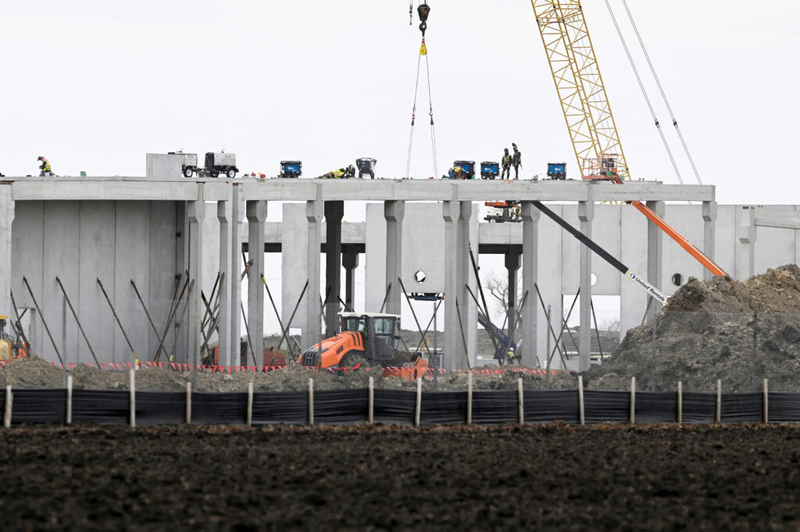
Crews work on the Applied Digital data center construction in Harwood, N.D., on May 6, 2026. (Photo by Dan Koeck/For the North Dakota Monitor)
The uproar in North Dakota about the wisdom or foolhardiness of data centers is the 21st century version of a long-standing contention in the state. Three episodes in recent history were rooted in conflicting bents in the state’s collective psyche that pit the desire for economic development and the promise of jobs against the instinct to preserve a way of life and protect the natural environment. Not long ago it was about lignite strip mine reclamation, air pollution from electrical generation stations, and oil development damage to the Badlands. The sentiments that drove those conflicts are, in part, the same that motivate the debate about the data centers phenomenon.
The late Arthur Link, who was governor from 1973 to 1981, presided over the expansion of lignite mining in the central part of the state. The mines were (and are still) gigantic scars in the earth that look like moonscapes. The concern that Link emphasized was how the land would be restored after the “one-time harvest” was over. He fought tirelessly to force the Legislature and out-of-state coal companies to adopt a reclamation mandate that would become a model for the nation. His 1973 speech, “When the Landscape is Quiet Again,” is one of the most eloquent, most significant addresses in the state’s history.
Despite powerful opposition and warnings that his agenda would kill the coal industry, Link cobbled together a strategy that kept the companies digging, and guaranteed they would restore the land to its original or better condition when the lignite played out. That’s what happened.
Electricity generated in massive plants adjacent to the lignite mines has been an economic boon that began in 1966. But burning low-grade lignite was dirty, and almost from the beginning of large-scale electrical generation in North Dakota, air pollution was a fact the industry did not want to talk about.
When at last the federal government imposed air quality standards (the state had done little or nothing), the power companies warned that cleaning up their smokestack emissions would mean higher electricity rates for North Dakota consumers. They descended on editorial boards and radio talk shows to insist they could not meet clean-air requirements, and at the same time keep costs down, and might even have to shutter plants.
None of it happened. Rates did not skyrocket. The companies cranked up their engineering and scientific expertise and developed “scrubbers” and other technologies to clean up their act. They even adopted the public relations mantra “clean coal.” In 2024, 54% of the electricity generated in the state was still coal-fired, according to the Energy Information Administration. Their Chicken Little scenarios were scare tactics.
North Dakota can both welcome data centers and consider public input
Finally, there was Gov. Ed Schafer’s management blueprint for the Badlands as oil and gas development accelerated. He was in office from 1992 to 2000. In his second term, he proposed a comprehensive plan for the state’s only wilderness landscape that would protect “the best of the best” from the damaging incursions of oil drilling, extraction and roads.
Schafer never described himself as an environmental absolutist. He was, however, a traditional western conservationist, in the sense he understood and embraced the concept of smart development alongside necessary preservation. As a native of the west whose family helped develop the sleepy cowtown of Medora into the state’s premier tourist attraction, Schafer’s pragmatic approach to the Badlands had the potential to balance tourism and oil development with ranching and protection of wild places.
His plan was shelved. It fell into obscurity as the state’s dominant political ideology favored all-out development over anything that hinted of environmental protection. Its fate was a reflection of the state’s historical discord over competing values – a longstanding argument with itself.
And that’s where North Dakotans find themselves today as they wrangle with the prospect of data centers in their backyards. It’s the same dilemma, the same dichotomy as it was with lignite mines, power plants and oil booms. This time, however, making the wrong decisions could be devastating because data centers are popping up everywhere; and no one has offered a credible assessment of their long-term consequences.

Bismarck, ND