Supreme Court denies latest challenge to Indian Child Welfare Act
Oct 06, 2026 | 4:14 pm ET
Description
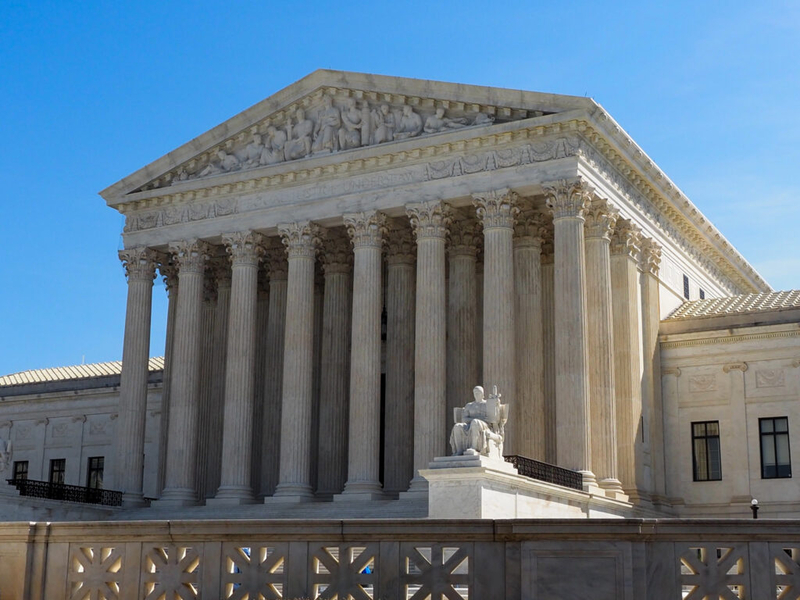
The U.S. Supreme Court on April 9, 2026. (Photo by Ashley Murray/States Newsroom)
Reprinted with permission from The Imprint.
The U.S. Supreme Court will not take up the most recent attempt to dismantle the 1978 Indian Child Welfare Act, according to the docket posted Monday, leaving in place a Minnesota lower court’s ruling.
The case involves Red Lake Nation twins who were placed in a temporary foster placement four years ago. The white couple who cared for the siblings for more than a year sought to regain custody after the children were placed with relatives. Under ICWA, tribal children’s kin and community members are prioritized for foster care placements over non-Native caregivers.
“My clients are deeply disappointed,” Mark Fiddler, who served as co-counsel for the foster couple, said in a statement sent to The Imprint.
Fiddler, a member of the Turtle Mountain Band of Chippewa Indians, vowed to continue his yearslong effort to overturn the federal law, which he says “creates a separate and unequal system for Indian children.”
“The fight for equality for Indian children will go on,” Fiddler wrote.
Three years ago, the Supreme Court overturned a similar constitutional challenge to ICWA brought by Fiddler and his legal team in Brackeen v. Haaland.
The latest Supreme Court petition was filed May 4 on behalf of foster parents Kellie and Nathan Reyelts. Local attorneys teamed up on the case with the Goldwater Institute, an Arizona-based conservative think tank. They sought to overturn ICWA and the local version of the federal law, the Minnesota Indian Family Preservation Act. Both require heightened efforts before tribal children and their families can be separated in child welfare cases.
The legal challenge alleged that the laws protecting Indigenous children, families and tribes racially discriminate against white foster parents such as the Reyelts.
“Each day, children like those involved in this case are denied the possibility of safe, loving homes, solely because of the color of their skin,” the plaintiff’s May petition reads.
Minnesota’s state Supreme Court rejected that argument in March, ruling that the Reyelts do not have standing in the case. Indigenous legal scholars maintain that ICWA is not a race-based law, because it hinges on the government-to-government relationship between tribes and the U.S.
The Protect ICWA Campaign, which includes several Indigenous rights groups, praised the high court’s rejection of the plaintiff’s petition, calling ICWA the “gold standard in child welfare policy.”
“We are pleased that the Court rejected another unwarranted attack on ICWA,” said the group in a press statement. Monday’s denial “supports the best interests of Native children, families, and communities.”

Saint Paul, MN