New Mexico behavioral health committee meets goal of approving all 13 regional health plans
Oct 06, 2026 | 2:44 pm ET
Description
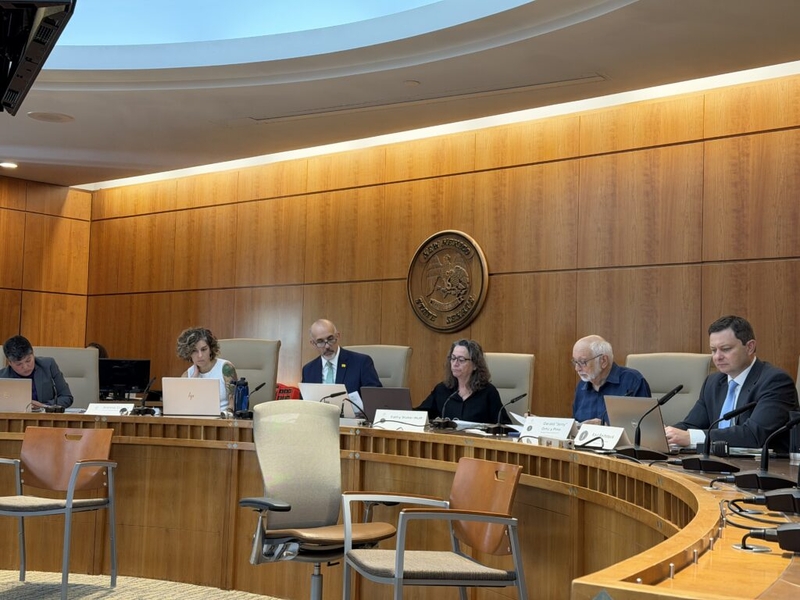
Members of New Mexico's Behavioral Health Reform and Investment Act Executive Committee — from left to right: Violette Cloud, Alanna Dancis, Nick Boukas, Kathy Slater-Huff, Gerald “Jerry” Ortiz y Pino and Karl Reifsteck — pictured on Aug. 14, 2026. The committee on Oct. 6, 2026, passed the remaining two regional behavioral health plans. (Photo by Joshua Bowling/Source NM)
The committee overseeing New Mexico’s efforts to rebuild behavioral health infrastructure across the state hit an important milestone Tuesday by approving the two outstanding regional plans in the state’s 13 behavioral health regions.
Outgoing Gov. Michelle Lujan Grisham signed Senate Bill 3, known as the Behavioral Health Reform and Investment Act, into law in 2025. It established 13 behavioral health regions across the state — patterned closely after the state’s 13 judicial districts — and tasked county, city and tribal officials with identifying their communities’ biggest behavioral health needs, from treatment facilities and behavioral health workforce to transportation and strengthening youth, family, school and caregiver support.
The law sought to address issues that arose after Republican Gov. Susana Martinez accused several behavioral healthcare providers of fraud, which spurred a mass departure of providers from the state.
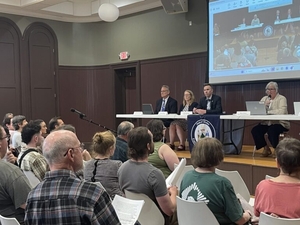
The Behavioral Health Reform and Investment Act Executive Committee on Tuesday approved plans for regions 4 and 12, which include Mora, San Miguel and Guadalupe counties and Lincoln and Otero counties, respectively. The two plans carry a combined price tag of nearly $13.5 million. With the funding, local officials hope to address a variety of issues, including behavioral health workforce recruitment and housing.
“We have all 13 plans approved…I just want to thank everyone for their hard work,” Nick Boukas, the executive committee chair and director of the state Health Care Authority’s Behavioral Health Services Division, said at the meeting.
Virtually since the executive committee’s work began, it’s faced criticism from lawmakers in both parties for what they’ve described as a lack of focus and slow progress. Some local officials have voiced similar concerns, saying that they’ve often relied on “nebulous” goals when crafting their regional plans. At an August committee meeting, for example, committee members disagreed on how to address the fact that leaders from New Mexico’s pueblos, tribes and nations did not always have clarity regarding whether they were automatically included in their corresponding region’s plan.
One committee member, former state Sen. Gerald “Jerry” Ortiz y Pino, on Tuesday said some of those issues persist. He recounted how he recently met with a state lawmaker and the leaders of a state agency who were requesting workforce development funding for an alcohol and drug treatment plan.
The state lawmaker “turned to me and said, ‘Well, you’re on that SB3 committee. That’s what you’re supposed to be doing,’” Ortiz y Pino said. “The Legislature, when they passed SB3, thought we were going to be doing a lot more than we’ve been doing. They thought we were going to be taking a look at the totality of behavioral health in the state.”
Santa Fe, NM