Idaho’s general election is less than a month away. Here’s what you need to know.
Oct 05, 2026 | 6:10 am ET
Description
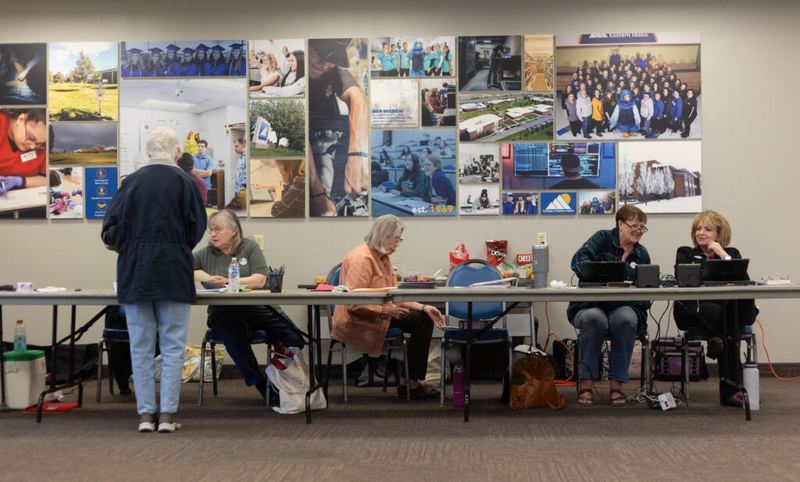
Bonneville County poll workers help voters get their ballots for the primary election on May 21, 2024 at the College of Eastern Idaho in Idaho Falls. (Pat Sutphin for the Idaho Capital Sun)
With a little less than a month left until the 2026 midterm election, here’s how Idaho voters can start preparing.
This election, statewide offices including the governor, lieutenant governor, attorney general, state superintendent, state controller and state treasurer; congressional seats in the U.S. House and Senate; and state legislative seats are on ballots. So are local races like for county commissioners, highway district officials and even a runoff election for an Ada County judge.
Voters can also in on a range of ballot issues, such as Proposition 1, a ballot initiative that would end the state’s abortion ban and establish reproductive rights; a proposed constitutional amendment that would allow only the Legislature to legalize drugs, such as marijuana; a constitutional amendment that would declare English as the state’s official language; and an advisory question that solicits a public vote to declare a state gun.
What is a general election?
The general election, on Nov. 3, is when voters can decide between party nominees and independents to win elected political offices, and on ballot measures. Midterm elections — which happen in years in which the president is not on the ballot — tend to draw less turnout than presidential election years.
How can you vote?
There’s three ways to turn out to vote:
- Absentee voting is the only form of voting available right now. In Idaho, voters can request absentee ballots without needing to state a reason. Absentee ballots can be requested from your local county clerk’s office — or online through the Secretary of State’s website, VoteIdaho.gov — until end of day on Oct. 23. Those ballots can be turned in in-person, or by mail. They are due to election offices by the time polls close on Election Day, at 8 p.m. local time on Nov. 3. If you wait to submit your absentee ballot until close to Election Day, officials encourage you to turn it in physically to ensure it is counted. (You can track your absentee ballot online.)
- Early voting will be the next form of voting made available. That’s when voters can show up early to select locations to cast ballots in-person. Early voting can start Oct. 13, and must end by 5 p.m. Oct. 30, but check with your local county clerk for specific dates in your area.
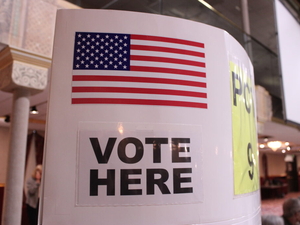
- Voting at the polls is when voters turn out to their local polling places on Election Day. Polls will be open 8 a.m. to 8 p.m. local time on Nov. 3. If you are in line before 8 p.m., you will be able to vote.
When do I need to register to vote?
If you want to vote before Election Day, you must be registered to vote. And if you’ve moved since you last registered, you need to update your voter registration. If you haven’t voted in the past four years, you may need to re-register to vote because state elections officials might have removed you from the registered voter pool.
The deadline to register to vote before Election Day is 5 p.m. Oct. 23. In-person early voting allows same day voter registration, Secretary of State Office spokesperson Joe Parris said.
If you are planning to vote on Election Day, you can register to vote or update your voter registration at the polls that day.
Want to check if you’re registered to vote? Look it up online on VoteIdaho.gov. (You’ll need your driver’s license handy.)
Here’s what you’ll need to register to vote:
- Two types of documents: A form of approved photo identification, and proof that you live in Idaho.
- Photo ID types allowed: An Idaho driver’s license, or free state identification card; a passport or federal ID; a tribal ID card; or a concealed weapons license, issued by an Idaho county sheriff.
- Proof of residence allowed: If the photo ID you plan to use has your current address, you’re likely covered here. But if not, you need a separate proof of residence. That could include a mortgage, lease, or rental agreement; proof of insurance; utility bills, besides for a cellphone; a property tax bill or assessment; a statement from your credit card or bank; a paycheck or paystub; an enrollment letter from an Idaho high school or university; an intake document to a care facility; or a letter from a social service agency.
To register to vote, you must be a U.S. citizen, at least age 18, who has lived in Idaho for at least 30 days before the election. People who have been convicted of felonies cannot register to vote until they have completed the terms of their sentence.
You can register to vote online. Idahoans who register to vote online can either submit a picture of their photo ID and take a selfie photo to confirm their identity, or verify that information in person at their county election office or the polls, Parris said.
To find information about issues on the ballot, see the Idaho Capital Sun’s voter guide or a physical or online version of the Secretary of State Office’s voter pamphlet. The voter pamphlet does not include information about candidates.
Boise, ID