Michigan Supreme Court revives appeal of ‘factory farm’ discharge permit in light of Line 5 ruling
Oct 01, 2026 | 9:56 am ET
Description
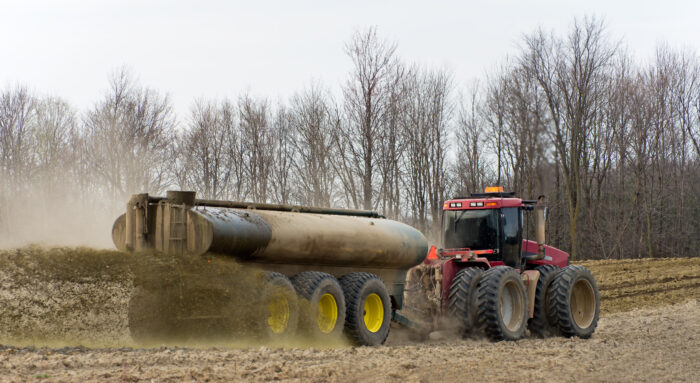
A farmer with a large tractor spreading liquid manure on a ploughed field on an overcast spring day. | Simply Creative Photography/Getty Images
A ruling from the Michigan Supreme Court regarding a permit for Enbridge’s Line 5 tunnel project is echoing into other aspects of the state’s environmental permitting process, as the state’s high court encouraged the Court of Appeals to take another look at a case centered on regulations for Michigan’s factory farms.
In late July, the high court determined state energy regulators did not properly consider the environmental harms when they granted one of the permits needed to move ahead on plans for replacing the dual pipelines resting on the bed of the Straits of Mackinac with a new segment housed in a utility tunnel beneath the lakebed.
In another case, the Michigan Court of Appeals denied an appeal from Flow Water Advocates arguing the state’s environmental agency did not properly apply the Michigan Environmental Protection Act in permit proceedings for wastewater discharged by concentrated animal feeding operations, also known as CAFOs. In lieu of granting an appeal, the high court has instructed the Court of Appeals to consider the Line 5 ruling on remand.
“Flow and our partners were deeply gratified by the High Court’s decision in the Line 5 tunnel permit case,” Liz Kirkwood, the executive director of Flow, said in a statement. “And while that decision certainly marked an important milestone in the fight to get oil out of the Great Lakes, just as important are the ripple effects we are now seeing — this powerful precedent can now be applied to other critical threats to our waters, like CAFO pollution.”
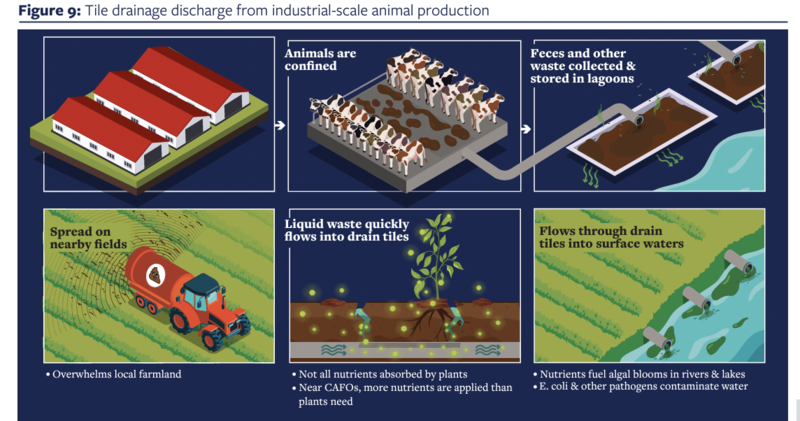
Flow and other environmental advocacy groups have argued for stricter regulations of CAFOs and the waste they generate. According to a 2024 report from the Environmental Law and Policy Center, livestock at these feeding operations in Michigan generate 62.7 million pounds of waste daily.
This waste is often applied to fields as fertilizer, which can lead to excess manure making its way into groundwater and nearby waterways, leading to E. coli contamination and nutrient pollution, which can create harmful algal blooms.
Flow Water Advocates requested a declaratory ruling from the Department of Environment, Great Lakes and Energy in 2024, contending that the Michigan Environmental Protection Act requires a separate, independent analysis when permitting concentrated animal feeding operations. In conducting this analysis, EGLE must consider the likely pollution or impairment of the environment alongside the range of alternatives available to prevent pollution.
EGLE argues the Michigan Environmental Protection Act is supplemental to the state’s Natural Resources and Environmental Protection Act, and thus does not require a separate review.
While EGLE’s position was affirmed in circuit court, Flow says the Michigan Supreme Court’s recent order to the Court of Appeals signals to lower courts that when they review permits, state agencies must separately apply the Michigan Environmental Protection Act and public trust common law to all permitting decisions with implications for Great Lakes waters and bottomlands.
“Public rights to our public waters are empty promises without permitting systems that prevent pollution and harm to our water ecosystems,” Kirkwood said, noting that laws like the Michigan Environmental Protection Act are vital to protecting the public’s rights to make use of the state’s waters.
Lansing, MI