NC election experts warn about voter trust as AI makes political misinformation easier to create
Oct 02, 2026 | 2:50 pm ET
Description
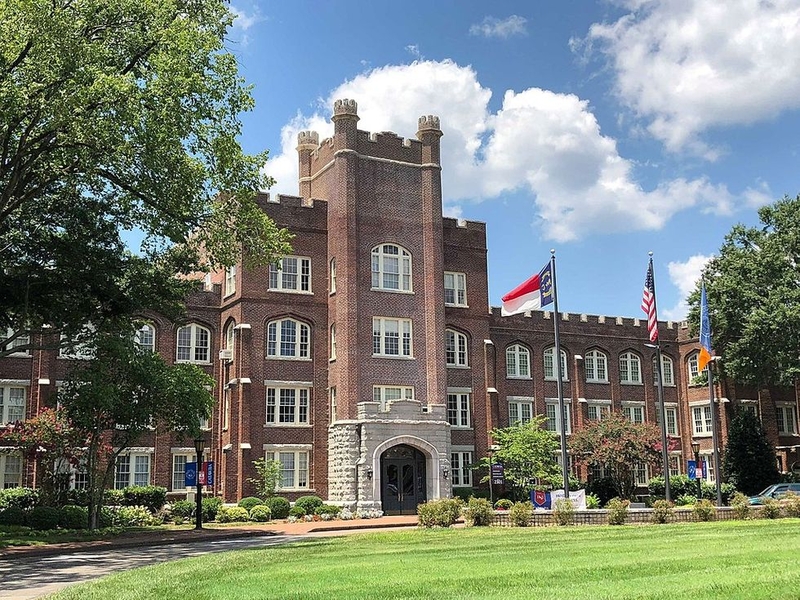
Catawba College in Salisbury, home to a new center on state politics that will work to promote civic engagement and public service. (Photo: Courtesy Catawba College)
SALISBURY — Artificial intelligence is making it easier to create realistic political images, videos and audio, leaving voters with a new question as they head toward the midterm elections: How do they know what they are seeing is real?
That question was at the center of a panel discussion at Catawba College’s “Ballots & Bots” event earlier this week, where election officials, journalists and students discussed the growing challenge of protecting public trust as AI becomes more common in political campaigns.
The discussions ranged from deepfake political ads and election misinformation to the role of local election boards.
Catawba College political scientist and pollster Michael Bitzer said the problem extends beyond voters simply believing a deepfake or other manufactured content. He said AI could make people increasingly skeptical of legitimate information.
“It’s not just about us promoting the issues of secure procedures to raise confidence in our elections; it also needs to be sustained by a public that can see, understand and trust these procedures,” Bitzer said.
Catawba College also released a survey of 1,000 North Carolinians, which found 70% of voters were very or somewhat confident in the integrity of the state’s elections.
But Bitzer said the larger challenge is making sure voters understand how election systems work and know where to turn when they encounter questionable information.
Transparency as a safeguard
Dave Boliek, North Carolina’s state auditor, said election officials, journalists and voters all have a responsibility to get accurate information into the public conversation.
Boliek pointed to the closely contested state Senate District 26 race as an example of how transparency can build confidence.
The race was between State Senate President Phil Berger (R-Rockingham) and his primary rival, Rockingham County Sheriff Sam Page. After two recounts, Berger conceded that he lost by less than two dozen votes.
The State Board of Elections issued detailed guidance explaining how the recount would unfold, including appeal rights and timelines. Local election boards also broadcast and streamed portions of their proceedings.
Boliek said North Carolina’s locally administered election system can provide another layer of trust, because voters can see people from their own communities overseeing elections.
“Your neighbors are the ones running the elections,” he said.
That local connection shows up in Catawba’s survey: 75% of North Carolinians said they were confident their own county would accurately count and report votes, compared with 58% who were confident votes would be accurately counted outside the state.
However, Boliek’s own role in the election process has been called into question.
The legislature passed a controversial law after the 2024 election cycle transferring Board of Elections appointment power to Boliek, taking that power away from Democratic Governor-elect Josh Stein.
An NC Appeals Court panel recently ruled that the General Assembly did not violate the Constitution when it transferred those powers, but Boliek is the only auditor in the country to oversee elections.
NC Appeals Court OKs auditor appointing elections board members
What should AI Safeguards look like?
The panel discussion also focused on whether campaigns should be required to disclose when they use AI in political advertising.
Some states have adopted disclosure requirements for AI-generated campaign ads. But North Carolina has not. Panelists said labeling AI ads could give voters additional information without preventing them from seeing the content itself.
Veronica Degraffenreid, from the Brennan Center’s Elections and Government program, said election officials and democracy organizations have also spent significant time planning for potential disruptions before they happen, including scenarios involving deepfakes and other AI-generated misinformation.
The idea is to have a response ready before deceptive content spreads rather than trying to develop a strategy after the content has been viewed thousands of times.
Existing laws can provide some avenues for accountability, panelists said, including laws governing defamation, but whether those laws apply depends on the circumstances.
“It is a daunting new world that we now live in because of AI, but the world is again just amplified,” she said. “If you see something or hear something, don’t believe it outright. Go to your trusted sources.”
She said that although trusted sources differ from individuals, it’s important that those sources are providing voters with factual information about local, state and national elections.
Raleigh, NC