Education advocates to legislature: No cuts to Blueprint education plan
Sep 30, 2026 | 5:00 am ET
Description
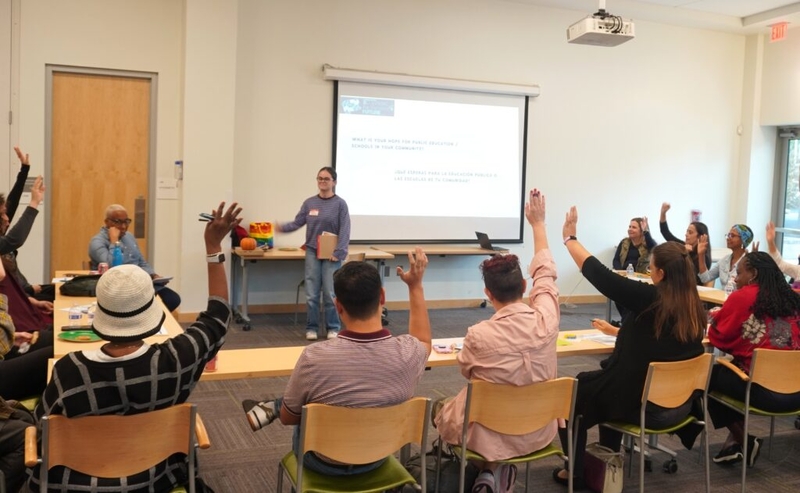
Attendees raise their hands after Kenzie Funk, standing, a policy advocate for Strong Schools Maryland, asked a question about education during a community meeting at Elkridge Branch Library in Howard County. (Photo by William J. Ford/Maryland Matters)
They acknowledged the looming budget shortfall, and said there have been challenges implementing the Blueprint for Maryland’s Future, the state’s sweeping education reform plan, but those weren’t the main themes at a meeting on the plan Tuesday.
“They better not cut it,” said Cheryl McLeod of Howard County after a two-hour meeting Tuesday night.
McLeod, a member of a nonprofit organization called World Class Grads, was among two dozen parents, educators, community leaders and others gathered at the Elkridge Branch Library to talk about education, with a specific focus on the Blueprint.
It was the latest in a series of meetings by the Blueprint Coalition, a collection of nonprofit organizations, community leaders and education advocates who support implementation of the 10-year, multibillion-dollar plan. Five years in, the costly plan is increasingly seen as a target for lawmakers grappling with budget issues in the 2027 legislative session.
The coalition has already held community sessions in Montgomery and Prince George’s counties. Another meeting is scheduled in Baltimore City and at least one more virtually in the next two months. The General Assembly convenes for the 2027 session Jan. 13.
“The main point of this conversation is that we stay connected and continue talking about it, especially as we lead up to the legislative session,” said Kenzie Funk, policy advocate for Strong Schools Maryland.
In respect to the Blueprint, some people said Tuesday that challenges in their communities include hiring and retaining staff, teacher preparation programs in higher education and larger class sizes.
A summary at the meeting outlined the five pillars, or priorities, of the plan: early childhood education; high-quality and diverse teachers and leaders; college and career readiness; more resources for students to be successful; and governance and accountability.
Those at the meeting acknowledged the state faces a projected $3 billion budget gap for the upcoming fiscal year, about $1.8 billion of which is tied to education under the Blueprint, according to the Maryland Associations of Counties (MACo).
The projected budget shortfall for fiscal 2028 also comes in the first year in which Blueprint costs will exceed dedicated revenues. To cover the balance, the state will have to dip into the general fund, as a first-in-the-nation digital ad tax that was supposed to help pay for the Blueprint remains in legal limbo.
At least one group will offer the General Assembly a solution to bring in revenue to help close the gap.
Fair Share Maryland, a coalition of 75 organizations, will renew its call for the passage of a tax package known as the Fair Share Act. The 2024 proposal included changes to corporate income tax reporting, increased taxes on the state’s wealthiest residents, more auditors and increased capital gains surcharges. Supporters claimed it could raise $1.6 billion when fully implemented.
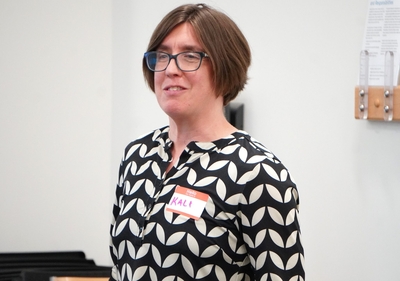
“Those are the kinds of things that we’re trying to fix that could raise revenue,” said Kali Schumitz, director of communication with the Maryland Center on Economic Policy, part of the Fair Share Maryland coalition. “We’ve already been through several cycles of state budget cuts that are affecting a lot of different things already,”
Some changes, even if they’re minor, are already under review.
The Blueprint for Maryland’s Future Accountability and Implementation Board that oversees the 10-year plan is scheduled to meet Oct. 15 to discuss and possibly vote on recommended changes.
One proposal in the 15-page document released this month includes increasing the annual appropriation for the prekindergarten expansion grant program. The General Assembly approved $10 million toward the program in this year’s fiscal budget.
Another proposal would be to allow health assistants lead after-school coverage under the supervision of a registered nurse. But the AIB document notes the Maryland Board of Nursing dictates whether a health assistant can lead an after-school program, even under a registered nurse’s supervision.
The Blueprint Coalition wants to partner and work with legislators, but members said Tuesday that any cuts to the Blueprint are not part of its agenda.
“Yes, it’s not perfect, but we need that funding to move forward, and then we can build upon it,” said Riya Gupta, executive director with Strong Schools Maryland. “But without that base, we’re not going anywhere. We’re going to take a step back because someone’s kid is losing out.”
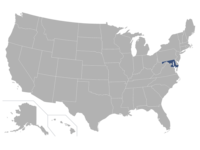
Annapolis, MD