WV Drug Czar Loyd resigns from Morrisey administration after leading state’s opioid response
Sep 30, 2026 | 6:00 am ET
Description
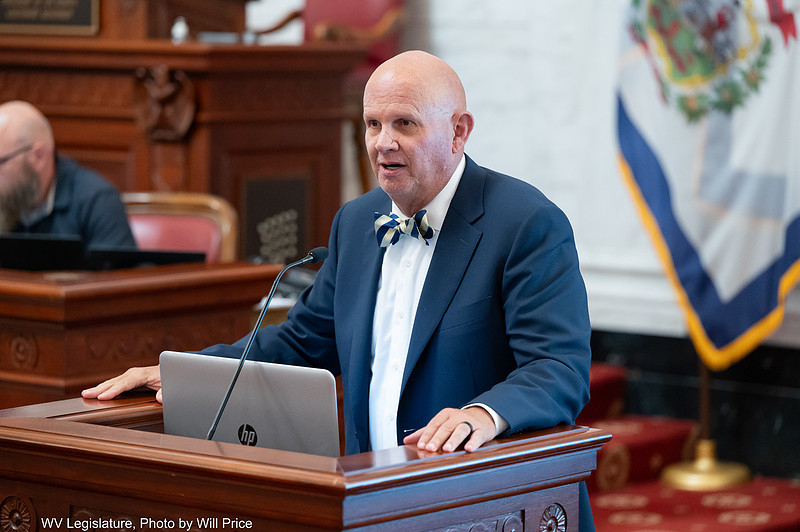
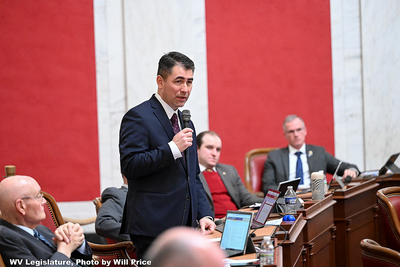
Dr. Stephen Loyd speaks to lawmakers at the State Capitol in Charleston, West Virginia, in August 2026 while serving as the director of the state’s Office of Drug Control Policy. (Photo by Will Price/West Virginia Legislative Photography)
West Virginia Drug Czar Dr. Stephen Loyd has resigned from his role after about two years on the job, he confirmed to West Virginia Watch Tuesday.
“I’m heartbroken,” Loyd said of leaving the role earlier this month.
Loyd, an internal medicine and addiction medicine physician from Tennessee, was appointed by former Gov. Jim Justice to be director of the state’s Office of Drug Control Policy in August 2024. He was the eighth person in the role of state drug czar since the position was created in April 2017.
His is the latest in a handful of high-profile departures for Gov. Patrick Morrisey’s administration. Tourism Secretary Chelsea Ruby resigned in July after five years in the role. Earlier this year, state Human Services Secretary Alex Mayer resigned from his position after about a year on the job.
Sen. Tom Takubo, R-Kanawha, who is a physician, told West Virginia Watch it’s “devastating” that Loyd is no longer in the role. He said Loyd is a national expert who loved and cared deeply about the work he was doing in the state.
“I am concerned that this was a preventable exit,” Takubo said. “My concern is that there wasn’t enough focus from the administration as to how important the substance abuse and drug epidemic is in West Virginia and the incredible work that Dr. Loyd was performing.”
West Virginia continues to lead the nation in drug overdose deaths, though the number of fatalities has declined under Loyd’s tenure.
Loyd said Tuesday that in the year and a half he worked for Morrisey, he did not speak to the governor aside from through a text message around the time he resigned.
“I don’t have any idea what the policy of the administration was,” he said. “I tried to find out.”
Loyd said he was required to report to Human Services Secretary Carl Ayers after Ayers was appointed in July, despite that according to state code, the drug control policy director reports directly to the governor.
“I would have never taken a job to come to report to somebody else,” Loyd said. “I’m 60 years old. I’m not at that point in my career, and that can sound like it wants to. I really don’t care.
“I came to work for Gov. Justice, and then when Gov. Morrisey won, I came to work with Gov. Morrisey. I was ready to, you know, to (do) whatever, you know, what policy he wanted to pursue, I’m the guy, and I still don’t know what that is, even now.”
He added that he has no ill will toward Ayers.
“I’m not trying to impugn anybody. That’s not my goal,” he said. “I’m not upset at any of that, I’m upset because of the people that I left that I love.”
Loyd said being the state’s director of drug control policy was his favorite job he’s ever had.
Last month, he highlighted to lawmakers a 41.6% decline in overdose deaths from pre-pandemic levels. Loyd credited improvement to a range of policies, including overdose response policies and widespread use of naloxone, a medicine used to reverse an opioid overdose.
In a statement through a spokesperson, Morrisey said Tuesday “We wish Dr. Loyd well and thank him for his service and many contributions to the Mountain State.”
Loyd said he’s now working with the Trump administration on the Great American Recovery Initiative, a program established by executive order earlier this year and led by U.S. Health Secretary Robert F. Kennedy Jr. and Kathryn Burgum, the White House’s Senior Advisor for Addiction recovery.
“There’s so much of what we’ve done in West Virginia by the folks that I just mentioned that I think are scalable, I think that other states can benefit from,” he said. “And, you know, to me, that’s the part I’m going to keep working on.
“I’m not leaving my folks behind,” he said. “I love them. I just wished I was still in the role I was in, and I wish, you know, I had had direction, and you know, and relationship with some of the funding mechanisms within the state, mainly the First Foundation.”
Loyd — who earned his medical degree from East Tennessee State University — was previously the chief medical officer at Cedar Recovery in Mount Juliet, Tennessee, and he was chair of the state’s Opioid Abatement Council. Before that, he served as Tennessee’s top drug policy expert, holding the position of opioid czar for the state’s Department of Mental Health and Substance Use for about two years.
He previously worked as a voluntary co-chair of The Helios Alliance, an Alabama-based organization that is using “innovative, transformative (and) evidence-based technologies” to confront the opioid epidemic while educating the public on interventions.
Loyd also has lived experience with substance abuse. He has been in recovery from opioid and benzodiazepine addiction for more than 20 years and is the inspiration for Michael Keaton’s character in the Hulu limited series “Dopesick” (based on the 2018 book of the same name by journalist Beth Macy).
“So much of this is about leadership and direction, and Dr. Loyd is very revolutionary in that oftentimes the country will follow his lead, not just the state of West Virginia,” Takubo said. He added that he had personally attended meetings in D.C. with the Substance Abuse and Mental Health Agency and other states.
“Many of these states are throughout Appalachia that have very similar issues with the epidemic, and I can say firsthand that all of those states would lean on Dr. Loyd for guidance and help,” Takubo said. “He brought an incredible amount of expertise, experience and leadership to the state of West Virginia, which is going to create a massive void in his absence. I only hope that we are as successful in finding a successor as we did in Stephen Loyd.”
Charleston, WV