Missouri judge hears challenge to Boone County charter school expansion
Sep 29, 2026 | 3:48 pm ET
Description
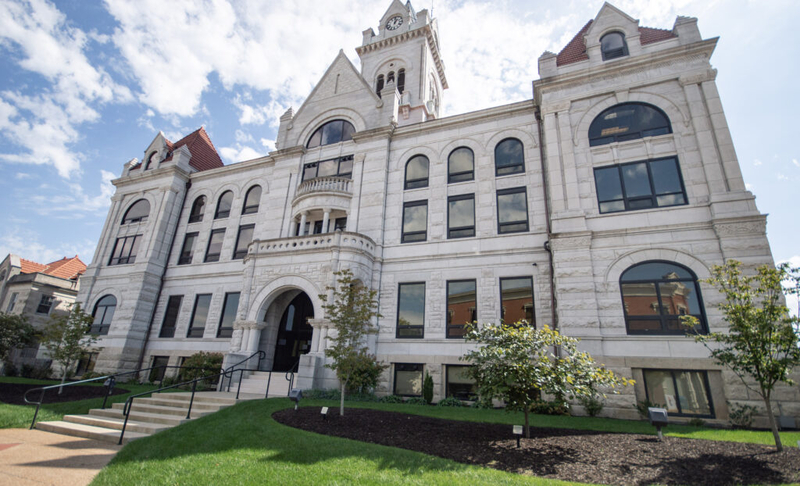
Columbia Public Schools is challenging actions related to charter school expansion into its district in Cole County Circuit Court. (Annelise Hanshaw/Missouri Independent)
A Cole County Circuit Court judge will decide whether to strike down a 2024 law allowing charter schools in Boone County, a case that could further define Missouri’s constitutional ban on special laws.
In a hearing Tuesday morning, attorneys representing Columbia Public Schools asked Circuit Court Judge Emily Fretwell to block a 2024 law that expanded Missouri’s charter school statute to include counties with “more than 150,000 but fewer than 200,000 inhabitants.” Boone is currently the only county that falls within that range.
Previously, charters were only permitted in St. Louis and Kansas City school districts, in districts that have lost accreditation from the state’s education department and where a local school district chooses to sponsor a charter school.
These are all “district specific,” said Grant Wiens, an attorney representing the school district and a Columbia taxpayer. But the 2024 law is “county specific.”
Wiens argues that there is not a reasonable explanation for why Boone County became the state legislature’s sole target for charter school expansion.
The Missouri Constitution bars state lawmakers from enacting local or special laws which single out localities or people when a general law could apply.
Since the 2019 Missouri Supreme Court decision in City of Aurora v. Spectrum Communications Group LLC, Missouri judges have used rational-basis review to determine whether a law is impermissibly special. Under this standard of review, a law is presumed to be constitutional unless challengers can prove that the statute is arbitrary and doesn’t serve a legitimate state purpose.
This standard is “highly deferential to the legislature’s decision,” Assistant Solicitor General Ryan Dugan, who is defending the charter school law, told the judge.
Dugan pointed to several factors that he said could give lawmakers a rational basis for expanding charter schools in Boone County, including standardized test scores showing a wide disparity between different student groups.
“Boone County has the largest achievement gap of any county with more than one hundred fifty thousand residents,” Dugan wrote in the state’s trial brief. “It is not purely arbitrary to limit charter school expansion to the county with the largest achievement gap.”
But Wiens argued that explanation does not account for differences among the several school districts within Boone County, whose achievement gaps vary considerably.
Fretwell asked Dugan what he thought about “the fact that there are districts within Boone County that have relatively small achievement gaps.”
He responded: “The legislature can look at it policy-wise and determine that county-wide would be the best way to administer it.”
Wiens also argued that the state must explain why the law should apply to each of the districts within Boone County — and address why other counties were excluded.
He pointed to a footnote written by Missouri Supreme Court Judge Paul Wilson in April 2025 in a case involving the legislature’s targeting of St. Louis County in a court-reform law. In the bottom margins of his judgment, Wilson wrote, “there must be a rational basis for those locations where a law applies and where it does not.”
Dugan offered some explanation as to why some counties could be considered a bad fit for charter expansion but seemed to disagree that the state had to explain why every other county was excluded.
“It is not this court’s role to question the general assembly’s wisdom or folly in limiting its expansion of charter schools to Boone County, but rather only to determine whether a reasonably conceivable state of facts provide a rational basis for that decision,” he wrote in the state’s brief.
Other attributes that make the county unique, Dugan said, are a highly educated population and the presence of the state’s flagship university.”
But none of those characteristics appears in the statute. Population is the only criterion.
So, Weins said, when other counties reach that threshold, charter schools would presumably be allowed to operate there, too.
Jasper County has around 127,000 residents, according to U.S. Census data, but bears none of the characteristics Dugan cited as reasons for Boone County to host charter schools.
“The question is what is so significant about a county passing through that population range at a single point in time that it permanently justifies charter school expansion,” Wiens wrote in his brief.
Fretwell, who had few questions Tuesday, also asked Dugan about the possibility of the statute applying to Jasper County.
He didn’t believe the hypothetical should guide the decision, saying prior cases only looked at the current population base.
“Rational basis is a highly deferential test,” Dugan said at the close of his arguments Tuesday. “It doesn’t have to be a perfect line. It just has to make sense.”
At the conclusion of the hearing, Fretwell said she would take time to review the case documents before issuing her decision. She gave attorneys two weeks to file post-hearing briefings.
Boone County does not currently have any charters in operation. Unless a court strikes down the 2024 law, Frontier Charter Schools is planning to open in Columbia in the fall of 2027.
Also Tuesday, Columbia Public Schools filed a second lawsuit challenging the State Board of Education’s review of Frontier Charter Schools’ application.
The state education department and board of education “failed to follow internal procedures and state statute throughout the application process, including providing proper notice to the school district on multiple occasions and violations of Missouri’s Sunshine Law regarding open meetings,” the district’s spokesperson Michelle Baumstark wrote in a statement.
The district also alleges that the state education department “inaccurately recommended” that the State Board of Education approve Frontier’s application.
“The state board violated its role as a governing body by rubber stamping advice from (the department), rather than reaching an independent determination,” the statement continues.
In that case, the district is asking for a reversal of the State Board of Education’s approval of Frontier’s application.
Jefferson City, MO