North Carolina high schoolers say schools feel safer, but experts want more school resource officers
Sep 29, 2026 | 2:52 pm ET
Description
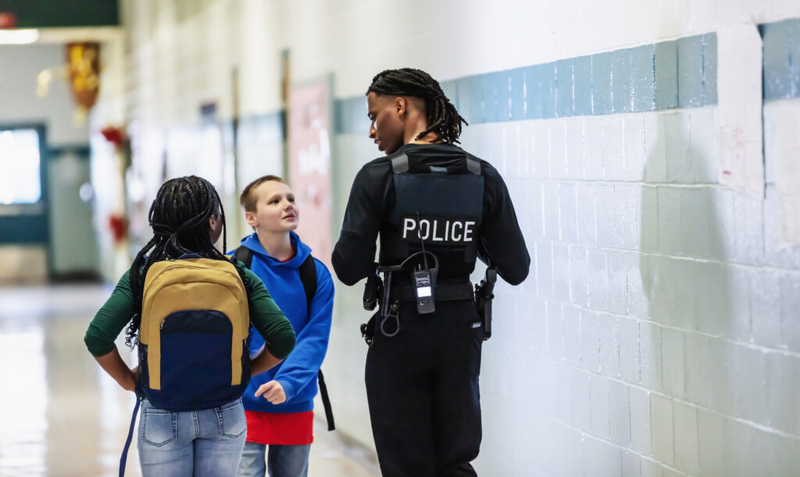
Members of the Governor's Advisory Council on Student Safety and Well-Being plan to advocate for more permanent funding for school resource officers in 2027. (Photo: Getty Images)
Dr. Ellen Essick said there is a lot of good news about mental health in the 2025 North Carolina High School Youth Risk Behavior Survey. But there are areas that clearly need attention when it comes to the overall well-being of North Carolina’s young people.
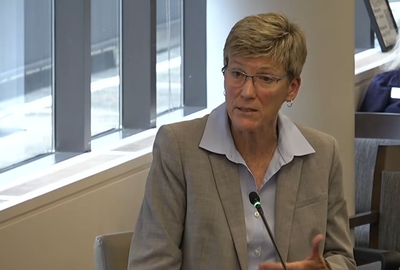
Essick, section chief for N.C. Healthy Schools in the state Department of Public Instruction, presented her findings Monday before the N.C. Governor’s Advisory Council for Student Safety and Well-Being. Governor Josh Stein created the council in April 2025 to promote safe, welcoming, and inclusive schools while improving student physical, social, and emotional well-being.
Essick told the group that between 2023 and 2025, the survey saw a decrease in physical fighting at schools. And the percentage of students who missed school because they felt unsafe decreased from 14.6% in 2023 to 9.9% last year.
But the survey found sexual violence is a persistent problem.
Nearly 14% of female students and 6.6% of male high schoolers who responded to the anonymous survey said they experienced sexual violence.
“The percentage of students who said they experienced sexual violence was 10.1%, and it was pretty much even [for grades 9-12] across the board,” said Essick.
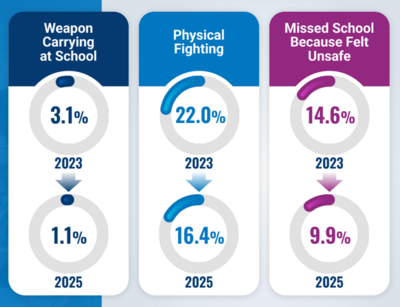
The survey also asked about physical dating violence. Nearly 9% of all students, male and female, reported having experienced some form of dating violence in high school. Hispanic/Latino students (11.4%) and 11th graders (10.9%) experienced the highest rates of physical dating violence.
A question the state had not asked since 2021 delivered equally sobering results. About 30% of North Carolina high schoolers said they could get a loaded gun without their parents’ permission in less than 30 minutes. White students (38.8%) and male students (34.6%) reported the highest likelihood of being able to get a gun without adult permission, about the same as in 2021.
Districts seek recurring funds for SROs
To improve student safety, the advisory council will recommend an increase in school resource officers in 2027. The National Association of School Resource Officers recommends every school employ at least one SRO. In North Carolina, there are approximately 1,500 SROs, but over 2,500 public schools. Existing SROs are also asking for additional training in dealing with juveniles, mental health challenges, and active assailants.
Advisory council members want a permanent state earmark for the SROs, replacing the current grant funding system that can fluctuate in each state budget.
Mark McHugh, the director of safety for Charlotte-Mecklenburg Schools, said the grant system is not working.
“With 185 schools, I got one SRO in the grant process last year,” said McHugh. “That’s our biggest hurdle right now.”
McHugh said that a dedicated SRO can cost upwards of $140,000 a year in salary and benefits, depending on the municipality a school district is working with. Even with a $40,000 grant from the state, districts struggle to come up with funds to pay the balance.
Emma Hodson, an attorney for Pitt County Schools, agreed more state funding is needed. “I do think local governments are pretty heavily subsidizing these programs, probably far in excess of what the state is contributing,” said Hodson. “We appreciate the recommendation on funding and would like to see the state do a little more if that is a goal.”
The N.C. Center for Safer Schools awarded $32.9 million to 198 public school units in 2025-26 through its school resource officer grant program. But demand eclipsed the grant money that was available, according to Karen Fairley, the center’s executive director.
North Carolina high schoolers show improvements in mental health
North Carolina’s public schools requested more than $86.8 million in school safety grant funding for 2024-2025. The advisory council is recommending legislators increase school safety grants to $50 million annually and make the funding recurring.
The council is slated to meet again in November before releasing its final report to the General Assembly just ahead of the 2027 legislative session. Members are hopeful their recommendations will gain a little more attention next year as the state will have hundreds of millions of dollars in new funding from a settlement with the tech giant Meta.
Raleigh, NC