Farmers Wanted: Hawai‘i Tries To Fix Its Unique ‘Ulu Problem
Sep 29, 2026 | 6:01 am ET
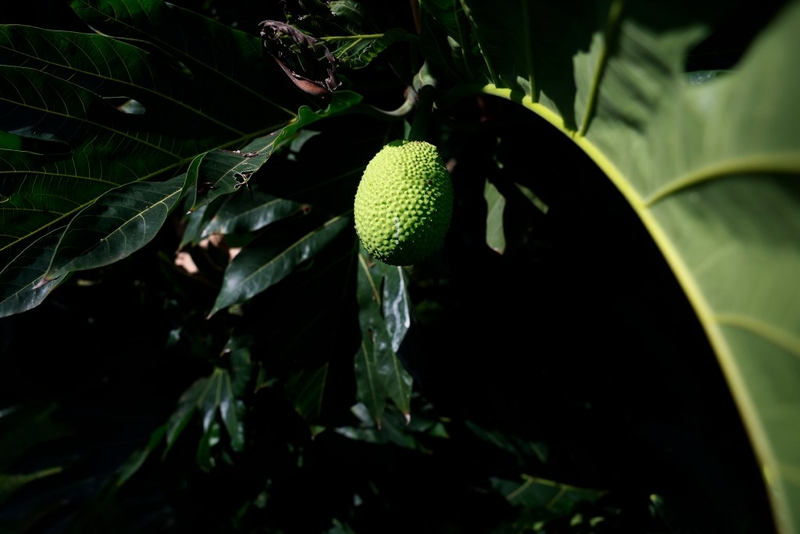
Description
Photo courtesy of Honolulu Civil Beat
Hawaiʻi has a breadfruit problem: The fruit’s popularity outpaces what local growers are able to provide.
In much of the rest of the Pacific, the opposite is true. It's abundant but “undervalued and underappreciated,” says Kyle Stice, executive director of Pacific Farmer Organisations.
The contrast was just one point of discussion among the hundreds of Pacific Islanders who descended upon the Big Island last week to take part in ‘Ulu Hoʻolauleʻa celebration and summit, the global breadfruit conference. All underscored the canoe crop’s cultural and societal importance but also shared their growing pains as they attempt to reinstate the starchy crop to a place of prominence in Pacific diets.
The crop holds the key to addressing a swath of societal issues, its proponents say, by improving community health, bolstering regional food security and insulating the islands from effects of climate change. But getting breadfruit to the people or getting them to eat it remains the biggest hurdle.
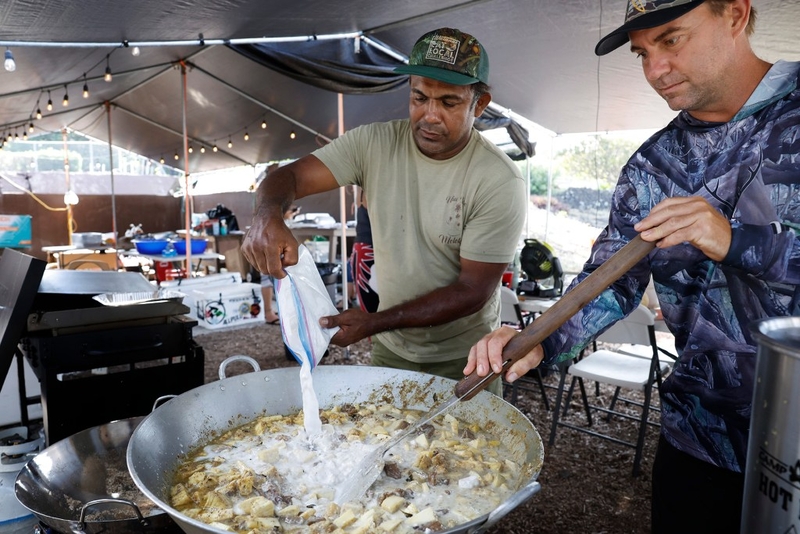
Hawaiʻi provides the blueprint for promoting ʻulu to make it desirable to the masses, said Stice, something that has been spearheaded by the Hawaiʻi ʻUlu Cooperative for the past 20 years. The cooperative has managed to secure contracts with state schools and made breadfruit readily available at grocery stores but, despite forecasting leaps in supply, needs more producers.
“Hawaii gives us an example of when you put in a concerted effort to promote it,” Stice said, “which is all the chefs and hype that’s been going on for the last 20 years.”
Secret Sauce
The Hawaiʻi ʻUlu Cooperative is about to launch a new recruitment drive, not to find customers but to find more people to cultivate the fruit to help meet demand in Hawaiʻi, with membership relying almost entirely on word of mouth.
Cooperative CEO Dana Shapiro attributes the increased demand here to a concerted effort to educate the public through chefs, recipes and cooking education. But their work, she said, sits within a wider movement: The Hawaiian Renaissance.
"I think if you zoom out and look at Hawaiʻi, you know we had a much more degraded culture of ʻulu than these other places," she said. "There's been several decades of increasing interest in revitalizing Indigenous ways of being and eating and doing, and ʻulu is a part of that."
Cooperative members currently produce over 200,000 pounds of fruit annually, which already falls far short of demand from the state Department of Education's school meals and the regular retail market. Shapiro estimates that demand at around 500,000 pounds per year.
Elevating A Staple, Kids First
For many of the islands, schoolchildren are considered the key to the crop’s future and popularity. In Tonga and Tahiti, initiatives are underway to get children eating more breadfruit – a common sight in both island groups.
But to get school kids interested in the fruit, which ranks low among their preferred carbohydrates, several islands are putting an emphasis on processing. In Tonga, where authorities are trying to promote healthier eating, breadfruit is planted at schools and processed into buns, burger patties and croquettes among other things.
In Hawaiʻi, the belief has long been that “kids don’t eat it because kids don’t know it,” said Stice, whose organization represents national farmer groups across the Pacific. “But that’s not the case in the Pacific Islands. They all have trees.”
Tonga’s approach appears to be whetting children' s appetites, and helping strengthen the important cultural connection to mai, or breadfruit, said Jenny Nishi of Nishing Trading.
“Breadfruit is already familiar to Tongan young people,” Nishi said. “The long-term objective is not just to establish school orchards. It’s also to develop a stronger connection between production, nutrition, education and consumption, while keeping mai relevant to future generations.”
Cultivation is not a problem in the Pacific, however, where it underpins islands’ resilience.
The French Polynesian islands produced almost 52,000 pounds of the fruit, there called ʻuru, in 2022, said Philippe Couraud, the former chief of agriculture. Commercial production of breadfruit, he added, represents a small fraction of the total fruit grown throughout the islands.
“It’s not just a food. It’s a symbol of abundance, community and identity,” said Ta’alolo ʻAinu’u of the Scientific Research Organisation of Samoa. “It grows on our family lands and feeds our villages.”
When mature, a single breadfruit tree in Hawaiʻi can produce between 150 and 300 pounds of fruit annually. That productivity, paired with it being widespread throughout the islands and resilient to climate shocks, make it a potential boon for Pacific economies.
For island groups such as Tonga, Samoa and Tahiti, among others, promoting breadfruit is focused on creating alternative markets through processing, among other things. But that requires building infrastructure to collect from their existing informal consumption landscape – people growing and harvesting their own fruit to eat.
Doing so creates additional income streams for communities and greater security for farmers, who can rely on an abundant crop.
Some are wary of commodifying the fruit because of its cultural significance. Others believe it is important for the Pacific to take ownership of the crop before someone else does, empowering the islands by doing so.
In Samoa, the fruit is processed into noodles, flour, bread and other ready-to-eat products. The government initiative there is to assist farmers and entrepreneurs in using what’s available.
In the meantime, research is being conducted on how to add value to the product, utilizing waste for biofuel feedstock or finding uses for the latex produced by the trees. Additional income streams, farmers say, will help make the crop's cultivation even more viable.
“We do not need to capture the whole market," said ʻAinu’u, of the Samoa research organization. "We only need to capture a piece of it: the Pacific slice, the authentic slice.”
Honolulu, HI