Newsom vetoes Delta levees bill as El Niño winter looms
Sep 29, 2026 | 8:00 am ET
Description
Even with an El Niño winter looming and memories of flooding still fresh, Gov. Gavin Newsom vetoed a bill aimed at shoring up the Delta’s aging levees and protecting the region and vital water infrastructure from flooding and sinking land.
In his veto message, Newsom said the more than $170 million for repairing levees, aqueducts and canals and other projects already included in the state budget made the measure redundant.
“While well-intentioned,” Newsom said, “this bill is unnecessary.”
But the state’s own data shows that this funding is nowhere close to what’s needed to protect the Delta, both as a region and as the heart of the state’s water supply.
A $3.3 billion repair job
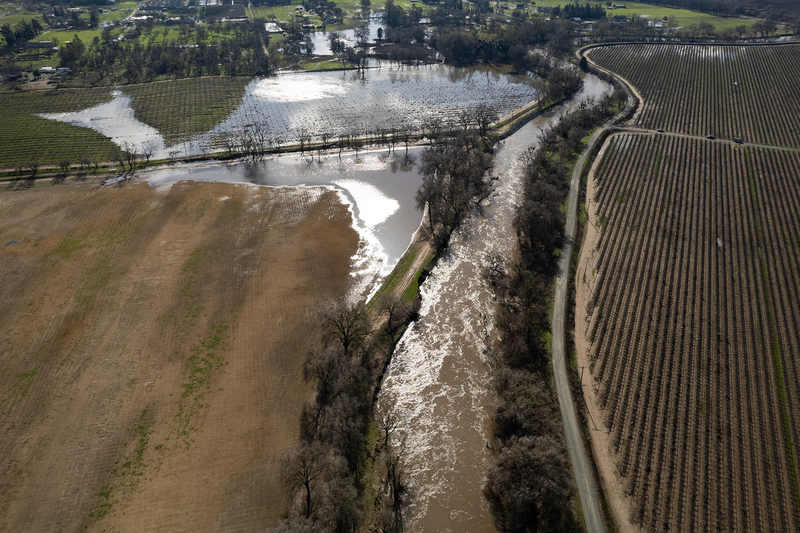
A network of 1,100 miles of federal and non-federal levees lines Delta waterways and protects the region from flooding. Many of these aging levees do not meet current “construction standards and could fail at water levels well below the top of the levee,” the U.S. Army Corps of Engineers said in 2018.
The price tag for fixing them: roughly $3.3 billion, according to the state’s Delta Stewardship Council. Not fixing them could cost far more: “$22 billion in assets and over $5 billion in annual economic activity could be … exposed to flooding in 2085 if improvements are not made.”
State Sen. Jerry McNerney, a Democrat from Stockton, wanted to create a $300 million annual repair fund for these aging levees, including from proceeds generated by the state’s embattled carbon market. The Delta Caucus secured a little over half that this year in the state budget. The bill eventually dropped the larger funding number.
The state has spent hundreds of millions already, including at least $400 million by the Department of Water Resources, according to a bill analysis.
The fund also would have paid to repair the massive water delivery system that pumps Northern California river water south through the Delta, supplying two-thirds of the state’s population and vast tracts of Central Valley farmland.
Sinking land threatens water deliveries
Groundwater overuse is damaging this system, including the California aqueduct and other vital canals, by causing the land around it to sink. A state report found the damage could cut water deliveries by almost 90% in the next 17 years. The California Department of Water Resources estimates that fixing the damage, both past and future, could cost nearly $4 billion.
The bill passed the Legislature unanimously, with no votes against and five members not voting. It drew overwhelming support from water agencies and local governments across the state, as well as environmental and business groups — who often find themselves on opposing sides of legislation.
The California Central Valley Flood Control Association, however, urged Newsom in a letter to veto the bill, saying it could disrupt existing funding programs and create additional bureaucracy around already complex reimbursement processes.
Supporters push back on veto
The bill “brought together traditional adversaries on California water issues — environmental groups and State Water Contractors, along with political leaders from both Northern and Southern California,” McNerney said in a statement. “As a result, 2026 represented (a) major step forward in the effort to safeguard the state’s primary water supply for the future.”
Restore the Delta is less sanguine. The Stockton nonprofit compared the bill to one of Newsom’s signature water projects: the Delta Conveyance Project, also known as the Delta tunnel.
Like the bill, the tunnel is meant to shore up the state’s water delivery system against time, climate change and disaster. But the tunnel’s $20 billion price tag would go toward bypassing the Delta rather than protecting it.
“It is (Newsom’s) white whale,” Barbara Barrigan-Parrilla, Executive Director at Restore the Delta, said in a statement.
Delta advocates say money should go toward shoring up the Delta itself.
McNerney called the veto disappointing but described the amount of this year’s funding historic.
“We’re not done,” he said in a statement after the Legislature’s budget vote earlier this month. “This historic investment is just a down payment. In the years to come, we need to continue to protect California’s primary supply of freshwater.”
Sacramento