Virginia education board approves new rules for local student assessments
Sep 29, 2026 | 5:28 am ET

Description
Students in a classroom. (Photo courtesy of Getty Images)
The Virginia Board of Education has approved new rules for assessing student learning in subjects without statewide Standards of Learning tests, giving schools another way to measure whether students have mastered the required material.
Last year, state lawmakers overhauled the state’s testing system to improve how SOL tests are administered and used to evaluate what students should know at the end of each grade or course, setting the stage for the new guidelines.
Local Alternative Assessments, or LAAs, give students opportunities to use critical thinking skills instead of rote memorization. Some education leaders have told The Mercury that LAAs need basic standards to ensure they are high-quality and administered properly.
”These guidelines are intended to be supportive to divisions to help them understand how to do this well,” Superintendent of Public Instruction Jenna Conway said at the board’s Sept. 24 business meeting.
As part of the overhaul, which went through several revisions, lawmakers directed the board to update the guidelines after making several changes to LAAs. Those changes included defining and categorizing assessments as mandatory or permissive, expanding permissive LAAs to new subjects and courses, and outlining specific requirements for their content, scoring, and administration, according to the agency.
Lawmakers also directed the board to develop and make available to each school board best practices for grading and scoring mandatory and permissive LAAs by Sept. 1 so school boards can adopt policies for implementation.
The board kept new scoring and reporting requirements in place while allowing flexibility for divisions already underway, seeking to balance state requirements with implementation challenges.
Third-grade science and history are among the courses with mandatory LAAs. New permissive LAAs include Virginia Studies, Civics and Economics, and end-of-course Earth Science and Chemistry.
Speakers at the business meeting supported the changes but were concerned about implementation support and timing.
Sofhia Pineda, government relations specialist for the Virginia School Boards Association, said the association welcomes the additional flexibility for broader use of local alternative assessments but urged the board and VDOE to provide “clear guidance, sufficient professional development, implementation support, and resources” given the potential impact on staffing and fiscal resources.
Neeley Minton, president of the Virginia Social Studies Leaders Consortium, said her colleagues also support the changes.
The consortium’s main concern was the timing, with two new requirements — double-scoring at least 15% of student responses and additional public reporting — added after divisions had already begun the school year using the earlier draft.
Minton said about 63 of Virginia’s 132 school divisions use local alternative assessments, with significant differences in staffing and resources.
“To put this in perspective, in my division, we spend about $12,000 to be sure that no teacher of record scores their own student work,” Minton said. “If we had to add more scores or time, our expenses would increase exponentially.”
Minton said local alternative assessments are worth the investment because they are rigorous, relevant and best for students and their learning.
Minton urged the board to consider delaying the new scoring and public reporting requirements until next school year, but the board moved forward with its plan and urged staff to be clear in its messaging to school divisions.
With the guidelines approved, the agency said it will share them with school divisions through newsletters.
Subject-area teams will also hold office hours and training to support school divisions. In addition, the agency will collect input through regional meetings, review divisions’ assessment plans and audit divisions that use LAAs.
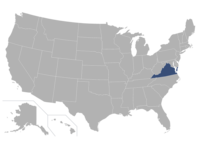
Richmond, VA