Q&A: UL Lafayette President Ramesh Kolluru
Nov 23, 2026 | 6:16 pm ET

Description
A brick wall sign marks the entrance to the University of Louisiana at Lafayette campus on May 15, 2025. (Greg LaRose/Louisiana Illuminator)
Ramesh Kolluru came to what was then the University of Southwestern Louisiana more than 30 years ago as a graduate student. In a recent interview, the self-described “honorary Cajun” described his rise through the ranks to become the University of Louisiana at Lafayette president earlier this year.
This transcript of the interview has been edited for length and clarity. The full interview can be heard in Episode 77 of “The Light Switch” podcast.
Piper Hutchinson: Tell us about your journey at UL Lafayette?
Ramesh Kolluru: I came to this country, to this university, in 1992 as a graduate student. The first semester, I absolutely hated the place. It was small compared to where I was from in India. Not that I was a partying kind, but there was the fourth largest city in India that I came from, and Lafayette, Louisiana, was not something that you thought of when you see Hollywood movies, there was not much of a skyline.
A few months into my tenure here, I got into my research and in my research lab. As I would work every so often, there would be this gentleman who would come check in on me, ask me what I was doing, and I might tell him something about, “Here is what I’m doing,” and “here is what I’m waiting on the next piece of equipment.” And a few weeks later, he would be back saying, “As I recall, two weeks ago, the piece of equipment that you were waiting for would have come in. What have you done with it since?”
That conversation with this person went on for a few months, and one day I found out that there was a president of the university, Dr. Ray Authement. And here I was, what we call one of those “PIGS,” right? Poor Indian graduate students. I was not the son of a prominent donor, politician, alumnus, but he made me seem like I was visible.
That made me fall in love with higher education, and here I am 33 years later.

Hutchinson: You’ve inherited a little bit of a budget mess. A lot of universities across the nation and in Louisiana are facing difficult budget times, but it was particularly acute here — a significant structural deficit that has impacted students, faculty, staff. Where are you in addressing that?
Kolluru: It has been a very tough year. When people talk about South Louisiana and its grit, it is real. The resiliency of our people is real, and that’s what I found, and I continue to find and continue to be amazed by what I see here at this university.
I’ve been at this university for 33 years, and I don’t think I have seen or faced a tougher year than this past year. Thanks to the grit and the resiliency of our people, and a lot of decisions that we had to make to address our fiscal health with fiscal discipline, we have been able to move to a place where we were leaving fiscal year ‘25-26, going into this year with cash flow of about $3 million, $3.2 million.
We still have about $19.9 million of deficit that I have presented a plan to the UL System that we are going to address over the next two years. Trying to do that at the same level that we did last year is going to be extremely tough because that would mean that we’ll cut to the bone, and you can’t cut your way to growth, you can’t cut your way to greatness.
So we are now going to focus on generating revenue, growing enrollment, improving our retention numbers, and so on and so forth. So we are able to generate the resources that we need to address the deficit that two years from now.
Hutchinson: How are you addressing the athletics part of the budget situation?
Kolluru: I think that’s a great question, and it’s not an easy question to answer because across the nation there’s about 25 universities that make money in athletics. The rest of us, UL Lafayette included, are burdened by the cost of athletics and the deficits that we run in athletics.
So what we are trying to do is to right size our budget in athletics. But in this landscape of NIL, (revenue) share, portal and so on and so forth, it seems like we have to invest more than less to be able to compete in athletics and to put our coaches and our student athletes in a place where they can be successful.
The fact is we can’t operate it at that $36 million level deficit. But for the time being, what I’m trying to do is to make sure that we reduce the deficits in athletics so that we can stop the bleeding.
We are in the process of hiring what I’m calling a CEO of athletics. I want someone who brings with him or her the ability to think from a business perspective. Because for far too long we allowed the expectation that athletics can lose money, perhaps even must lose money, and it is the responsibility of other parts of the university or the enterprise to make up money.
Hutchinson: There’s a really big SpaceX project coming to Lafayette’s backyard. What role do you see UL Lafayette playing in this?
Kolluru: We have every intention of making sure that to the extent that we can contribute, it is done right. This could be a transformational opportunity for Louisiana with the size of the investment of $100 billion.
This university has a long history and tradition in aerospace, and now are poised to meet the movement and are ready to go boldly into space. So some of my enrollment targets and growth targets that we had for what we call Louisiana Vision 2035, my vision for the next decade, were designed and developed before we even knew about the SpaceX as an opportunity.
Hutchinson: What do the next few years look like for you?
Kolluru: I have a vision that I have been articulating since being appointed as interim president in 2025. We call it Vision 2035, and it’s a vision that keeps me excited. There are days that are challenging, but the vision for the future is a university that grows from its current enrollment of 16,000 students approximately to 27,500 students, improves our retention graduation rates from 52% to about 75% retention in six years or so, grows our research program from the $265 million per year level that we currently are in to $1 billion in a decade.
And when we do those things, and grow our endowment from about $250 million to $500 million to a billion, then these happen. So that’s my vision for the next decade. That’s what we are grinding toward. I would anticipate that my next eight years or nine are going to be focused on that, at which time I’m ready to retire.
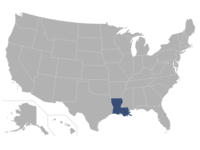
Baton Rouge, LA