Groups criticize state for late, lenient pollution enforcement in Lake Charles
Sep 29, 2026 | 5:00 am ET
Description
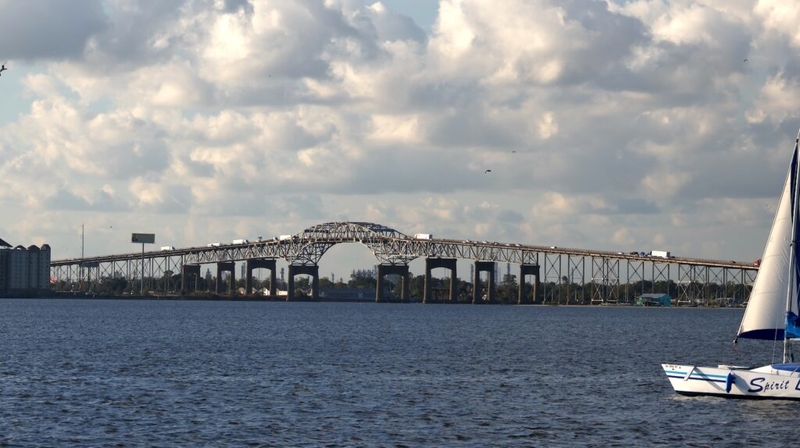
The Interstate 10 bridge Lake Charles, pictured on Nov. 18, 2025. (Photo by Wes Muller/LA Illuminator)
Louisiana officials have been slow to identify and punish violations of federal climate laws in the Lake Charles area, according to environmental groups.
In response, the state Department of Environmental Quality called the assessment too broad and said it doesn’t take into account the agency’s recent steps to provide more timely accountability.
The review was a joint effort from the Environmental Integrity Project, a Washington, D.C.-based climate policy watchdog organization, and Micah 6:8 Mission, a community group focused on air and water pollution in Southwest Louisiana. They shared their findings last week with LDEQ Secretary Courtney Burdette.
The groups reviewed documents covering how state officials responded to violations of the Clean Air Act at 23 facilities from January 2021 through August 2026. The comprehensive federal law sets allowable limits for emissions from industry and automobiles. The Department of Environmental Quality is the lead state agency responsible for enforcing it, with the U.S. Environmental Protection Agency providing oversight.
The EIP-Micah 6:8 Mission review found “several serious concerns,” including delays in identifying violations and taking enforcement action, enforcement that doesn’t require corrective measures and a heavy reliance on companies self-reporting their violations. The LDEQ also relies heavily on warning letters rather than taking specific action against companies, according to the findings.
“These problems can allow violations to continue, weaken incentives for facilities to invest in compliance, and reduce the effectiveness of enforcement in preventing future violations,” reads the letter to Burdette.
The state’s lack of timeliness on enforcement prevents companies from promptly addressing the problems that led to their violations, according to the Environmental Integrity Project.
In reviewing the 45 warning letters LDEQ issued over the review period, the average time between the reported incident or state inspection to a warning being issued was 1.7 years. In one instance, the delay was 10 years.
One example highlighted in the review involved the Phillips 66 Lake Charles Refinery, which received a compliance order from the state in November 2025 directing the company to address violations. It was based on “repeated exceedances of permit limits for multiple pollutants,” with the order issued five years or more after several of the reported violations occurred.
Another pitfall of delayed enforcement is that it results in the state not being able to obtain financial penalties from violators, according to the review. It found instances where the Department of Environmental Quality had information about potential violations for years before taking formal enforcement action.
For example, the EIP-Micah 6:8 Mission review highlighted a violation notice LDEQ sent to Indorama Ventures Olefins in Westlake in March 2025 covering multiple allegations from 2016-19. Earlier this year, a lawyer for the company said information about those events was provided to LDEQ more than five years earlier and that the deadline for the state seeking penalties had passed, according to documents cited in the review.
“Whether or not that defense ultimately succeeds, the matter illustrates that delayed enforcement is not merely an administrative concern,” the Environmental Integrity Project wrote. “It can limit LDEQ’s ability to obtain penalties and weaken incentives for facilities to comply with environmental requirements.”
The review determined the state took formal enforcement action against companies 28 times over the five-year-plus period. Such actions could include compliance orders, penalty notices, penalty and settlement agreements, or emergency cease-and-desist orders when the public is at immediate risk.
None of the 28 instances reviewed included any required corrective actions or investigations to determine the root cause of the violations, according to the findings shared with LDEQ.
The Environmental Integrity Project also noted a 2021 report from the Louisiana Legislative Auditor highlighted delays in enforcement “as one of the most significant weaknesses in LDEQ’s enforcement program.” The department agreed with nearly all of the recommendations from auditors in the report, including one to develop timeframe goals to take enforcement actions.
The Department of Environmental Quality also issued a written response to the authors of the EIP-Michah 6:8 review, which the department’s spokesman provided to the Illuminator. In it, LDEQ Assistant Secretary Jerry Lang said a follow-up report from the Legislative Auditor issued this past April found the department had implemented a recommended 365-day deadline for air quality enforcement actions. It applies to incidents that aren’t deemed high-priority, which require a quicker response, and those that are not based on citizen complaints.
The Environmental Integrity Project included a list of recommendations in its review, including that LDEQ develop a formal, written policy for using warning letters and when to escalate to formal enforcement. The Louisiana Administrative Code, which lays out the department’s enforcement policy, doesn’t include these specific triggers for escalation.
The groups’ review also recommended the state require enforceable corrective measures, including those that address the underlying causes of violations and prevent them from recurring. The agency should also conduct follow-up inspections to confirm corrective measures have been taken and are effective, the groups suggested.
In his response, Lang said that while the suggestions were appreciated, the department believes “a complete and accurate assessment” should take into account the agency’s enforcement workload and the complexity of some of its cases.
He cited numbers that indicate LDEQ took 3,456 enforcement actions, including 975 related to air quality, over the same period covered in the review.
“The vast majority of these actions include matters that were identified, evaluated and processed without the extended timelines highlighted in the EIP report,” Lang wrote.
Baton Rouge, LA