Doug Carter, twice sentenced to die, steps out from behind bars in Utah thanks to DNA analysis
Sep 29, 2026 | 12:09 am ET
Description
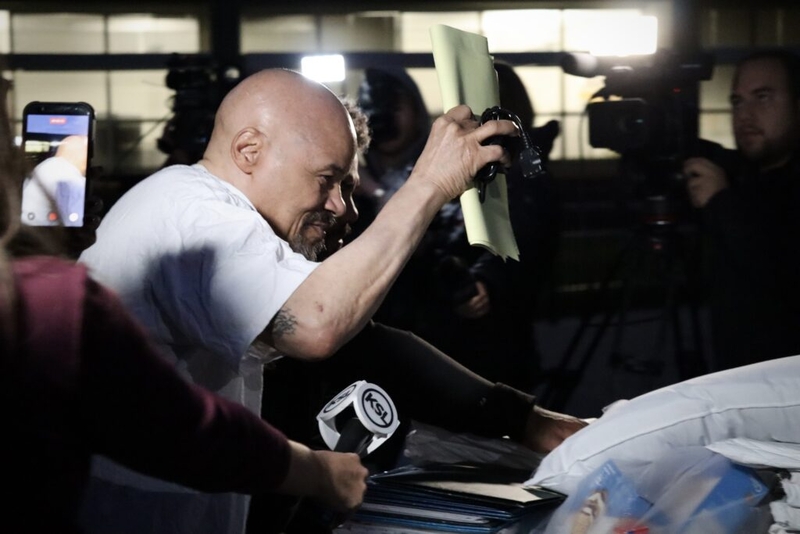
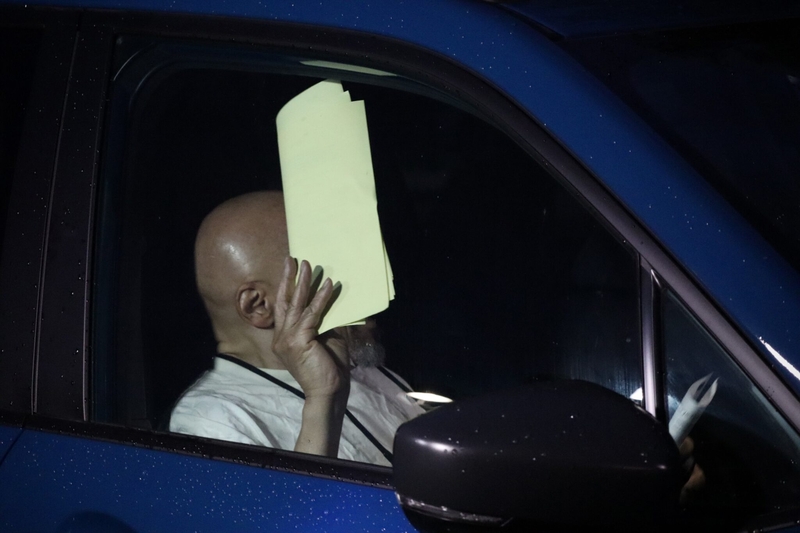
Douglas Carter leaves the Utah County Jail without comment on Monday, Sept. 28, 2026. (Annie Knox/Utah News Dispatch)
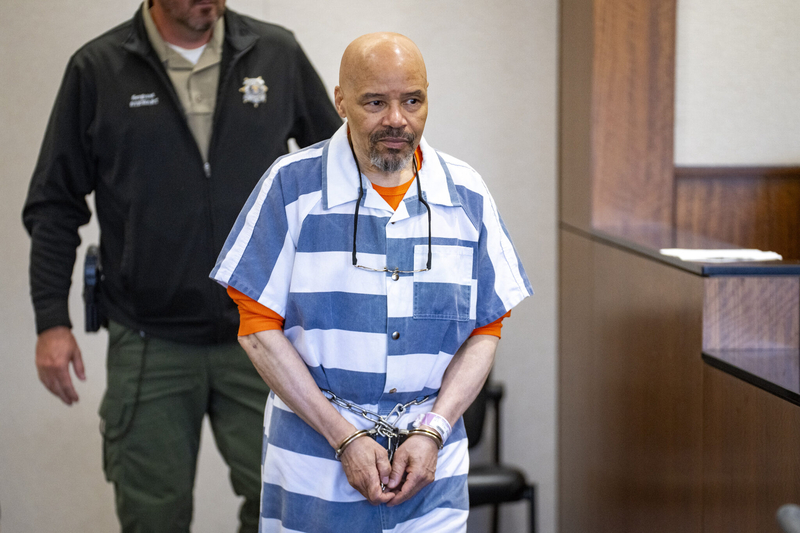
For most of his life, Douglas Stewart Carter has been confined to a Utah prison cell. On a misty evening and at 71 years old, he emerged free of shackles or guards Monday, with his time on death row now behind him.
As he strode out of the Utah County Jail, Carter smiled and pushed a cart full of belongings he amassed over 40 years in state custody — a pillow and boxes of legal documents charting his efforts to prove he’s not guilty of murdering a Provo grandmother in her home in 1985.
Those efforts culminated in a judge granting him bail on Monday, in light of new analysis of crime scene DNA evidence that was not a match to him. Though Carter walked free in a physical sense Monday, his attorneys say it’s not actual freedom. He still faces a charge of aggravated murder and is scheduled for a retrial in July, though prosecutors last week withdrew their intent to seek the death penalty.
Carter shielded his face with paper and didn’t stop to talk to reporters before getting in a car and going home with family, but he laughed as he thanked his attorneys and took a moment to celebrate with his son Tyler Anger, who told reporters he was eager to bring Carter home.
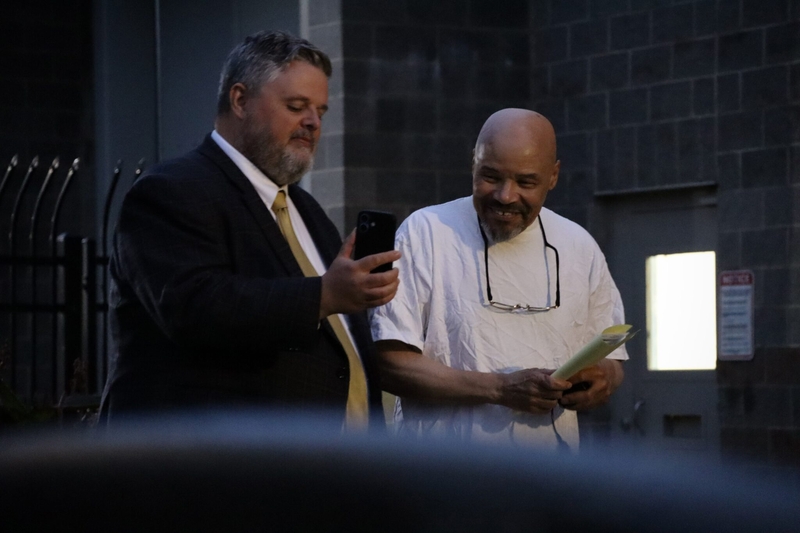
Carter’s defense attorney Neal Hamilton described his client’s new reality by highlighting what’s absent from it: a phone, income, and a sense of how modern technology has transformed society over the last four decades.
“This is going to be not just a day at a time, but minute-by-minute at a time,” Hamilton said of Carter’s next chapter, describing him as traumatized by his time on death row.
A death sentence overturned
Carter, originally from Chicago, was found guilty by a jury and sentenced to die in the death of Eva Olsesen, the aunt of a former Provo police chief. She was found stabbed and shot in what police said was a home invasion.
Jurors in the case relied on Carter’s confession and evidence of his bragging to friends Epifanio and Lucia Tovar that he killed a woman. He appealed, and another jury upheld the death penalty in 1992.
Almost two decades later, the Tovars — key witnesses in the case — said police had threatened them with deportation, given them gifts and told them to lie about the financial help. Carter appealed again based on sworn statements from the couple.
The Utah Supreme Court ordered a new trial for him last year, citing “intentional misconduct” on the part of investigators and prosecutors. The court’s opinion noted that Epifanio Tovar was instructed “to fabricate a statement intended to show that Carter harbored a premeditated intent to commit rape on the night of the murder.”
Carter was held in the Utah County Jail for more than a year as he has awaited a new trial. Prior to that, while in prison, he’d get an hour at most each day to either go outside, shower or watch TV, Hamilton said.
Carter had not allowed himself to believe he could actually be released, Hamilton said, albeit with an ankle monitor and strict orders not to contact Olesen’s family members.
New revelations about old evidence
Prosecutors last week withdrew their intent to seek the death penalty in the case, noting recently tested evidence found at the crime scene, including blood on a doorknob and DNA on the handle of a knife, excluded Carter.
But the new information does not necessarily exonerate Carter, Utah County Attorney Jeff Gray wrote in a court filing. He noted the gun used in the crime was never found and said Carter had confessed.
Hamilton pushed back on that Monday morning at the courthouse.
“Doug signed a confession under duress, which is the very definition of a coerced confession,” Hamilton said.
Carter wants the state to dismiss his case altogether, arguing evidence pointing away from him as a suspect went missing and it means he can’t get a fair trial now. The materials include a recording of an interrogation, fingerprints, plaster casts of a shoeprint, and a behavioral analysis report from the FBI, his attorneys say.
Utah bill to speed up timeline on death penalty cases moves forward
Utah’s new death penalty law
The recent revelations in the case come after Utah changed its death penalty law earlier this year in an effort to speed up the process. Supporters cited the fact that multiple men on Utah’s death row have died of natural causes before the state could execute them.
The new state law, backed by the Utah Attorney General’s Office, limits how and when Utahns can argue they’re not mentally fit to be put to death, among other changes. Its sponsor, Rep. Candice Pierucci, R-Herriman estimated the new framework will cut the timeline from around 34 years to about 20 years while still respecting the rights of defendants.
But in Carter’s case, Hamilton told reporters, misconduct on the part of the state stayed hidden from his client and the public for more than 20 years.
“I mean, this is precisely why we told them not to,” Hamilton said of the expedited process.
Arguing bail
In court Monday morning, Eva Olesen’s family opposed bail for Carter, saying the DNA report is not proof that Carter was the wrong suspect and emphasizing that prosecutors are still examining evidence.
Olesen’s daughter-in-law, Theresa Olesen, said a member of Carter’s family has posted videos critical of the case online that have been distressing to the Olesens. They see the videos as hostile and even defamatory, she said, adding that Carter’s relatives had offered to care for him upon release.
“We have serious concerns about whether this would be a stable and appropriate environment for Carter,” Theresa Olesen said.
In his written ruling, 4th District Judge Derek Pullan acknowledged the Olesen family’s sense of justice has been upended. But he said Carter doesn’t pose a danger to them, writing that Carter hasn’t talked to his own family about wanting revenge or had any major disciplinary issues while incarcerated.
Prosecutors didn’t oppose Carter’s release with an ankle monitor and other conditions, saying they are still reassessing the evidence ahead of a scheduled Nov. 10 hearing.
Salt Lake City, UT