U.S. Senate passes Ted Cruz’s college sports bill that seeks to rein in NCAA “chaos”
Sep 28, 2026 | 11:16 pm ET
Description
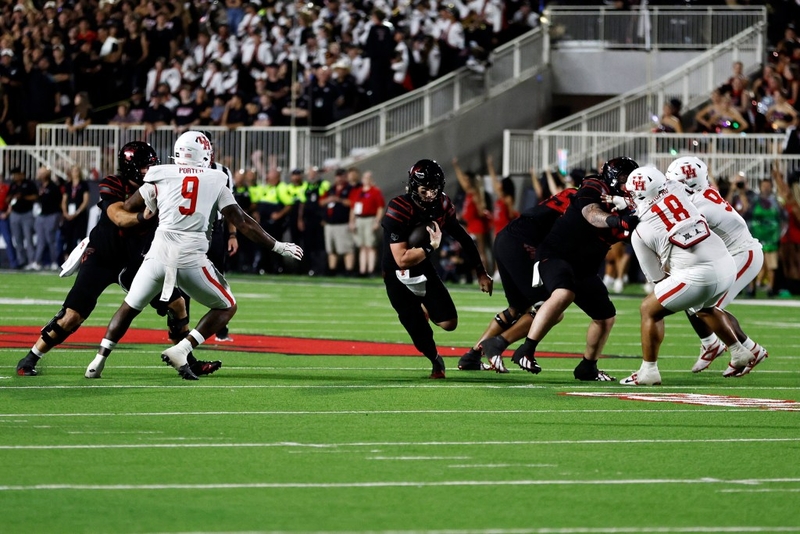
Texas Tech Red Raiders quarterback Will Hammond (15) rushes against the Houston Cougars in the second half at Galaxy Stadium in Lubbock on Sept. 18, 2026. (Michael C. Johnson/Imagn Images via REUTERS)
WASHINGTON — After several months in limbo, U.S. Sen. Ted Cruz’s bill that would impose a sweeping set of regulations on college sports passed the Senate late Monday night with more than three quarters of the body’s support, marking the legislation’s furthest milestone yet.
Sponsored by Cruz, the Senate Commerce Committee chair, and Ranking Member Maria Cantwell, D-Washington, the Protect College Sports Act had remained stalled since it advanced through the committee in June. After hours of discussion Monday on amendments that saw minor changes to the bill, it finally passed in the upper chamber 77-22. The bill must still clear the U.S. House, which is in recess until after the November elections, before reaching the desk of President Donald Trump.
Cruz’s bill would install a slew of regulations to rectify what he frequently has called the “chaos” that’s emerged since the NCAA’s 2021 decision to allow college athletes to profit off their name, image and likeness, or NIL, and after a subsequent settlement a few years later, House v. NCAA, forced the association and its athletic conferences to share revenue with athletes. College athletics continue to operate under varying state laws, court rulings and NCAA regulations that govern everything from athlete compensation to conference realignment.
On the Senate floor Monday, Cruz said the bill “protects our student-athletes.”
“It protects NIL opportunities, because student-athletes deserve the opportunity to benefit from their talent without being taken advantage of by unscrupulous agents and backdoor deals,” Cruz said. “It creates clear, enforceable rules for eligibility and transfers. It protects our traditions and rivalries. It prevents the most powerful and wealthy conferences from breaking away to form a super league.”
The bill garnered fresh momentum at the start of August, when Cruz, other lawmakers and White House officials won the support of Big Ten and Southeastern Conference leaders, who got on board after Cruz and Cantwell revised the bill’s revenue sharing framework. Soon after, the White House formally voiced its support for the bill, with Trump calling on lawmakers to move quickly to pass it. Cruz has recently pressed the House to return to Capitol Hill to pass the legislation.
“What I would like to see is the speaker call the House back to pass this bill and put it on the president’s desk,” he said on his podcast last week, adding that he has “urged the president to sign it on the set of College Gameday, do it on a big game and do it going into the election.”
Among other provisions, the bill would enshrine some recent legal victories for athletes while also establishing stricter regulations on their activity. Schools and athletic organizations could no longer restrict athletes from entering NIL agreements, while athletes would have to report their revenue above $600 to their institutions. It would also limit athletes to one transfer throughout their college careers and establish permanent ceilings on their revenue, with annual adjustments for inflation.
The legislation also aims to protect athletic programs that don’t return huge profits. Division I conferences would be prohibited from reducing their schools’ required number of varsity or Olympic sports teams. Schools that make $80 million or more in annual athletics revenue would have to at least maintain 2024-25 levels of scholarships and roster spots for sports that don’t generate a profit.
For Ruben Rojas Betanzos, a Syracuse University student-athlete, president of Syracuse’s Student-Athlete Advisory Committee and vice chair of the Atlantic Coast Conference’s committee, the rapidly changing landscape has made it increasingly difficult for athletes to know what rules apply to them.
“Rules are changing so quickly that it’s almost impossible for someone to keep up,” Betanzos told The Texas Tribune. “A student-athlete in one state could be having a completely different experience from an athlete in another state.”
Betanzos, who is in his fifth year at Syracuse and completing a masters in business administration after studying bioengineering as an undergraduate, said he supports the bill’s provisions addressing healthcare, Olympic and women’s sports, and capping agent endorsement fees at 5%.
Other notable college sports figures have voiced their support for the legislation, like former University of Alabama football head coach Nick Saban and Deion Sanders, current head coach of the University of Colorado Boulder football team.
But the bill has drawn significant opposition from labor and civil rights organizations, as well as some lawmakers who argue that it would give the NCAA and athletic conferences too much control over athletes.
In an August letter to Senate leadership, NAACP President and CEO Derrick Johnson urged lawmakers to reject the legislation.
“Congress should not grant new federal benefits, legal protections, or economic advantages to public institutions and athletic conferences that profit from the talent and labor of Black college athletes while remaining silent as their states dilute Black voting power,” he wrote. “That arrangement is a modern version of Jim Crow.”
Black athletes make up about 20 percent of Division I athletes and more than 40 percent of Division I men’s basketball and football players, according to NCAA figures.
The AFL-CIO, a major federation of U.S. labor unions, also urged senators to oppose the bill in a letter signed by Jody Calemine, director of government affairs. The letter took aim at the legislation’s antitrust exemption for universities and conferences, and argued that the bill halts the progress that athletes have made in combating their exploitation through collusion.
“The bill only gained its current momentum not when athletes’ interests were satisfied but when the richest intercollegiate conferences in the country voted to endorse the bill,” the letter read. “That should tell you everything you need to know about who this bill protects.”
Gabby Birenbaum contributed to this report.
Austin, TX