Motivated older voters could shape NC’s 2026 US Senate race, poll finds
Sep 28, 2026 | 2:27 pm ET
Description
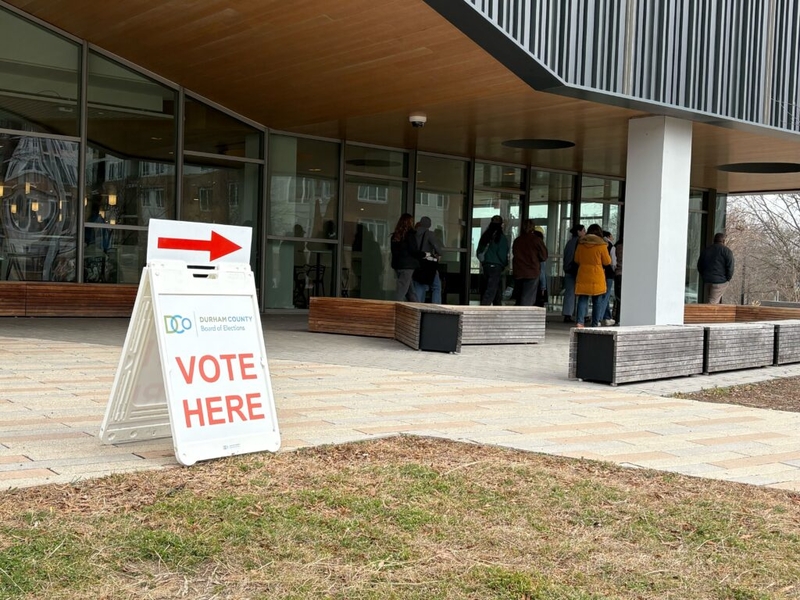
Voters trickle into the Durham County Main Library to cast their primary ballots on the first day of early voting on Feb. 12, 2026. (Photo: Brandon Kingdollar/NC Newsline)
Voters above the age of 50 could play a major role in North Carolina’s 2026 election, according to a new poll.
Older voters typically have the highest turnout in elections. But they appear to be even more motivated than usual to vote this year.
The AARP, an organization that represents the interests of people 50 and older, found in a survey released Monday that 83% of voters 50 and older rate their motivation to vote as a 10 out of 10, compared to 66% of voters under age 50.
In North Carolina’s 2026 primary election, voters above the age of 65 accounted for 35% of all voters.
Financial security, democracy and healthcare are some of the voting bloc’s top issues.
Poll: 2 out of 3 North Carolinians get political news from local TV or social media
Among voters over 50, two-fifths said their top concern is affordability, and 29% ranked threats to democracy as their second issue.
At 93%, almost all respondents older than 50 said they are more likely to support a candidate who would ensure workers receive their earned Social Security benefits, and 84% are more likely to back a candidate who would expand Medicare’s ability to negotiate prescription drug prices.
“Older voters are highly engaged, motivated to vote, and likely to determine close midterm races,” said Nancy LeaMond, vice president of AARP. “Candidates looking to gain an edge must speak to their everyday concerns, including whether Social Security will be there for them and if they’ll be able to keep up with rising costs for everyday essentials like groceries, gasoline and healthcare.”
The survey is part of AARP’s 2026 battleground polling series.
Democratic former Gov. Roy Cooper continues to maintain a double-digit edge over former Republican National Committee and North Carolina GOP chair Michael Whatley, 53-42 out of all voters. However, among voters older than 50, Whatley leads by 6 points, 51-45.
“Both candidates would be wise to speak clearly and directly to the issues older voters care about,” AARP North Carolina state director Michael Olender said. “Older North Carolinians want to know they will be able to age with financial security and independence and are looking for candidates who can answer that plainly.”
AARP’s bipartisan polling team of Fabrizio Ward and Impact Research conducted the survey of 1,115 likely North Carolina voters between Sept. 17 and 20. The margin of sampling error at the 95% confidence level is plus or minus 2.9 percentage points.
Raleigh, NC