10 years after Townville, what did South Carolina learn?
Sep 28, 2026 | 7:00 am ET
Description
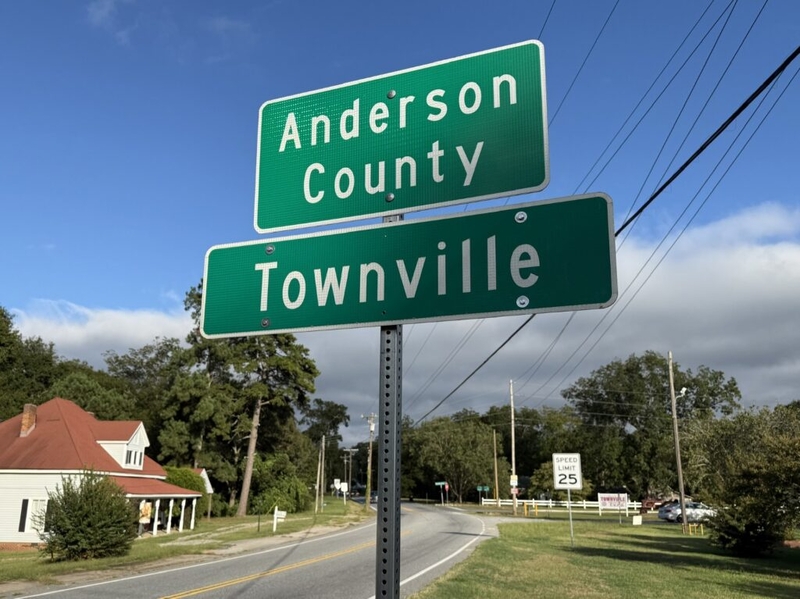
Sept. 28, 2026, marks the 10-year anniversary of a school shooting in this unincorporated community of Anderson County that killed 6-year-old Jacob Hall. (Photo by Paul Hyde/Special to the SC Daily Gazette)
TOWNVILLE — Things like this can’t happen here.
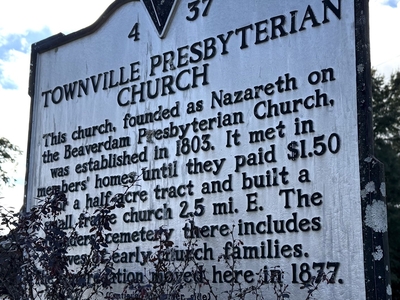
A school shooting can’t happen here. Not in this quiet, tight-knit rural community of rolling fields and roadside vegetable stands. Not in this village (population 3,913) whose history reaches back two centuries to a post office that opened in 1836 and a Presbyterian church founded in 1803, when Thomas Jefferson was president.
But on Sept. 28, 2016, the unthinkable did happen.
A 14-year-old boy, after killing his father at home, drove to Townville Elementary School and opened fire on the playground. Three people were wounded. One was 6-year-old first grader Jacob Hall, who died three days later.
The shooter never entered the school. Teachers hurried children to safety, and a volunteer firefighter tackled the gunman until deputies arrived.
At Jacob’s funeral, covered by the national media, mourners dressed like the superheroes Jacob adored.
Ten years later, the anniversary is being remembered quietly, much as the community has always marked the tragedy.
The remembrances have tended to be private and restrained — held in churches, schools and hearts rather than on stages before television cameras.
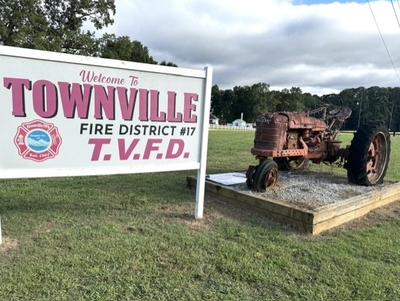
That’s fitting. A small community does not need a yearly public ceremony to remember a child it never forgot.
But an anniversary can be a time to ask a less comfortable question: What did the rest of us learn?
In one respect, South Carolina learned a great deal.
School security is different from what it was a decade ago. In 2018, just 406 of South Carolina’s 1,283 public schools had a full-time school resource officer.
By 2025, that number had risen to 1,181.
The state says every public school now has funding for a school resource officer, although 102 schools still did not have an officer in place when Gov. Henry McMaster reported the figures in January.
Schools also have more formal safety plans, drills, security assessments and procedures for responding to threats.
South Carolina now requires every school to maintain a threat-assessment team, with the Department of Education and State Law Enforcement Division providing training and support.
Those are meaningful changes.
Townville demonstrated why preparation matters. The gunman never got inside the school. Teachers and staff moved children to safety. Their training and quick response undoubtedly limited the casualties.
The harder lesson
But school security can only do so much.
It can keep a gunman outside the building. It cannot prevent a child from getting a gun in the first place.
That is where South Carolina’s record is more troubling.
The gun used in the Townville shooting belonged to the shooter’s father. It was a loaded handgun kept in a dresser drawer, where the 14-year-old was able to retrieve it.
The tragedy therefore raised an obvious question: How do we keep firearms out of the hands of children who should not have them?
Ten years later, South Carolina still has no comprehensive safe-storage law requiring firearms to be secured from children.
That doesn’t mean such a law would have prevented Jacob’s death. We cannot know that. But it is difficult to look at what happened in Townville and conclude that safe storage is an irrelevant lesson.
Legislation has been repeatedly proposed. The latest introduced in January 2025 would have created offenses involving unsecured firearms accessible to children or criminally negligent storage. None gained traction. They could be re-filed to try again in 2027.
There has been progress on another front: recognizing troubled behavior before it becomes violence.
South Carolina’s threat-assessment system is designed not simply to punish students who make threats, but to bring educators, mental-health professionals and law enforcement together to evaluate concerning behavior and determine what intervention is appropriate.
That’s an important evolution. We have learned that school safety is not simply a matter of locked doors and armed officers. Sometimes the most important warning sign is a troubled young person whom somebody needs to notice.
So perhaps the honest answer, 10 years after Jacob Hall’s death, is that South Carolina has learned some lessons and resisted others.
We have put more resources into protecting schools. We have become more systematic about recognizing threats. We have put more emphasis on mental health.
But we have not resolved the question of how to keep guns away from children.
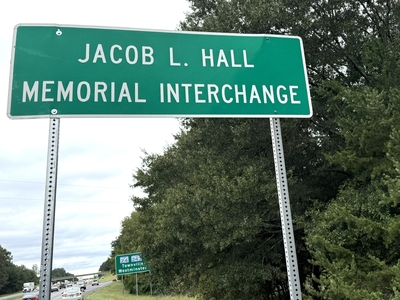
The sign at the interchange on Interstate 85 bears Jacob’s name. It is a fitting memorial because it is not a monument removed from daily life. People drive past it on their way to and from Townville.
Jacob’s name is literally on the road home.
But the harder memorial is the lesson we have yet to learn.
For all the security doors, armed officers, threat-assessment teams and safety plans we have put around our schools, South Carolina still has not learned Townville’s most basic lesson: Keep guns out of the hands of children.
Columbia