Locals, developer debate future of Wilmington’s Bancroft Parkway project
Sep 28, 2026 | 8:13 am ET

Description
Photo courtesy of Spotlight Delaware
Why Should Delaware Care?
Wilmington has made adding more housing a priority, but the fight over Bancroft Parkway shows the challenges that can come with bringing larger developments into established neighborhoods. The months-long dispute has raised questions about how the city balances its need for housing with residents’ concerns about the size and impact of new development.
Earlier this month, Wilmington City Councilman Chris Johnson tabled a measure that would have rezoned land along Bancroft Parkway, allowing developers to move forward with plans for a high-rise apartment complex.
If the high-rise were built, it would be the tallest development along the Bancroft Parkway, a century-old greenspace that runs through northwest Wilmington.
The decision came amid months of opposition from nearby residents, who have raised concerns about the size and scale of the proposed development and argued that it would change the character of the surrounding northwest city neighborhood.
For now, those concerns have put the rezoning and the project on hold. But residents and the Wilmington and Newark-based developer, Tsionas, have remained in discussions over whether they can reach a compromise on what could ultimately be built at the site.
In a press release last week, the resident group, Protect Bancroft Parkway, said neighbors recently met with the president of the development company, Angela Tsionas, and her attorney, who presented a concept for what the developer believes it could build under the property’s existing zoning — without the rezoning measure currently before City Council.
Under the presented concept, the development would include 72 apartments across two buildings, one would be three stories tall and the other eight stories, along with approximately 48 surface parking spaces. The apartments would be less expensive than luxury units and would feature fewer amenities, such as a gym or garage, and more modest finishes, according to the press release.
The new concept marks a significant change from the previous proposal, which called for a 12-story apartment building and a parking garage with nearly 300 spaces.
Despite the new proposal, residents made it clear they remain opposed to rezoning the properties, arguing that the change would legally allow a taller, larger development that could increase traffic and parking problems and alter the neighborhood’s character, regardless of the developer’s promises to build something smaller.
“Build within the legal right you have to build. Go to town, do what you want, but don’t try to change the law,” said Kathleen Dinsmore, a longtime neighborhood resident and an organizer of Protect Bancroft Parkway.
Tsionas did not respond to Spotlight Delaware’s requests for comment.
According to Johnson, discussions between his office, Tsionas and residents have continued. While the rezoning measure remains tabled for now, he said he believes the development plans are still moving forward.
“Now, what that project is, I can’t 100% say for sure, but they intend to move forward,” he said.
Residents push back on rezoning
Back in March, Tsionas originally proposed building a nine-story high-rise along the Bancroft Parkway, submitting an application to the city to rezone two pieces of land so they could move forward with a 315,000-square-foot apartment complex that would have included almost 200 units and an underground parking garage with 325 spaces.
Tsionas currently owns the 2000 Pennsylvania Avenue Apartments, a luxury five-story housing complex that sits near the parkway, at the intersection of North Grant Avenue and Pennsylvania Avenue. It’s visible from the
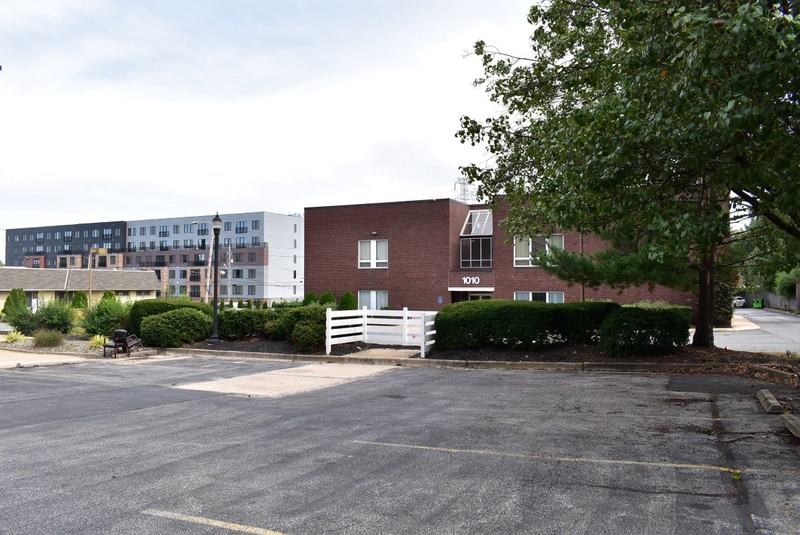
The locations they requested for rezoning included 2140 W 11th St. and 1010 N. Bancroft St., which are both zoned C-1, one of the city’s commercial districts. That current zoning is capped at a maximum height of three stories and 47 feet, while rezoning the properties to the requested C-2 commercial district would allow up to 15 stories and 180 feet.
Tsionas also owns a third parcel at 1100 N. Grant St. that would be part of the development and sits adjacent to the two properties it sought to rezone. Unlike those properties, however, the Grant Street parcel is already zoned C-2.
In the application, the company’s attorney noted that the plan was developed through a series of working group meetings with the local community, where different proposals were discussed and “reworked based on the working group’s feedback.”
But shortly after the application was submitted, residents began to push back against the development, saying that it would change “the character in appearance and nature” of the area, alter its skyline, and substantially increase traffic in the area.
In April, City Council referred the developer’s application to the City Planning Commission for review. But two months later, the City Council passed a resolution to approve a 90-day extension for the City Planning Commission to make recommendations on the application, in part because of community concerns.
In May, Tsionas submitted an amended rezoning application, which altered the development to a “stepped concept,” including a four-story building along Bancroft Parkway, an eight-story building, and a 12-story building along North Grant Avenue. The following month, Johnson held a town hall to talk with residents.
Then in August, Tsionas submitted a letter to the city council, agreeing to make changes to development and commit dollars to community initiatives. In the letter, the market-rate developer agreed to cap the maximum height of the housing complex at eight stories as opposed to 12. They also agreed to set up parking to direct traffic away from the Bancroft Parkway median.
The company also agreed to commit $300,000 to the Todmorden Foundation’s new senior affordable housing program. They also agreed to provide $50,000 annually for the next three years to a public safety program administered by West Side Grows Together and Cornerstone West CDC.
Later that month, the city Planning Commission held its meeting on the proposal, drawing representatives from Tsionas and 200 residents. Neighbors raised concerns about the development’s potential impact on property taxes and traffic, construction-related noise and safety, and the lack of binding commitments from the developer not to build to the maximum height of 15 feet if the rezoning was approved.
“This development, if allowed to move forward, will destroy our section of Brancroft Parkway for my children’s generation,” said one resident, Andrea Cassidy, during the meeting.
Wali Rushdan, an attorney representing Tsionas, defended the rezoning as consistent with the city’s plan and future needs, arguing the project would not worsen existing traffic and that deed restrictions could address community concerns.
“Your voice does matter, but that doesn’t make you right,” he said. “So again, I ask that you all carefully consider this, all the arguments that have been raised, as well as the current and future needs of our city.”
The commission ultimately voted 4-1 against the rezoning. That decision raised the threshold for approval by city council, requiring 10 of the council’s 13 members to vote in favor rather than a simple majority, according to Johnson.
Johnson told Spotlight Delaware that the commission’s decision was unusual because the city’s Planning and Development Department had recommended approving the rezoning.
“This is quite a unique and rare territory for the city that the planning commission would go against the planning professionals in the city,” he said. “I think part of the issue with this matter is that planning professionals from a city perspective believe this is an appropriate project.”
On Sep. 3, Councilman Johnson decided to table the city council measure that would have approved the rezoning of the properties.
He said he held the measure in response to community concerns over the height of the building.
Why residents are still opposed
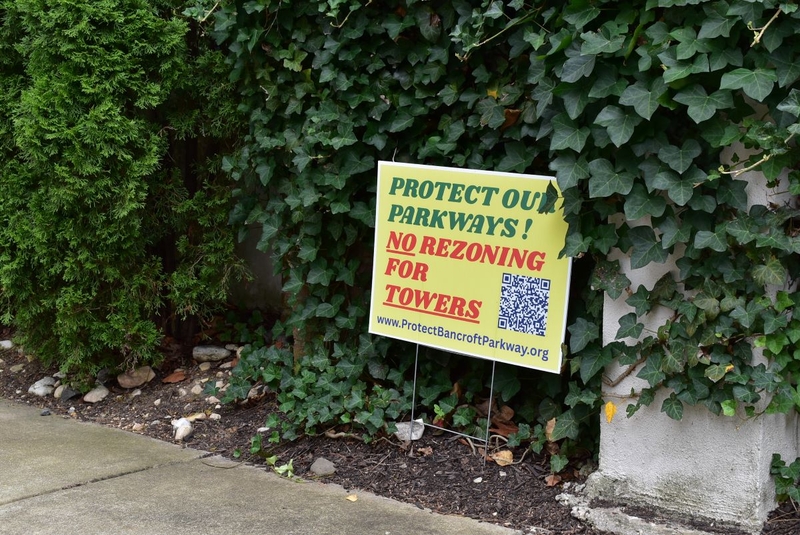
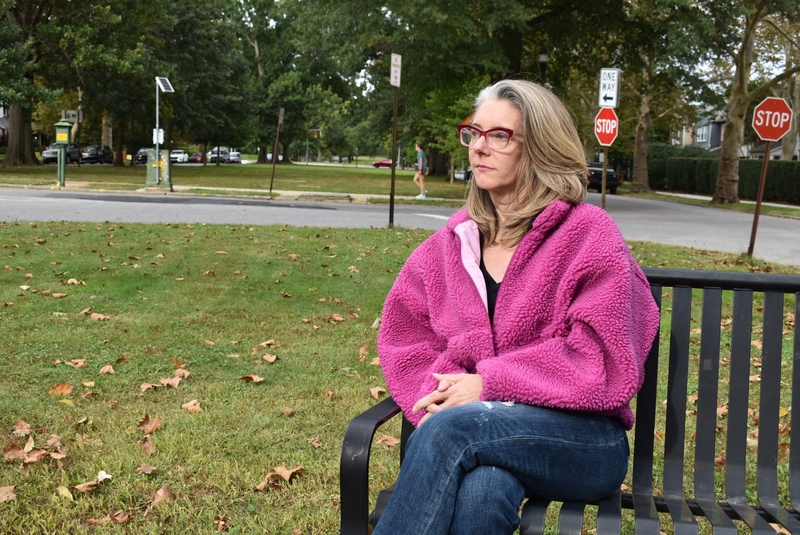
Dinsmore has lived in the Bancroft Parkway neighborhood for nearly seven years. She is one of several residents who helped start Protect Bancroft Parkway, a neighborhood group formed in April to oppose the rezoning.
The group has since created a website to serve as a hub for residents, providing copies of the rezoning applications, updates on the project and upcoming meetings, as well as a mailing list.
Dinsmore said she first learned about the project in March, after Tsionas submitted its initial rezoning application, from residents who had participated in invite-only working group meetings held by the developer with Councilman Johnson.
She said many other residents were unaware of the proposal. Dinsmore and several neighbors began spreading the word and organized a community meeting at the Woodlawn Library in late April to discuss the rezoning and how residents wanted to respond.
“I just didn’t feel like it was right that people didn’t know. That was my biggest thing. Like we really deserve to have known. I keep going back to that. The developer didn’t have to, but I believe our representative on city council had an obligation,” Dinsmore said.
The group has since sought to demonstrate the extent of the neighborhood’s opposition. Members went door to door on blocks surrounding the proposed development and reached residents at 99 of 123 households, according to Dinsmore. Of those, 93 signed a petition opposing the rezoning.
“People were very angry because for months they had heard that this was just going to happen without us having any way of having our voice heard,” she said.
Dinsmore said broader public outreach from Tsionas and Johnson followed as residents became more vocal about their opposition. That included a June town hall and a meeting earlier this month where residents and the developer discussed, for the first time, what could potentially be built under the property’s existing zoning.
While residents have raised concerns about the proposed development’s density and its potential effects on traffic and parking, Dinsmore said one of their central concerns is what the zoning change itself would permit, not simply what Tsionas currently intends to build.
If the city council approves the rezoning, she said, the properties could legally accommodate a larger development in the future regardless of the developer’s current plans. Residents also do not view a private agreement with Tsionas as sufficient protection, Dinsmore said, because enforcing such an agreement could require residents to take legal action if its terms were violated.
“We are forever subject to possibly having to deal with the developer on anything that they violate,” Dinsmore said.
But the residents’ campaign has also drawn criticism from some who view the opposition as an example of NIMBYism, an acronym for “not in my backyard” commonly used to describe resistance to development near one’s home.
Another resident Barbara Kanter told Spotlight that labeling residents’ opposition as NIMBYism or classism is misplaced because the proposed apartments would cater to people with incomes similar to those already living in the neighborhood.
“There is not an argument for it other than the developer wants it there,” she said.
Dinsmore rejected that characterization, arguing that residents are not seeking to prevent development of the properties altogether, noting Tsionas could still develop the site under its existing zoning, she said.
Instead, Dinsmore said residents’ concerns center on the scale of development that rezoning could allow and whether the surrounding neighborhood can accommodate it.
“I believe we can be pro-development and pro-housing in this city, and care passionately about being Wilmingtonians, and not want a massive building right on a green space in a neighborhood that’s not set up for it. I think we can do both,” she said.

Dover