Missouri should take the time to get its next education commissioner right
Sep 26, 2026 | 6:50 am ET
Description
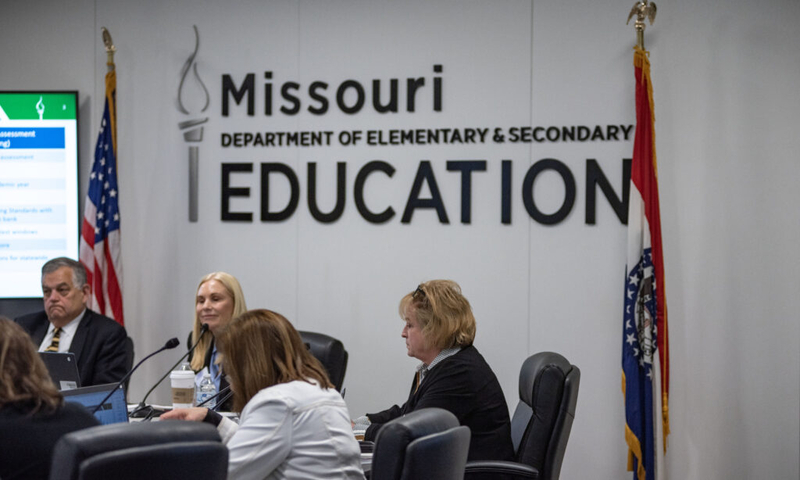
The Missouri State Board of Education discusses a proposed change to the state's standardized test during its meeting on March 24 (Annelise Hanshaw/Missouri Independent).
Missouri education is entering a period of significant change. That makes the search for the state’s next Commissioner of Education more than a personnel decision. It is a decision about who will lead Missouri’s schools through some of the most consequential policy changes the state has undertaken in years.
The Missouri State Board of Education should take the time necessary to get that decision right.
Fortunately, the board has something many organizations navigating a leadership transition do not: an experienced interim leader who understands the department, the policy landscape, and the people involved.
Stacey Preis was appointed interim commissioner in June following the retirement of Karla Eslinger. Preis brings extensive experience in education leadership and statewide policy, including previous service within the Department of Elementary and Secondary Education. She has also made clear that she does not intend to pursue the permanent position.
That gives Missouri an opportunity to resist the pressure to rush.
Rather than treating the interim period as a vacancy that must be filled as quickly as possible, the State Board can use it as a bridge, maintaining stability under a knowledgeable interim commissioner while conducting a thoughtful search for the leader Missouri will need for its next chapter.
And that next chapter will not be simple.
Missouri is simultaneously changing how it communicates school performance, reconsidering how it funds public education and confronting the urgent need to improve student achievement.
The State Board recently approved Missouri’s new A–F school and district grading framework, intended to give parents, policymakers and communities a clearer picture of school performance. Creating a system is one thing. Implementing it in a way that provides meaningful, understandable information and builds confidence in the results is another.
At the same time, Missouri is reconsidering something even more fundamental: how we fund our schools.
The School Funding Modernization Task Force is examining a funding system that has long raised questions about whether state dollars are distributed in ways that reflect the needs of today’s students and communities. Any significant changes that emerge from that work will affect students, districts, taxpayers and communities across Missouri.
And underlying both conversations is an even more important challenge: whether Missouri students are learning what they need to succeed.
Literacy must remain at the center of that work.
Reading is foundational to nearly every other outcome we expect from our education system. Students who struggle to read face greater challenges in every subject that follows. Improving literacy requires more than adopting a policy or purchasing a curriculum. It requires sustained attention to evidence-based instruction, educator preparation and professional development, assessment, implementation and accountability for results.
Taken together, these issues represent a significant period of transition for Missouri education.
The next commissioner must be prepared to lead through it.
Missouri should be looking for more than someone capable of managing a large state agency. The next commissioner must understand the connection between policy and implementation and know that passing a law or adopting a new system is only the beginning.
That leader will need to work effectively with the State Board, governor, legislature, educators, business leaders, and families, even when those groups disagree about the path forward. The commissioner must understand school finance and accountability while keeping student outcomes at the center of the conversation.
And importantly, the next commissioner will need credibility and experience to lead change.
That requires listening to educators responsible for implementing policy while maintaining high expectations for results. It requires explaining complicated issues clearly to parents and taxpayers. And it requires building an organization within DESE that can move major initiatives from policy documents to classrooms.
Those are significant expectations. They should be.
The State Board itself is relatively new to working together in its current configuration. Before choosing the next commissioner, board members have an opportunity to establish a shared understanding of what Missouri needs from the position over the next several years.
The question should not simply be: Who can do this job?
It should be: What does Missouri need this job to accomplish, and who has the experience, leadership ability, and commitment to student outcomes to get us there?
There will understandably be pressure to fill the position quickly. Leadership transitions create uncertainty, and permanent leadership provides clarity.
But speed and stability are not the same thing.
With Dr. Preis providing experienced leadership during this transition, Missouri has the breathing room to conduct a serious search, listen to stakeholders, establish clear expectations, and identify a commissioner equipped for the work ahead.
Missouri is making important decisions about accountability, school funding, and literacy. Each has the potential to shape education in this state for years.
The person leading DESE will sit at the intersection of all three.
Missouri does not need to decide quickly.
It needs to make it well.
Jefferson City, MO