You can’t strengthen Arizona schools by dismantling the team behind our teachers
Sep 25, 2026 | 5:20 pm ET

Description
Photo by iStock / Getty Images Plus
During my time in the Air Force, fighter pilots were the golden boys. In combat, they were the tip of the spear. But they never fought alone.
They depended on aircraft maintenance crews, airfield managers, security forces, civil engineers, personnel specialists and countless other support personnel. Everyone had a role. Everyone mattered. Whether the pilots admitted it or not, they knew it — and so did the rest of us.
Teachers understand this, too.
A teacher cannot do the job alone. Teachers depend on nurses, counselors, speech-language pathologists, social workers, librarians, special-education professionals, technology staff, custodians, transportation workers, food-service employees, administrators and many others. These employees help students get to class, stay healthy and safe, receive specialized services and overcome the behavioral, social and academic challenges that can stand between a child and learning.
They are not distractions from education. They are part of the machinery that makes education possible.
Yet Proposition 320, referred to the November ballot by the GOP-led legislature, takes a very different view of how schools should allocate their resources. The measure would require school districts with at least 7,500 students, or districts operating a school in a county with at least 500,000 residents — that means every school in Maricopa and Pima counties — to spend at least 60% of their operational spending on “direct instructional expenses.”
The Arizona Auditor General would determine what qualifies. Yes, that means voters are being asked to approve a law that has undefined parameters.
Beginning in the 2027-28 school year, districts below the threshold would have to increase their share annually until they reached 60%. Districts that fail to comply could lose 25% of their Classroom Site Fund allocation (part of which helps pay and train teachers) after one year, with the penalty increasing to 100% for continued noncompliance.
Republican legislators supporting Prop. 320 have framed it as a way to increase teacher pay and reduce administrative spending. What happens, though, when they mandate more of an already limited pool of money go into one category without providing additional resources needed to sustain the rest of the system?
Yes, Arizona has a severe teacher shortage, with double the national average of teachers leaving the classroom every year. Compensation matters. But so do working conditions, workload, class size, student behavior and access to the professionals who allow teachers to focus on teaching.
The answer cannot be to make schools compete internally for pieces of the same inadequate pie.
And the premise that Arizona schools simply need to redirect more money away from administration deserves scrutiny. Arizona school districts’ administrative spending is about half that of national levels, while districts also face declining enrollment, fixed operating costs and significant demands for maintenance and special education. When enrollment falls, some costs do not fall with it. And when the proportion of students requiring intensive specialized services grows, those needs do not disappear simply because a district has fewer students.
There’s a big problem with how much teachers are paid, but it’s not because of administrative bloat
In other words, what may look like “administration” on a spreadsheet can represent the infrastructure required to keep a school system functioning.
Public education is not a zero-sum game. Teachers need support. Students need support. Families need functioning schools. Communities and employers need an educated workforce.
The Air Force understood something that schools should never have to learn the hard way: You do not make the tip of the spear stronger by dismantling the team behind it.
No one would have suggested that the way to make a fighter pilot more effective was to eliminate the mechanics who maintained the aircraft, the security forces who protected the airfield, the engineers who maintained the infrastructure or the people who kept the operation running. The mission depended on all of them.
Arizona’s public schools are no different.
If we want teachers to succeed, we need to give them the people and resources that allow them to teach. If we want students to succeed, we need schools capable of meeting the full range of needs that students bring through the doors.
We should not be debating how to divide the shortage.
We should be asking how to end it — and build the fully staffed, fully supported public schools our children deserve.
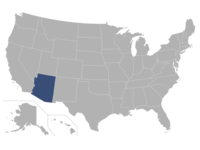
Phoenix, AZ