Bucking the wind: Wyoming artists transform wind blade into snowfence
Sep 25, 2026 | 6:20 am ET
Description
Photo courtesy of WyoFile
A collection of Wyoming artists is hoping for a few good, blustery snowstorms this winter in the Esterbrook community in the Medicine Bow National Forest — an opportunity to test a new art installation, and to inspire.
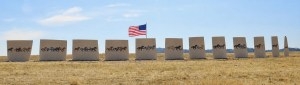
“Windborne,” functionally, is a modern-day snowfence made of a single wind turbine blade, chopped into a dozen pieces planted in a row. It’s designed to pull swirling snowflakes down into a pile instead of allowing the white stuff to drift across a road near the Wyoming Rescue Mission Recovery Camp.
‘Windborne’ dedication
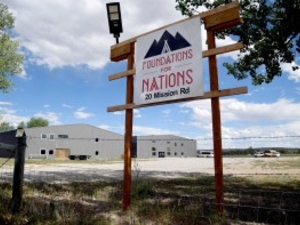
A dedication of the installation is scheduled for 11 a.m. Oct. 3, at the Wyoming Rescue Mission Recovery Camp, located at 3046 Esterbrook Road.
There’s about 500 miles of snowfencing — typically of the wood variety — across Wyoming. It’s practical infrastructure in a state that battles snowdrifted highways.
“Windborne” is also art intended to inspire, Casper sculptor Chris Navarro says, because it demonstrates how a group of artists can repurpose what’s commonly regarded as industrial waste that typically crowds landfills.


“It costs more to recycle them than it does to bury them,” said Navarro, who typically works in bronze. Several years ago he saw a photo in a local newspaper of a dozer pushing dirt over a massive pile of decommissioned wind turbine blades at the local landfill and was moved to do something about it. “I saw that and I just said, ‘Wow, what a waste of material! There’s got to be something better to do with them.'”
He found co-conspirators at the Rescue Mission Recovery Camp and coaxed Colorado-based Vestas to supply and cut up a decommissioned blade, which it was more than willing to do, Navarro said. Vestas, like other wind energy manufacturing companies, is eager to find new ways of making better use of the industry’s byproduct.

The nearby Mantle Ranch Wild Horse Adoption and Training Facility was also integral, Navarro said. He tapped several other local artists to paint a band of wild mustangs running across the blade sections. “When I look at those 40 mustangs, I don’t see horses running away. I see a herd moving forward.”
Navarro said he hopes the installation’s sense of “moving forward” inspires a solutions-oriented resolve to tackle challenges like discarded wind turbine blades. In fact, the Wyoming Department of Transportation will monitor how well the installation prevents drifts, and may consider wind turbine blades as part of its snowfence program.

Cheyenne, WY