Trump orders plans to unlock isolated public land, revise river-trip permitting
Sep 25, 2026 | 6:27 am ET

Description
Photo courtesy of WyoFile
President Donald Trump last week ordered federal land managers to boost public access to public lands, including to landlocked checkerboard parcels and to Western whitewater rivers.
The order, titled Reinvigorating America’s Hunting Heritage, could reverse federal priorities to sell or trade isolated parcels of public land. Across the West, the BLM alone has identified more than 6 million acres available for “disposal,” according to onX, a digital mapping firm, and the Theodore Roosevelt Conservation Partnership.
The order also seeks to reform online application systems for coveted western river floating permits, which have reportedly been abused by individuals using computer programs.
The order directs the secretaries of War, Interior, Agriculture and Commerce to develop access plans within 180 days. National parks and monuments are generally exempted from the call.
The plans seek “to unlock checkerboarded and landlocked parcels through voluntary access easements, land exchanges, and cooperative agreements that respect private property rights,” according to a White House fact sheet.
As such, the action could reverse longstanding federal policies regarding public land that’s hard for the public to reach. That includes parcels that are surrounded by private land or arranged in a checkerboard pattern.

That checkerboard pattern covers millions of acres in southern Wyoming and resulted in legal battles over public access by corner crossing, a controversy only recently settled in favor of public access.
Today, the Bureau of Land Management, for example, has a disposal policy that targets lands that are “uneconomical or difficult to manage with respect to contiguous public lands.” Almost 800,000 acres of BLM land in Wyoming reportedly qualify for disposal.
“Disposal” means to remove those lands from the federal estate by selling, trading or donating them to either private or public entities. The order calls for the federal government to plan for means to seek public-access easements to the parcels.
On rivers, where access is governed by lotteries and first-come online reservation systems, the order calls for reforms to favor U.S. citizens and previously unsuccessful applicants. The order also seeks to prohibit “automatic computer entries into the lotteries.”
Downriver dash
On Western rivers where access is governed by federal agencies like the National Park and U.S. Forest services, boaters seeking wilderness whitewater and stillwater adventures must obtain permits. Federal agencies limit the number of floaters to protect the environment, prevent crowding at a limited number of campsites and for other reasons.
The chance of obtaining a permit for the classic week-long whitewater descent of the Middle Fork of the Salmon River in Idaho’s Frank Church River of No Return Wilderness in Idaho’s Salmon-Challis National Forest is as low as 1%, river runners say.
Some permits are released online at a specific date and time. Boaters who react quickly win in the first-come, first-served computer dash. (There’s also a permit lottery that is random, not first-come, first-served.)

The first-come permits are scarfed up “the second they are released — in 10 milliseconds,” said Heather Hansman, a river-running journalist who recently wrote about abuses of the system.
“People are making up fake bot accounts,” she said, to evade prohibitions against multiple applications under the same name and other rules designed to create a fair system. Those fake names and applications can be operated by a computer program that can secure permits faster than a human typing on a keyboard the instant the application period goes live.
A river runner suspected something fishy and created a program to see whether he could beat the system, Hansman said.
It worked.
“The guy ran an experiment,” she said. “He ended up with six or seven permits by bot and nothing doing it by hand.”
While the executive order could remedy the bot battle, other aspects of the federal recreation system also deserve scrutiny, Hansman said. Recreation.gov or rec.gov reportedly provides permits to more than 100,000 sites, including national park campgrounds and backcountry camping sites.
Booz Allen Hamilton, a private company created the system and operates it for the government. Rec.gov is unsatisfactory, Hansman believes.
“I think the river permits are one piece of a systematic problem,” she said. “The issue is with the rec.gov umbrella.”
She recently visited Capitol Reef National Park in Utah, for example. “The entire campground was booked,” she said, with no way to get a permit for an overnight stay.
“I had had this experience trying really hard to get permits and not being able to,” she said, “then going out and finding them empty, even though they’re booked up online.
“The entire campground was booked out but probably half of the sites were empty.”
Certainly, some empty sites were the result of emergencies or other cancellations on the part of the prospective campers. But many vacancies, Hansman believes, are due to overzealous campers who are not serious about their plans or who hoard permits for flexibility or some other reason.
There’s no downside to that hoarding and non-use, Hansman said, except for loss of a first-night fee.
Park rangers who see the problem, “can’t stop you from getting more reservations,” or otherwise penalize misuse, she said.
Booz Allen didn’t immediately respond to a request for comment on the executive order and other issues.
Corner crossing case
The order that targets public access to checkerboard land ownership follows the high-profile case of four Missouri hunters who reached public land in Wyoming by corner crossing.
Corner crossing is the act of stepping from one piece of public land to another where the two share a common corner with two pieces of private land. The ownership pattern resembles a checkerboard with alternating squares of public and private property. Corner crossers do not set foot on private land.
To step from public land to public land in such an area, a person necessarily passes through the airspace above the private property. A prosecutor in Carbon County charged the Missouri hunters with trespass in 2021, but a jury found them not guilty.
The landowner whose private ranch enmeshed some 6,000 acres of public land the hunters sought to reach sued the four in civil court. Courts cited the 1885 Unlawful Inclosures Act in siding with the hunters in a case that went all the way to the U.S. Supreme Court.
The 1885 act prevents landowners from blocking access to public land in the checkerboard.

The high court declined to hear landowner Fred Eshelman’s appeal of the 10th Circuit Court of Appeal’s decision. The two cases brought national attention to corner crossing and the checkerboard land ownership pattern. (WyoFile covered the issue over five years with some 80 articles.)
As a result of the ruling, corner crossing is legal in the checkerboard area of Wyoming and in Colorado, Utah, Arizona, Oklahoma and Kansas. Nevertheless, the executive order could boost access in these states.
That’s because a caveat in the 10th Circuit decision allows corner crossing when it is the sole means of reaching public land. Depending on how new rules are formed and what new access easements the government may obtain, access to public land could become easier and less complicated than stepping over a hard-to-find survey monument at a common corner.
Southern Wyoming has about 2.4 million acres that are considered corner locked – inaccessible to the public without corner crossing. Across the West, the area is estimated at 8.3 million acres.
Hansman said the executive order may illustrate one point.
“Journalism can change policy,” she said. “It’s cool.”
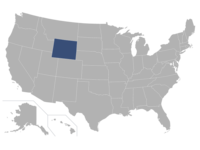
Cheyenne, WY