In nuclear campus talks, Idaho Gov. Brad Little says protecting Snake aquifer is ‘nonnegotiable’
Sep 25, 2026 | 6:15 am ET
Description
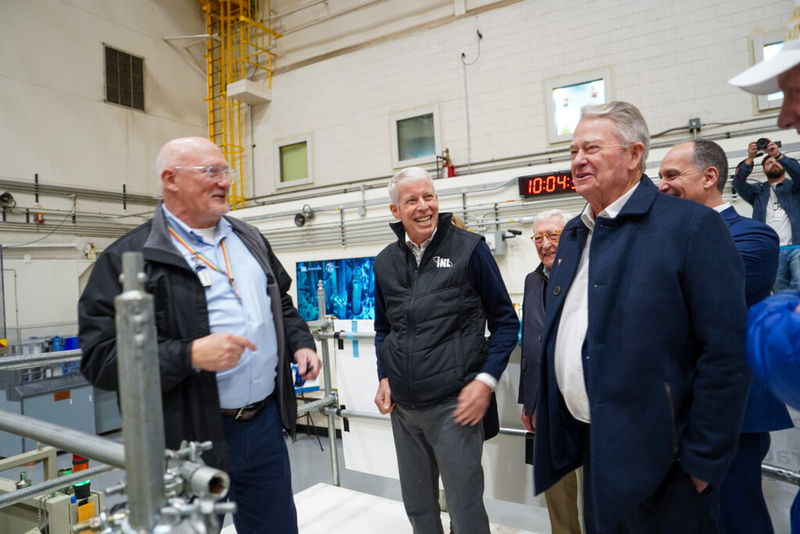
U.S. Energy Secretary Chris Wright (center) visits Idaho National Laboratory with Idaho Gov. Brad Little (right) in December 2025. (Photo courtesy of Sarah Wood/U.S. Department of Energy)
Editor’s Note: This is the first installment of a three-part Idaho Capital Sun series examining the proposal to bring a new Nuclear Lifecycle Innovation Campus to Idaho. Part one focuses on Gov. Brad Little’s role in negotiations and his priorities for Idaho. The series continues Monday and Tuesday with a closer look at the cases for and against bringing a Nuclear Lifecycle Innovation Campus to Idaho.
Idaho Gov. Brad Little said he will not jeopardize the health of the Eastern Snake Plain Aquifer or the health of Idahoans as he continues to negotiate potentially bringing a new Nuclear Lifecycle Innovation Campus to Idaho.
“I’ve had this direct conversation with Secretary (of Energy Chris) Wright: Disposal of spent fuel over the aquifer in Idaho – that’s a nonstarter,” Little said in an interview Wednesday at the Idaho State Capitol in Boise.
In July, U.S. Department of Energy officials announced that Idaho is one of five states selected as a finalist to host one of the new innovation campuses.
Little signed a memorandum of understanding in July with the U.S. Department of Energy, or DOE, to hold formal discussions and negotiations about bringing an innovation campus to Idaho.
If Idaho is selected as a host site, the federal government has said the state will have to accept shipments of spent nuclear fuel and radioactive waste from other states.
A Request for Information Response that Little signed and submitted to the federal government in March describes an accelerated process that takes “months rather than decades” to bring the “initial capabilities” of a Nuclear Lifecycle Innovation Campus online in 2027.
But on Wednesday, Little said things aren’t moving that quickly.
“There’s a long way to go before this happens,” Little said. “(The DOE) would love to identify some sites, and I believe … they may need something by the end of the year. But it will not be in any way, shape or form a final agreement.”
Little said the documents he signed do not obligate Idaho to host an innovation campus or accept nuclear fuel or radioactive waste. Instead, the agreements simply bring Idaho to the negotiating table, the governor said.
Little said it makes sense for Idaho to be at the negotiating table because of the potential economic benefits to the state, the infrastructure, the experience at Idaho National Laboratory in eastern Idaho and the need for additional, reliable energy.
The memorandum of understanding lists a Sept. 30 deadline, but Little said he doesn’t think agreements will be reached that quickly, and he suggested the two sides could either continue talks or sign another memorandum of understanding with a later deadline.
Officials at Idaho National Laboratory declined to comment for this series of articles.
What is a Nuclear Lifecycle Innovation Campus?
There are now five other potential host sites for one or more DOE innovation campuses – Utah, Tennessee, Oklahoma, Louisiana and West Virginia.
According to the DOE, a Nuclear Lifecycle Innovation Campus is “designed to support activities across the full nuclear fuel lifecycle, including fuel fabrication, enrichment, reprocessing used nuclear fuel and final disposition of used nuclear fuel. Depending on state priorities and regional capabilities, the campuses may also host advanced reactor deployment, power generation, advanced manufacturing and co-located data centers.”
An innovation campus could bring thousands of jobs and millions or billions of dollars in revenue to the state or states selected to host a campus, supporters and DOE officials have said.
But site selection comes with a catch – accepting spent nuclear fuel and radioactive waste from other states.
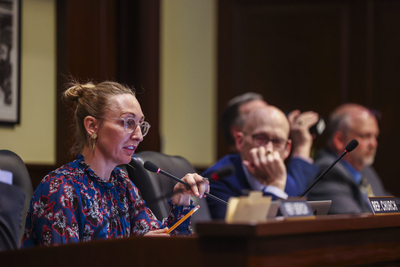
Rep. Monica Church, a Boise Democrat, said it’s too great of a risk to the aquifer, the environment and the public’s health to bring shipments of spent fuel and radioactive waste from other states into Idaho. She called the storage and disposition of spent fuel and radioactive materials a “forever decision” that will have ramifications that outlive anyone who strikes an agreement today.
“Forever is a lot longer than an administration, and we have a hard time budgeting a year ahead let alone until the earth blows up,” Church said.
“We have a situation here where it has been a long enough time since we’ve been having this conversation that there are too many people who don’t understand what it means to store spent fuel and what the different types of waste are,” Church said.
When asked Wednesday, Little told the Sun he doesn’t know where the campus would be located or where the spent fuel and radioactive waste would be stored.
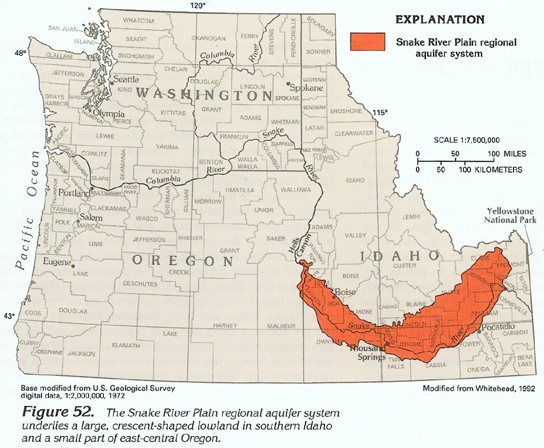
While an Idaho site has not been selected, Little did say state officials are adamant that spent nuclear fuel won’t be stored over the Eastern Snake Plain Aquifer.
The aquifer is the lifeblood of Idaho, providing drinking water and irrigation water to Idaho families and farmers.
“We have to have guarantees on all the safety issues,” Little said. “Those are nonnegotiable. So the amount of ancillary money that comes later on, we know there’s going to be some. There absolutely has to be. But the guarantees about the safety – of protecting our aquifer, protecting our air, protecting the people that are around us – that’s not negotiable. We have to have rock-solid guarantees for that.”
When asked if he would sign an agreement that wasn’t rock solid, Little said no.
“No. That’s easy,” Little said.
Why would nuclear campus sites be required to accept spent fuel and radioactive waste?
A U.S. Department of Energy representative told the Idaho Capital Sun on Wednesday that accepting shipments of spent nuclear fuel and radioactive waste is a requirement to host an innovation campus.
“That front end is a public-private partnership between the state and industry,” said the DOE official, who asked not to be identified by name. “The back end, which is the used nuclear fuel component and the ultimate waste disposition, that is a federal responsibility. But the campus as a whole, the only way you end up with a campus is with a willingness to continue the conversation and a willingness to have waste disposed of in your state. And let me clarify that one more time: The backend for waste disposal had to be inclusive of out-of-state waste. So it wasn’t just you were disposing of your own nuclear fuel. You would be disposing of nuclear fuel from other states as well.”
The DOE official said there is a total of 97,000 metric tons of used nuclear fuel that has not been reprocessed, but it is unknown what quantities would be sent to each innovation campus site.
“The reason we can’t quantify how much would end up in each campus is a couple of reasons,” the DOE official said. “One, we don’t know how many campuses we will end up with at the end. And two, the residual waste stream at the end of reprocessing is highly dependent on which reprocessing system and which technology you’re using.”
The DOE official said the innovation campuses are not the same thing as the Yucca Mountain program – the Nevada site that was designated as a repository for spent nuclear fuel and radioactive waste, but was halted and defunded following public opposition.
“This is not the Yucca Mountain program,” the official said. “This is not 40 miles of subsurface tunnels. We’re talking about a significantly smaller footprint for a mined repository. But even more importantly, when you incorporate reprocessing into the conversation, your waste residual stream doesn’t look the same.”
1995 settlement agreement limits amount of radioactive material that can be sent to Idaho
Thirty years ago, the late former Idaho Gov. Phill Batt, a Republican, signed the 1995 Settlement Agreement with the federal government that protects Idaho from becoming the nation’s nuclear waste dumping ground. The agreement limits the amount of radioactive materials that come to Idaho and establishes a timeline for cleaning up and removing existing radioactive waste.
“It’s sacrosanct, and it’s leverage,” Little said. “But the drafting of it, a lot of things have changed since then, and it needs to be amended.”
New nuclear campus deal would require Idaho to accept, store spent nuclear fuel, radioactive waste
Little said the settlement agreement has been amended five or six times since 1995 and it would specifically need to be modified again to adjust the cap on the amount of radioactive materials that can be brought into Idaho if Idaho is to host a Nuclear Lifecycle Innovation Campus.
So far, it is not clear what funding commitments are in play.
The memorandum of understanding Little signed said it does not represent a funding commitment from the federal government or Department of Energy.
Little and his Policy Director Lloyd Knight said there would be investments from private companies working in or around a nuclear campus. They also said spent fuel is the Department of Energy’s responsibility, and Knight suggested states could charge for the storage of spent fuel or waste.
But Little would like guarantees and long-term funding commitments regarding the storage, reprocessing, monitoring and security.
“And then the big question to all the states is, ‘where is the money?,’” Little said.
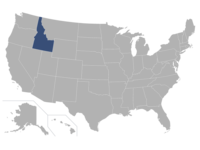
Boise, ID