These Trees Wreaked Havoc During Storms. Hawaiʻi Is Fed Up
Sep 25, 2026 | 6:01 am ET
Description
Photo courtesy of Honolulu Civil Beat
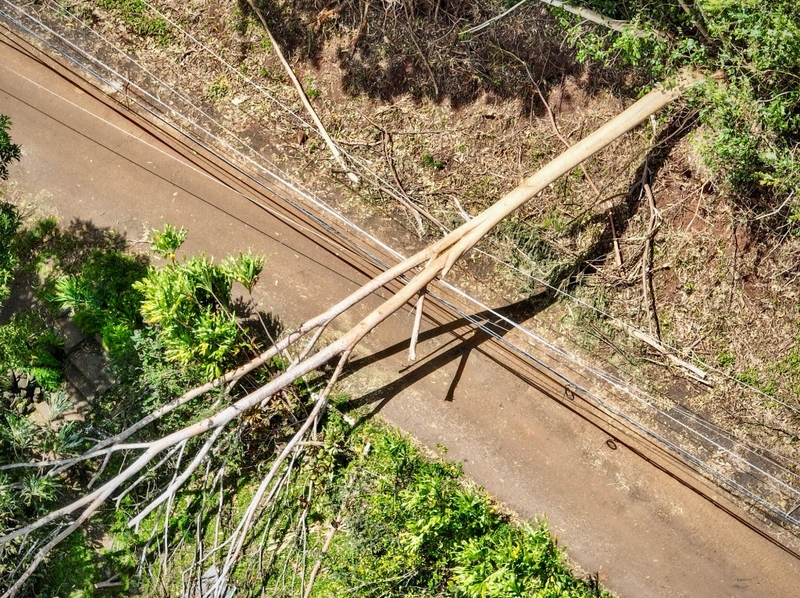
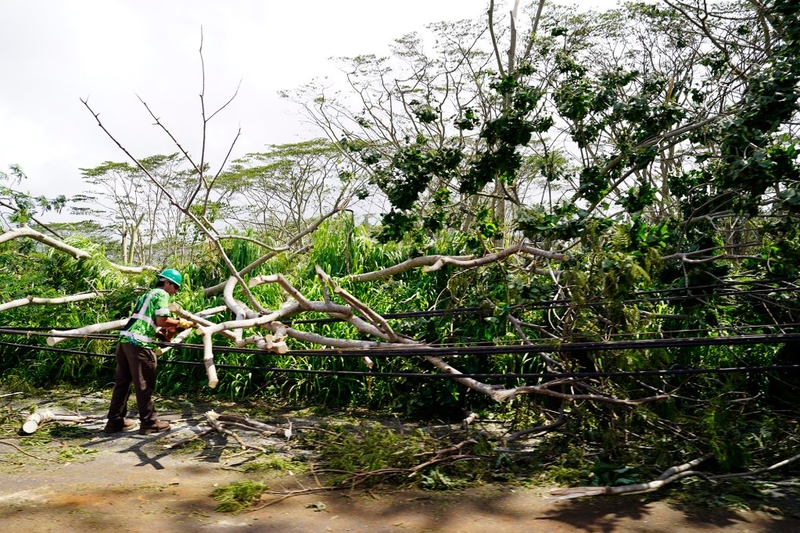
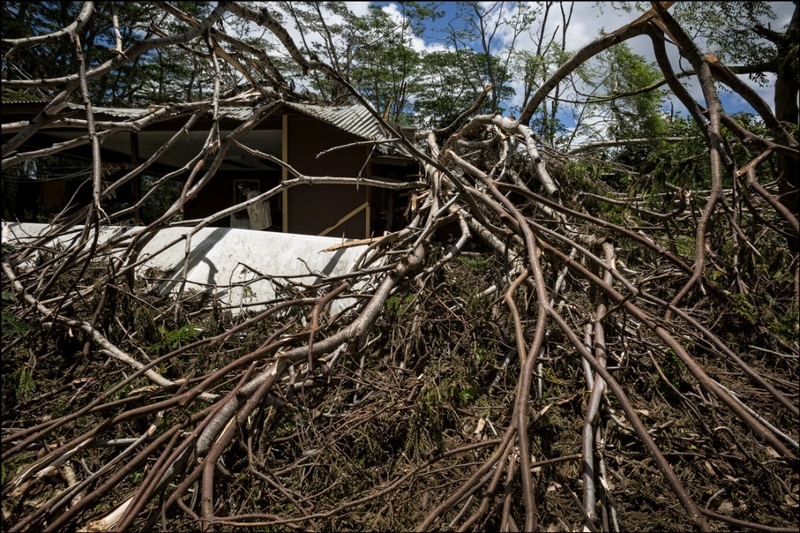
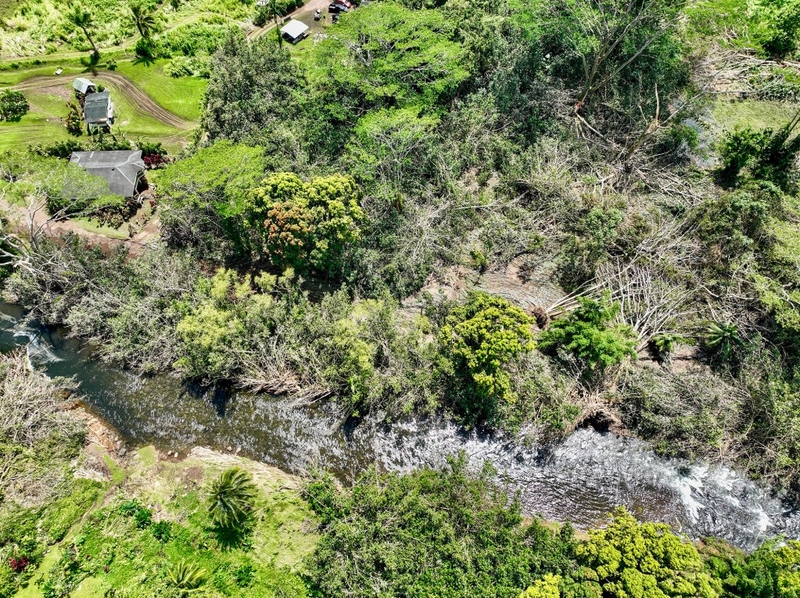
Hurricane Lowell’s intense winds and heavy rains knocked thousands of trees onto power lines, blocked roadways as residents tried to evacuate, crushed homes and clogged streams earlier this month on Kaua‘i.
Nearly everyone lost electricity after the storm sideswiped the island. Thousands lost access to running water. Dozens of families were displaced. Several hundred homes remained in the dark Thursday despite a herculean effort by the utility cooperative to restore power to 30,000 members since the storm hit on Sept. 7.
Albizia, a fast-growing and flimsy invasive tree that’s taken hold across Kaua‘i and much of the state, is widely blamed for exacerbating the toll. Its limbs still litter the island two weeks after intense community-led cleanup efforts began.
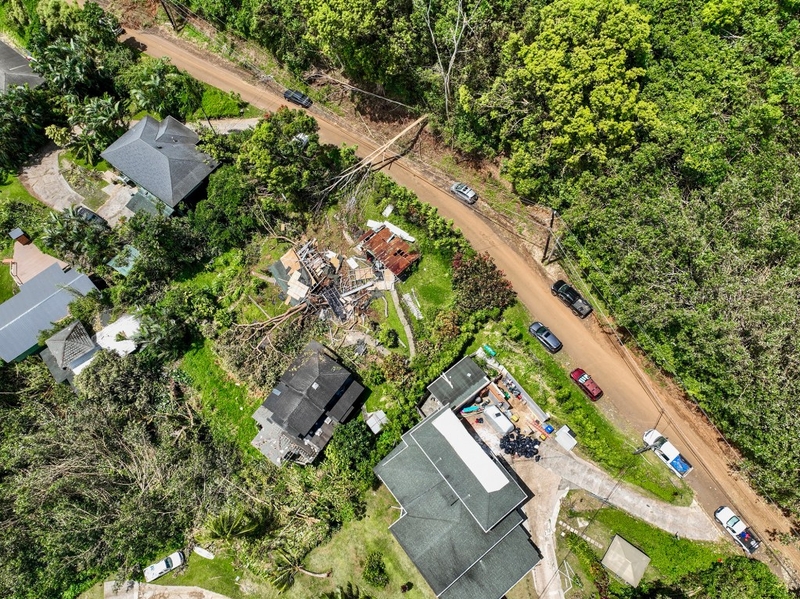
A similar situation played out with albizia and other invasive trees, such as eucalyptus, on Oʻahu during the Kona low storms in March and on Maui and Hawai‘i island during Hurricane Lala in August. More trees are expected to go down during Hurricane Nolo this weekend.
The longstanding issue has community members clamoring for action during a record-breaking storm season. They want better tree maintenance along highways, increased funding to do more in preparation of incoming storms, even legislation to require landowners to take better care of the vegetation on their own properties.
A week before Lowell hit, Kauaʻi County Council member Fern Holland warned of the threat albizia would pose if a hurricane hit the island during deliberations over new wildfire-focused construction regulations. Now, in the hurricane's aftermath, she’s looking for ways to use the disaster as an opportunity for a reset, especially regarding the trees.
“It feels like a different kind of pain to look out at my community suffering because of this,” Holland told Civil Beat. “If we had just acted 20 years ago to start managing these species, even in these corridors that are critical, we wouldn't be in this situation.”
'Bully Species'
Albizia and other nonnative trees have been making disaster damage worse for more than a century in Hawai‘i, according to local officials and university experts.
State and county lawmakers have drafted strategic plans to deal with the perils of the trees and made a handful of attempts to increase funding for their management. But efforts have only gone so far, as existing initiatives remain modestly funded. Just this year, the Hawaiʻi Senate killed a bill that would have directly funded hazardous tree management across the islands, while plans have been left untended with minimal funding.
The responsibility for managing much of the tree population has defaulted to the counties, which have ordinances related to nuisance trees and flora. But that, many say, has done little to address an issue blanketing the landscape.
The state Department of Agriculture and Biosecurity, counties and invasive species committees all have their own limitations. Biosecurity and invasive species control aren’t core functions of the county, Holland said, so that is left to the state. But the state biosecurity department focuses more on acute invasive species infestations.
For the Kaua‘i Invasive Species Committee, which is associated with the University of Hawaiʻi, the problem is simply too widespread to be a priority for an entity with limited staff and funding, outreach specialist Haylin Chock said. The committee predominantly focuses on little fire ants, mongoose, coconut rhinoceros beetles and miconia trees, which are larger threats to the island’s ecosystems. Miconia is another fast-growing tree with a dense canopy that kills native understory plants by blocking out light and rain.
Albizia, native to the southwestern Pacific, is coincidentally making the Kauaʻi Invasive Species Committee’s work more difficult. The fallen trees have cut off access to myconia treatment areas. And the movement and removal of downed trees could foster the spread of little fire ants and coconut beetles.
“I like to call invasive species ‘bully species,’” Chock said. As opposed to often symbiotic native flora, invasives like eucalypts and albizia are “selfish,” she said, hogging nutrients in the soil, growing quickly and crowding out slower-growing native species.
Albizia, for one, is among the world's fastest growing trees. It climbs roughly 15 feet per year in its first five years and ultimately reaches up to 150 feet tall. Their canopies expand just as wide, dropping abundant leaf litter that chokes out new growth and alters the soil chemistry below.
During disasters, their most problematic feature is their weakness, as winds easily snap their exceedingly long branches that can, even without wind, just drop. It’s a problem for personal property in the best of times.
A study published in June found an almost direct correlation between the presence of albizia – and miconia – and severe flooding in watersheds on Oʻahu.
“The best management practice is, unfortunately, getting them early,” Chock said. “Once it gets to a certain point, it's really hard to get rid of and it's really dangerous to get rid of.”
‘Bad Things Happen When You Don't Manage’
Holland is hoping to keep people’s attention on albizia as Kauaʻi recovers from Lowell, to create some lasting change akin to what happened on Hawaiʻi island after Hurricane Iselle hit in 2014.
That year, the storm knocked over albizia trees right and left, took out power lines, blocked roads and destroyed homes and businesses. The trees, which had been taking over abandoned cane fields on the eastern side of the Big Island since the industry shut down in the 1990s, faced a reckoning after the storm.
A task force made up of over 30 organizations came together to address the albizia challenge, recalled Franny Brewer, manager of the Big Island Invasive Species Committee.
Hawaiian Electric Co., which was part of the task force, worked with the committee to identify priority areas for albizia removal and the company paid the committee and a group of arborists to begin removing the trees. The state Department of Transportation supported the committee’s efforts. It was effective but expensive.
“These were well over 100-foot tall trees,” said JB Friday, a University of Hawaiʻi extension forester based on the Big Island. “Guys were climbing them with ropes, taking the branches off one by one, lowering them to the ground. A crew of five guys working a week on a tree, you could use up a lot of money.”
For one 1.5-mile section of road, it cost $300,000, Brewer said. The county now allocates $250,000 to the committee annually for tree control, which she said helps but is not enough to solve the problem.
On Kaua‘i, Gabrielle Edwards’ Wainiha Country Market sits less than 500 feet from a rivermouth. And while community groups have worked for years to prevent the spread of albizia and minimize its footprint, limited funding has always posed an issue, she said, as has been the ability to keep people involved because it’s tedious, hard work.
The situation is further complicated by land ownership. For Wainiha, the entire community is surrounded by land owned by the Robinson family, which owns more than 50,000 acres on the island and all of Ni‘ihau. Kauaʻi's other largest landowners include Grove Farm, controlled by AOL founder Steve Case, and the State of Hawaiʻi.
“Everything from weeds and wildfire to hazard trees, if you don't manage your property, things will get worse on it,” Friday said. “A lot of Hawai‘i is owned by absentee landlords who aren't managing their property. Bad things happen when they're not managed, including having giant trees grow up and threaten your neighbors.”
One seemingly simple fix to the islands’ albizia problem is biological control: introducing an organism to act like a predator on the trees. Introducing an insect to eat albizia’s wind-driven seeds seems simple, but Hawaiʻi has a spotty track record of successful biocontrol introductions.
Recruiting and deploying biocontrols is a lengthy procedure, requiring hefty investment of time and resources, which the U.S. Department of Agriculture began exploring in 2015. It’s complicated by the fact that the prized native koa tree could be collateral damage if the wrong pest is introduced since it’s albizia’s cousin.
Another albeit expensive option is trying to remove them all, Friday said. That’s complicated by the fact that other invasive species could replace them and outcompete native ecosystem regrowth after the albizia’s removal.
The state Department of Land and Natural Resources in 2018 published a strategic plan to control albizia, but it has mostly gathered dust.
“Individual agencies have taken related actions on their island, however, there has not been a coordinated statewide effort to specifically implement the action steps of the plan without more dedicated funding,” Hawaiʻi Invasive Species Council planner Jack Reef said.
‘An Expensive One To Solve’
Island-by-island strategies vary. On the Big Island, its invasive species committee began running semi-annual workshops in the Puna area where they taught people to control albizia on their own, following Iselle.
Many past participants have created neighborhood groups and they work together to treat the trees with herbicide or use other techniques called girdling and ring-barking. Similar work is being done by its sister committee on Kauaʻi, in lieu of a dedicated program.
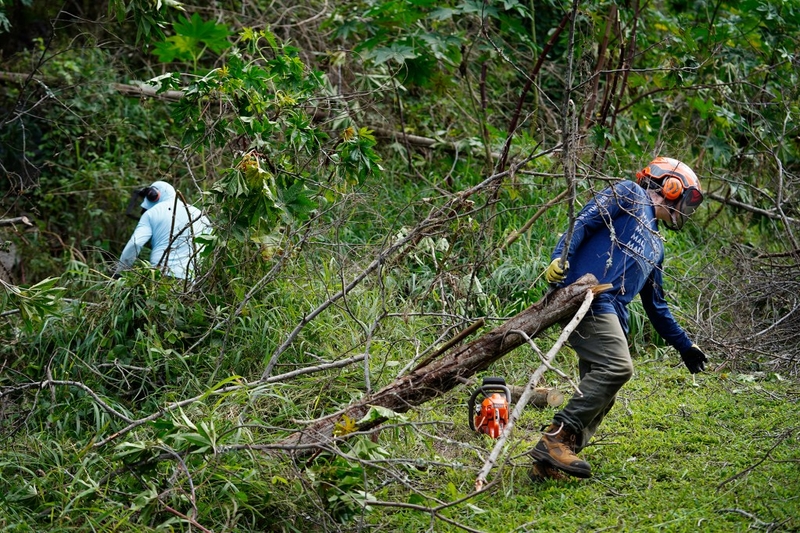
In addition to removing the trees from their own property, Brewer said a statute protects people who try to contact the owner of neighboring land if they don’t hear back from them. In those cases, they can legally remove the trees themselves.
On Maui, the county fire code does require property owners to manage invasive trees and other vegetation that poses a fire risk. But that requirement is difficult to enforce because it relies largely on complaints filed by other residents, Kula Community Watershed Alliance Executive Director Sara Tekula said. Some property owners would also rather accept a citation than find a long-term solution to the problem, because it is usually much cheaper and easier to just pay the resulting fine, she said.
Other islands have similar statutes, related to fire or otherwise, though they’re predominantly focused on nuisances or hazards between properties, not whole-island removal efforts.
“Every way you look at it, it's a big problem, and it's an expensive one to solve,” she said. “But it is so, so necessary.”
To be sure, it’s not just albizia causing problems. Brewer noted that a large number of eucalyptus trees came down the upper part of Puna during Hurricane Lala, and several destroyed buildings. She added that the number of gunpowder trees have exploded in recent years.
Eucalyptus is a problem on Kauaʻi, Oʻahu and Maui, too, as are several shallow-rooted species of pine trees. State land and parks remain off-limits on Kauaʻi after Lowell due to the overall destruction — but wind-toppled eucalyptus trees are especially problematic.
For Tekula, vigilance is essential. The invasive trees have taken up so much of the landscape and have fallen so frequently that many Upcountry residents have dealt with property damage, lengthy power outages and road closures caused by downed eucalyptus.
Tekula recalled how her family has been stranded for days after large eucalyptus trees fell onto roads around her neighborhood, and she said her family is still dealing with an internet outage caused by trees downed during Hurricane Lala last month. So it’s unsurprising that during high winds or heavy rain, the trees can cause a lot of anxiety for residents.
“We prepare to get stuck now because it's happened so many times,” Tekula said. “We need to be able to have our supplies, knowing we might be out of power or out of water. That kind of thinking becomes normal… it's kind of terrifying.”
Going Underground
Kauaʻi Island Utility Cooperative board vice-chair Jan TenBruggencate said it could have been much worse for the Garden Isle during Lowell. The utility has doubled its vegetation management efforts since 2023. That increase in work includes two dedicated vegetation management crews, motivated by albizia and invasive grasses largely stemming from the wildfires of 2023.
More solutions need to be considered, he said. Parts of the island have grown accustomed to power outages because albizia are so tall and their canopies so broad that even the utility finds them difficult to control. The utility maintains rights of way under utility lines, though because the trees are so broad, they’re not within the cooperative’s reach.
He’s a big advocate for putting powerlines underground. The cost to utility customers, of course, is a major hurdle to contend with in doing that, he said.
Rep. Greggor Ilagan of the Big Island agrees undergrounding is an important next step. The Puna lawmaker is looking for a way to pilot a program in his district and believes there’s a way to leverage federal funding to do so. In the meantime, Illagan said, state funding needs to be dedicated to helping islands contend with their hazardous trees.
On Kauaʻi, as calls grow for the state and counties to take control, council member Holland believes incentive programs or mandates are going to be necessary to get landowners on board. It’s a price worth paying, she said.
“Investing in preparation and being proactive,” she said. “Control is so much easier than picking up the mess in the aftermath.”
Civil Beat reporters Noelle Fujii-Oride contributed from Kaua‘i and Erin Nolan from Maui.
Honolulu, HI