Ohio lawmakers turn their backs on public schools again
Sep 25, 2026 | 3:30 am ET
Description
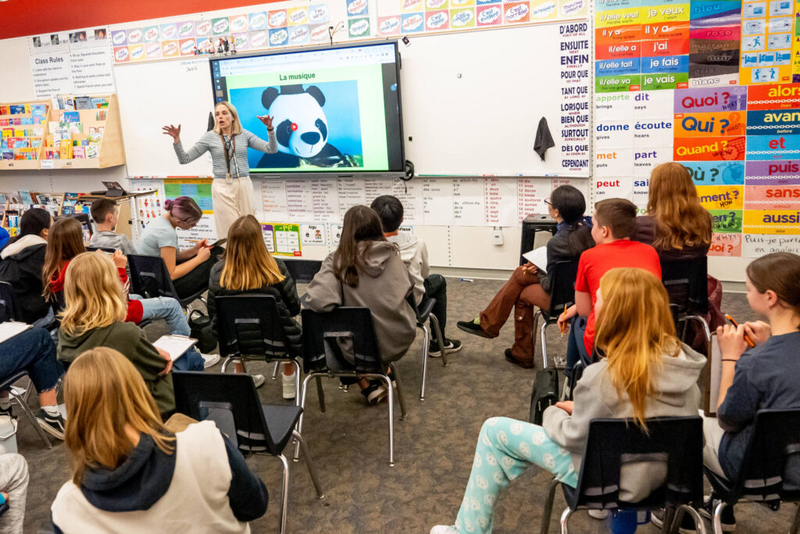
Students work in a classroom. (Photo by Spenser Heaps, States Newsroom.)
The Heights Coalition for Public Education is a grassroots organization formed in 2014 by public education activists in the Cleveland Heights-University Heights (CHUH) school district.
Like most taxpayers across Ohio, we want our public schools to excel so that our children, economy, and democracy can thrive. Our focus is state policies that impact the ability of communities to provide students the quality of education they seek for their children.
The current financial crisis facing Ohio public schools and the legislature’s continued indifference is the latest case in point.
Communities across Ohio are facing new school levy requests and/or deep cuts to education opportunities. The Cleveland Heights-University Heights schools have done both.
More than 20% of Ohio school districts will run out of funds in FY2029.
The Ohio Legislature triggered this crisis when the current state budget abandoned the final phase of the Fair School Funding plan.
According to Policy Matters, the state appropriated $2.75 billion less for FY26 and FY27 than what the plan required. Like more than 400 districts, our district received less funding than in the previous two-year budget.
By failing to fulfill its constitutional obligation to adequately fund public education, the Legislature shifted even more of the funding burden to local communities.
This year the state share dropped to 32.2% compared to 43.3% in FY24. In a fair system, the state share would reduce not increase reliance on local property taxes.
Ohio ended its fiscal year in June with more than $2.428 billion in unencumbered funds in part because tax revenue was higher than predicted (estimated $1.237 million) while expenses were about $778 million less than planned.
Instead of directing this substantial surplus to fill the public education funding gap, lawmakers passed Ohio House Bill 479 and committed more than $1.2 billion to the rainy-day fund and one-time rebates.
None of the money benefited public education — the only expenditure mandated by the Ohio Constitution.
As students head back to school, their public schools are hurting. The state could provide them some immediate relief. About $536 million of the surplus is still sitting in the General Revenue Fund.
Lawmakers should use this remaining surplus to increase state funding for Ohio’s most vulnerable students: children with disabilities and children from low-wage families.
This investment would give school districts across the state short-term financial relief and improve education opportunities for students whose unique costs have been studied for the Fair School Funding Plan but not addressed in the state budget.
These higher cost students now make up a larger share of public-school enrollment. Their needs are real and extra resources matter, but per pupil spending has been stagnant and shamefully inadequate.
An infusion of funds would enable resource starved school districts to better meet student needs during this school year.
It would not remove the need for local levies or the need for the legislature that is elected in November to bring forward a budget for the next biennium that adequately funds public education.
What can we do?
- State lawmakers can commit any remaining surplus funds to the education of our neediest students for this school year.
- Make sure public education is lawmakers’ priority in the next state budget.
- Sustain our local public schools.
The next state budget is the real opportunity to ensure that state policy makers support our aspirations for the 1.2 million children who rely on public education. We need leaders who share that goal and understand that it’s essential to a state budget that helps public schools thrive.
Columbus, OH